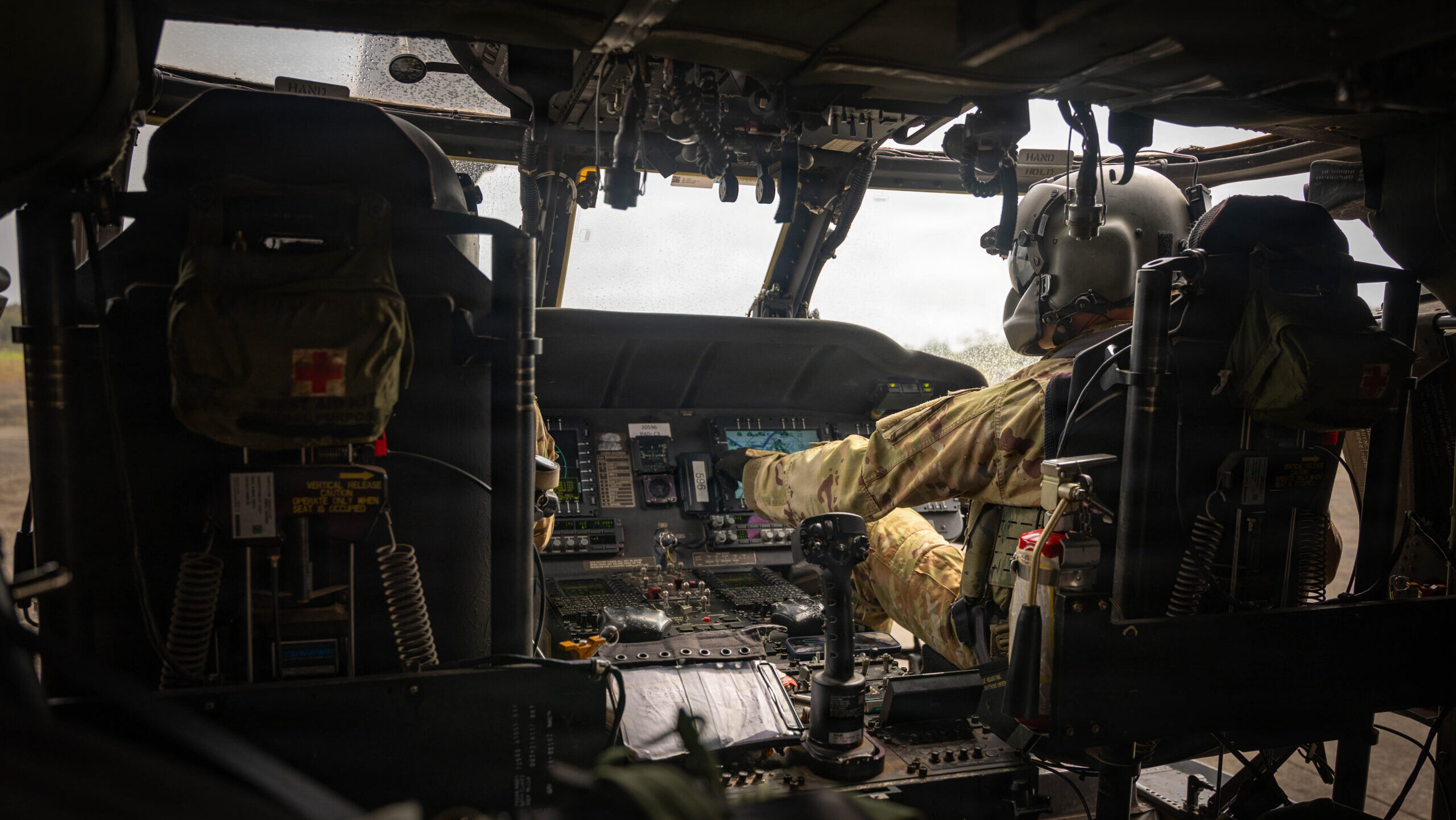
The Army narrows a key training competition
The U.S. Army’s effort to reshape how it trains new helicopter pilots has moved into its final phase, with Bell and M1 advancing in the Flight School Next competition. The program is intended to provide not only aircraft, but also a revised curriculum and a new acquisition model for the Initial Entry Rotary Wing program at Fort Rucker.
That scope makes the competition more consequential than a simple aircraft buy. Flight School Next is about the pipeline that produces Army aviators, and changes at that stage can influence cost, training speed, and operational readiness for years.
What the finalists are offering
According to the supplied reporting, Bell is serving as its own prime contractor and offering the Bell 505. The company says it will deliver a full turnkey solution with teammates including DigiFlight, Delaware Resource Group, V2X, Alpha 1 Aerospace, Semper Fly, and TRU Simulation.
M1, by contrast, is acting as the prime while using Robinson Helicopter’s R-66 platform. The company has emphasized technologies intended to accelerate learning and build student pilot proficiency.
Both approaches signal that the Army is evaluating a package rather than a single machine. The final phase will include flights by members of the Army’s technical evaluation team to confirm that the aircraft meet standards set by the Aviation Center of Excellence.

Why the program matters
Military aviation training is expensive, time-intensive, and closely tied to readiness. A program that promises a lower-risk, more cost-effective route from student to qualified rotary-wing pilot will get attention even before the contract is awarded. The Army appears to be looking for a combination of modern aircraft, updated pedagogy, and acquisition efficiency rather than simply preserving a legacy training model.
That is a meaningful shift. Training systems are often treated as background infrastructure, but they determine how quickly forces can regenerate talent and how well new pilots adapt to later operational platforms. If the Army can improve student throughput or reduce training friction without lowering standards, the benefits would extend beyond the schoolhouse.
September could set the direction
The report says an award is expected in September, which gives the remaining phase practical importance. At this point, the competition is less about concept and more about proving that a proposed system works in Army hands. Aircraft performance, supportability, and instructional fit are all likely to matter.
Bell arrives with brand familiarity in military aviation and a vertically integrated offering. M1’s pitch appears more service-oriented, pairing prime-contractor oversight with Robinson’s aircraft and additional training technology. The contrast reflects a broader defense-market pattern: established manufacturers and specialized service providers increasingly meet on the same battlefield of lifecycle delivery.
Whichever team wins, the result will say something about how the Army wants to modernize a foundational part of aviation training. Flight School Next is not a frontline weapons program, but it sits upstream from nearly every rotary-wing mission the service performs. In that sense, the competition is about more than trainers. It is about how the Army intends to build aviators for the next era.
This article is based on reporting by Breaking Defense. Read the original article.
Originally published on breakingdefense.com