The Mission No Stealth Bomber Can Skip
Range is the defining characteristic of a strategic bomber. The aircraft's entire purpose — to hold targets at risk anywhere on Earth regardless of where it is based — depends on its ability to travel vast distances without relying on forward bases in contested regions. Aerial refueling is what makes that possible, allowing a bomber to take off from a secure location, fill its tanks en route, and reach any target on the planet.
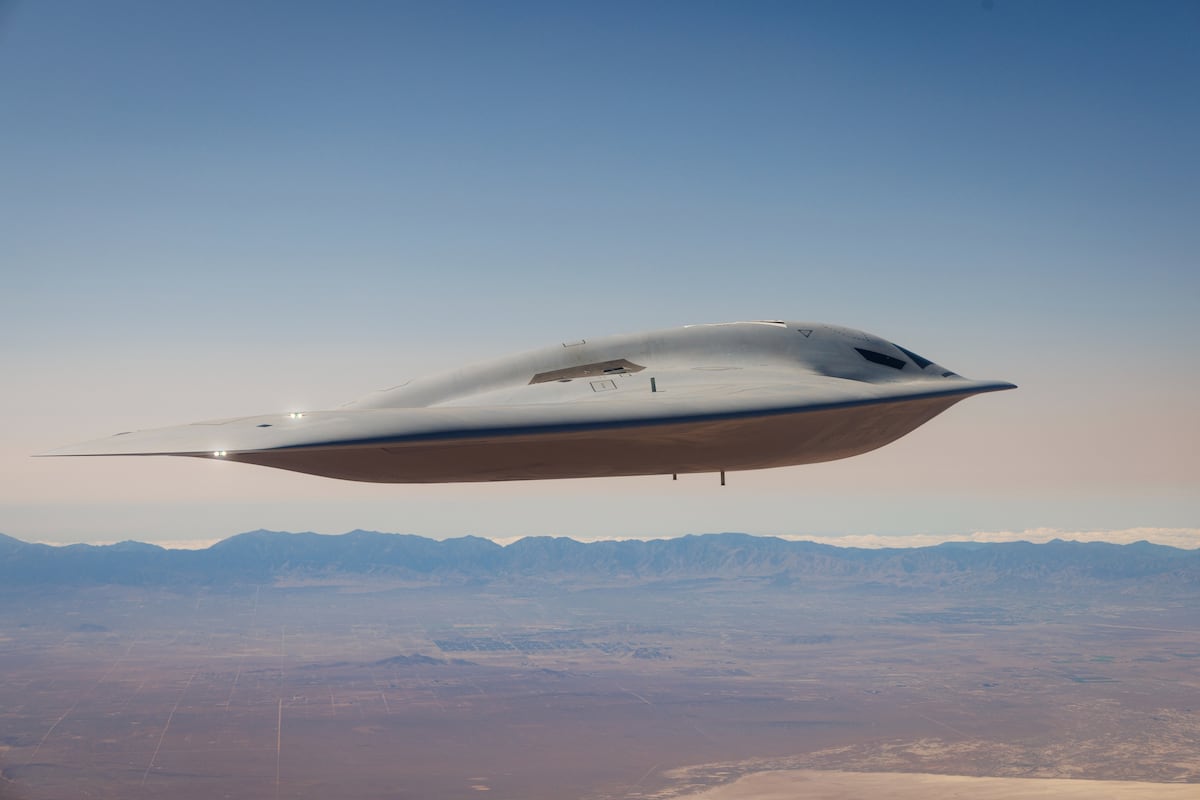
For the B-21 Raider, Northrop Grumman's next-generation stealth bomber that represents the United States' primary strategic airpower investment for the coming decades, validating aerial refueling capability is a critical milestone. A recent mission over the Mojave Desert confirmed that a B-21 test aircraft completed a close-proximity flight with a KC-135 Stratotanker over Edwards Air Force Base.
What the Test Confirmed
The Air Force statement was carefully worded: it confirmed a close-proximity flight with the KC-135 but did not confirm that fuel was actually transferred. Aviation photographers on the ground captured images of the B-21 positioned behind the tanker in a formation consistent with refueling approach procedures, but visual observation cannot confirm whether a physical connection was made or fuel was offloaded.
This reflects standard Air Force practice for sensitive test programs — the B-21's specific technical capabilities are treated as classified. What the statement does confirm is that the aircraft flew alongside a tanker in a controlled test environment, demonstrating that the two aircraft can operate in close proximity. The mission lasted approximately 5.5 hours, suggesting more than a simple approach and break-off, consistent with multiple approach attempts and potentially actual fuel transfer.
Why the B-21 Matters
The B-21 Raider is not an incremental improvement on existing bombers. It represents a fundamental rethinking of how the United States projects strategic airpower. Designed from the outset for survivability in highly contested environments — including those with advanced integrated air defense systems like China and Russia field — the aircraft incorporates stealth characteristics, advanced electronic warfare, and mission flexibility its predecessors lack.
The current U.S. bomber fleet relies primarily on the B-52 Stratofortress, first flown in 1952, and the B-2 Spirit with a fleet of only 20 aircraft. The B-21 is designed to operate in environments where the B-52 would be shot down and where the B-2's small numbers limit operational options.
Timeline and Deployment
The Air Force has confirmed that the first operational B-21s are on track for arrival at Ellsworth Air Force Base in South Dakota in 2027, with initial operational capability expected in the late 2020s. The program has proceeded without the major cost overruns or schedule delays that have plagued other major defense acquisitions, and successful progression through flight testing milestones suggests the B-21 is tracking toward its planned deployment date.
This article is based on reporting by Defense News. Read the original article.
Originally published on defensenews.com