First Aerial Refueling Image Released
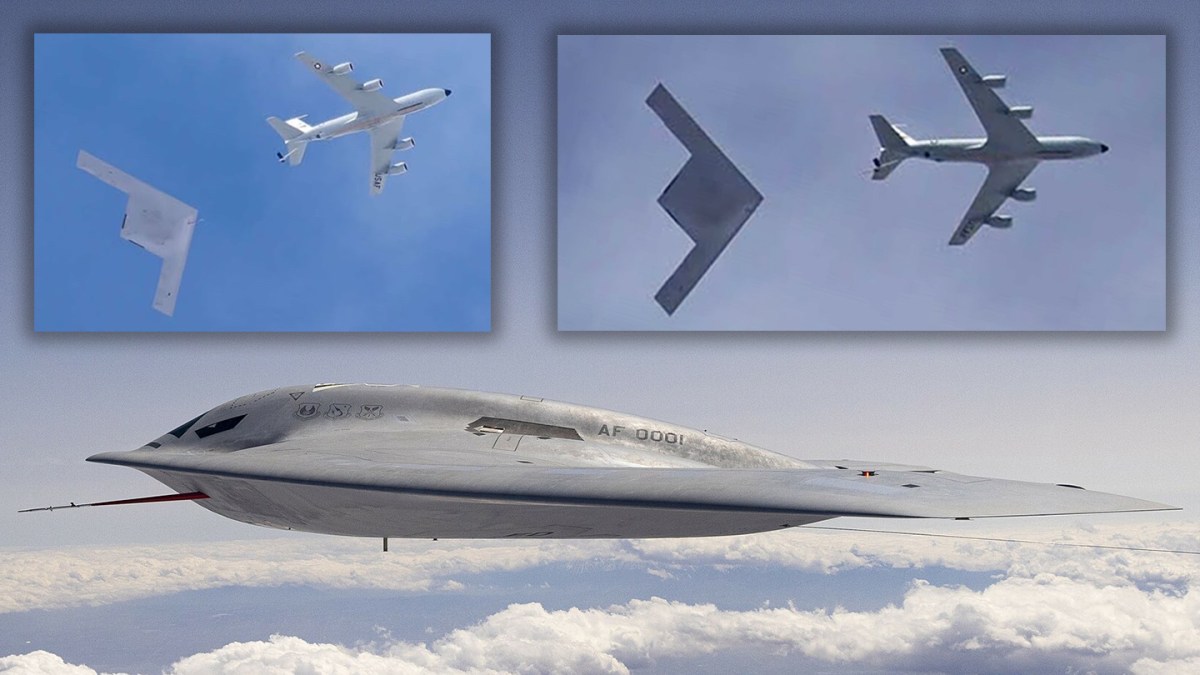
The B-21 Raider, America's next-generation stealth bomber, has been photographed conducting aerial refueling for the first time, providing the public with a striking new view of the aircraft that will form the backbone of the U.S. strategic bomber fleet for decades to come. The image shows the aircraft connected to a tanker's refueling boom, confirming that this critical capability has been successfully demonstrated during the ongoing flight test program.
Aerial refueling is essential for the B-21's intended mission set. The bomber is designed to penetrate the most heavily defended airspace on the planet and deliver both conventional and nuclear weapons at intercontinental range. Without the ability to refuel in flight, even the most advanced aircraft is limited by the fuel it can carry at takeoff. Aerial refueling effectively gives the B-21 unlimited range, allowing it to strike targets anywhere in the world from bases in the continental United States.
Test Program Progresses
The refueling milestone is part of a broader flight test campaign that has been expanding steadily since the B-21's first flight in November 2023. The aircraft has been flying from Edwards Air Force Base in California, where it shares ramp space with other test aircraft and the legacy bombers it is designed to eventually replace.
The Air Force has kept details of the test program closely guarded, releasing only periodic updates and carefully curated images. What is known is that the B-21 has been expanding its flight envelope, testing various systems, and demonstrating core capabilities that must be validated before the aircraft can enter operational service.
Aerial refueling testing involves verifying that the B-21 can safely and reliably connect with tanker aircraft under various conditions including different altitudes, speeds, and weather states. The aircraft must also demonstrate that its stealth characteristics are not compromised by the refueling receptacle and associated systems.
Strategic Significance
The B-21 arrives at a moment when the strategic bomber force is under unprecedented scrutiny. The ongoing air campaign against Iran has put the existing bomber fleet, particularly the B-2 Spirit, in the spotlight as one of the few platforms capable of delivering large quantities of precision munitions deep into defended territory.
The B-2, which the B-21 is designed to supplement and eventually replace, has been in service since 1997 but numbers only 19 operational aircraft. Its small fleet size has been a persistent limitation, and the aircraft's maintenance requirements, including climate-controlled hangars for its radar-absorbing coatings, constrain operational availability.
The Air Force plans to acquire at least 100 B-21s, a number that would represent a dramatic expansion of the stealth bomber force. Northrop Grumman, the prime contractor, is already building production aircraft at its facility in Palmdale, California, even as testing continues. This concurrency approach, building production aircraft before testing is complete, carries risk but is intended to accelerate the timeline to operational capability.
Design and Capabilities
The B-21 is a flying wing design, similar in configuration to the B-2 but incorporating decades of advances in stealth technology, materials science, sensors, and networking. The aircraft is designed to operate in the most advanced anti-access, area-denial environments, meaning it must be able to evade detection by the latest Russian and Chinese air defense systems.
Beyond stealth, the B-21 features an open-architecture mission system designed to be rapidly updated with new software and capabilities. This approach reflects lessons learned from the B-2, whose closed architecture made upgrades expensive and time-consuming. The Air Force wants the B-21 to remain relevant for decades by continuously integrating new weapons, sensors, and electronic warfare capabilities.
The bomber is also designed to serve as a node in the military's broader network of sensors and shooters, sharing targeting data with other aircraft, satellites, and ground stations in real time. This networked approach multiplies the effectiveness of each individual aircraft by allowing it to leverage information from across the battlespace.
Production and Timeline
Six B-21 airframes are currently in various stages of production and testing. The Air Force expects to declare initial operational capability in the coming years, though the exact timeline has not been publicly disclosed. The program is considered the Air Force's top acquisition priority, and recent budget submissions have included significant funding increases to accelerate production.
The cost per aircraft remains classified, though estimates range from $550 million to over $700 million per unit depending on what is included in the calculation. While expensive by any measure, the B-21 is significantly less costly than the B-2, which adjusted for inflation cost over $2 billion per aircraft in its original production run. The B-21's more affordable unit cost is what makes a fleet of 100 or more financially feasible.
The aerial refueling photographs represent just one visible marker of a program that is advancing largely behind closed doors. Each successful test brings the B-21 closer to joining the operational force and reshaping the strategic balance for decades to come.
This article is based on reporting by twz.com. Read the original article.
Originally published on twz.com