Introduction
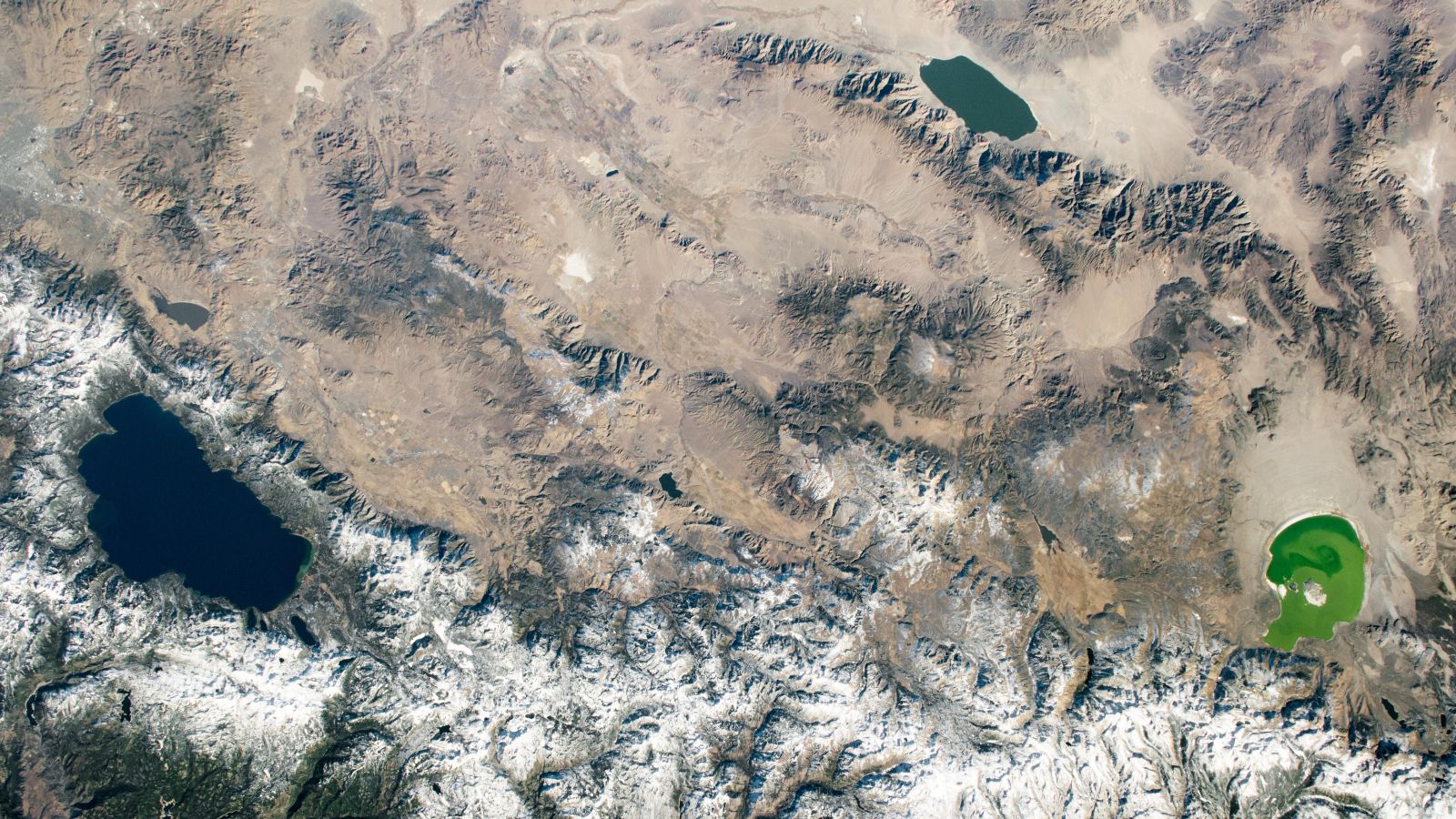
An astronaut aboard the International Space Station captured a dramatic photograph on December 3, 2020, showing three strikingly different lakes straddling the California-Nevada border. The trio—Lake Tahoe, Walker Lake, and Mono Lake—varies dramatically in shape, size, salinity, and the ecosystems they inhabit. The image offers a rare perspective on how geography and climate create stark contrasts within a relatively small area.
Lake Tahoe: The Alpine Giant
Lake Tahoe, visible on the left side of the image, is the largest alpine lake in the United States. Covering approximately 192 square miles (497 square kilometers) and sitting at an elevation of about 6,223 feet (1,897 meters) above sea level, it lies within the Sierra Nevada mountain range. The snow-covered peaks of the Sierra Nevada stretch across the bottom of the photograph, highlighting the region's wet and cold conditions. Tahoe's deep blue color is a result of its exceptional clarity and depth, making it a popular destination for recreation and tourism.

Walker Lake and Mono Lake: Desert Gems
To the southeast of Lake Tahoe, two other bodies of water stand out: Walker Lake (upper right) and Mono Lake (lower right). Each has a maximum width of around 13 miles (21 kilometers). Unlike Tahoe, these lakes are situated in the Great Basin desert, a flat region that extends into parts of Utah, Idaho, and Oregon. The Great Basin lies in the rain shadow of the Sierra Nevada, meaning it receives very little precipitation. This stark environmental difference gives Walker and Mono Lakes their unique characteristics.
Walker Lake
Walker Lake is a terminal lake, meaning it has no outlet. Its water levels have been declining due to drought and water diversion, leading to increased salinity. The lake's color often appears greenish or turquoise, influenced by algae and mineral content. It is located entirely within Nevada.
Mono Lake
Mono Lake, on the other hand, is in California. It is famous for its high salinity and alkaline conditions, which create a unique ecosystem. The lake's water is so salty that it supports only brine shrimp and alkali flies, which in turn attract migratory birds. Mono Lake's color can range from pale blue to milky white due to calcium carbonate deposits known as tufa towers.
Biomes and Borders
The California-Nevada border runs directly through the middle of Lake Tahoe and continues to separate the space between Walker Lake (Nevada) and Mono Lake (California). This border also marks a transition between two distinct biomes: the alpine Sierra Nevada and the arid Great Basin desert. The contrast is evident in the photograph: the snow-covered mountains give way to the dry, flat desert landscape.
Another major body of water, Pyramid Lake, is located out of the shot to the northeast of Lake Tahoe. Two much smaller lakes sit between the three larger lakes, but they are not prominent in the image.

Scientific Significance
The photograph provides valuable data for scientists studying climate, hydrology, and ecology. The different colors of the lakes reflect their varying chemical compositions and biological activity. For instance, Lake Tahoe's deep blue indicates low nutrient levels and high clarity, while the greener hues of Walker Lake suggest higher productivity. Mono Lake's pale color is due to its unique mineral content.
These lakes also serve as indicators of environmental change. Declining water levels in Walker Lake and increasing salinity in Mono Lake are concerns for local ecosystems. The image captures a snapshot in time, but ongoing monitoring helps track long-term trends.
Conclusion
The astronaut photo of Lake Tahoe, Walker Lake, and Mono Lake is a stunning reminder of Earth's diversity. Within a few hundred square miles, three lakes exhibit drastically different characteristics, shaped by elevation, climate, and human activity. As seen from space, they form a colorful triangle that highlights the intricate interplay between geography and ecology.
This article is based on reporting by Live Science. Read the original article.
Originally published on livescience.com