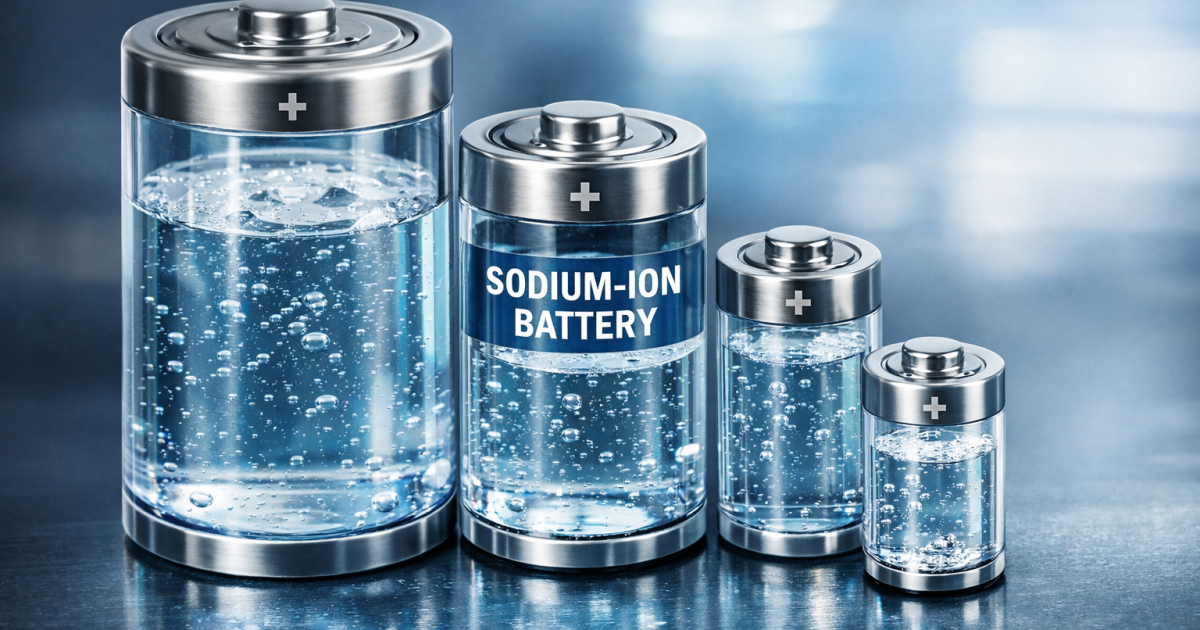
A Counterintuitive Breakthrough in Battery Chemistry
For years, battery manufacturers have treated water as the enemy. Manufacturing processes for rechargeable batteries typically involve carefully drying electrode materials at high temperatures to eliminate any trace of moisture. Now, researchers at the University of Surrey have turned that assumption on its head with a discovery that could reshape the economics of grid-scale energy storage.
The team found that keeping water molecules inside the cathode material of sodium-ion batteries nearly doubles their energy storage capacity compared to dehydrated versions of the same material. The findings, published in the Journal of Materials Chemistry A, suggest that the industry's standard approach to battery manufacturing may have been leaving significant performance gains on the table.
"The material showed much stronger performance and stability than expected," said lead researcher Daniel Commandeur from the University of Surrey. The discovery opens a promising pathway for sodium-ion batteries, which have long struggled to match the energy density of their lithium-ion counterparts despite offering compelling advantages in cost and sustainability.
How Water Supercharges Sodium-Ion Performance
The mechanism behind the improvement is elegantly simple. The cathodes in the study were made from nanostructured vanadate hydrate, or NVOH. When water molecules remain embedded in the material's crystal structure, they cause the layers within the cathode to expand slightly. This expanded spacing creates additional room for sodium ions to shuttle in and out during charge and discharge cycles.
Think of it like widening the aisles in a warehouse. With more space to move, sodium ions can flow more freely and in greater numbers, allowing the cathode to accept and release more charge per cycle. The water molecules essentially act as structural pillars, propping open the layered architecture of the cathode and preventing it from collapsing during repeated cycling.
Test batteries built with the hydrated cathode material maintained stability for more than 400 charge cycles, demonstrating that the water does not degrade or destabilize the electrode over time. The NVOH material is now considered among the top-performing cathode materials for sodium-ion batteries, a class of technology that researchers and industry have increasingly looked to as a complement to lithium-ion for stationary storage applications.

Why Sodium-Ion Batteries Matter
Lithium-ion batteries dominate the rechargeable battery market for good reason. They pack tremendous energy into a small, lightweight package, making them ideal for smartphones, laptops, and electric vehicles. But lithium comes with baggage. The element is concentrated in a handful of countries, mining it requires enormous amounts of water, and the geopolitical complications of lithium supply chains have become a growing concern for governments and manufacturers alike.
Sodium, by contrast, is one of the most abundant elements on Earth. It can be extracted from seawater at a fraction of the cost of lithium mining, and sodium-ion batteries are generally safer to operate, with a lower risk of thermal runaway and fire. These advantages make sodium-ion technology particularly attractive for large-scale grid storage, where weight and size are less critical than cost, safety, and supply chain resilience.
The catch has always been energy density. Sodium-ion batteries store significantly less energy per unit of weight or volume than lithium-ion cells, limiting their practical applications. The Surrey team's discovery, by nearly doubling cathode capacity, takes a meaningful step toward closing that gap.
A Bonus Discovery: Desalination Potential
In an unexpected twist, the researchers also found that their hydrated cathode material works effectively as a desalination electrode. When used in an electrochemical desalination setup, the NVOH material can remove salt from water while simultaneously storing energy. This dual-purpose capability raises the tantalizing possibility of battery systems that could be integrated with desalination plants in coastal communities, producing both stored energy and fresh water from seawater.
While such applications remain speculative, the finding hints at a broader potential for the material beyond conventional battery use. In regions where both clean water and reliable energy storage are pressing needs, a technology that addresses both challenges simultaneously could prove transformative.

The Road to Commercialization
The immediate implications of the discovery are most significant for the growing sodium-ion battery industry. Companies in China, including CATL and HiNa Battery, have already begun commercial production of sodium-ion cells for electric vehicles and grid storage. If the hydrated cathode approach can be scaled up and integrated into existing manufacturing processes, it could substantially improve the competitiveness of sodium-ion technology against lithium-ion alternatives.
The simplicity of the approach is particularly encouraging. Rather than requiring exotic new materials or complex manufacturing techniques, the improvement comes from doing less, specifically from skipping the energy-intensive drying step that is standard practice in cathode production. This could translate to both better performance and lower manufacturing costs, a rare combination in battery research.
As the world races to build out the energy storage infrastructure needed to support renewable energy grids, affordable and scalable battery technologies will be critical. The Surrey team's work suggests that the answer to better batteries might have been hiding in plain sight all along, in the water that manufacturers have been so carefully removing.
This article is based on reporting by New Atlas. Read the original article.
Originally published on newatlas.com