U.S. defense officials say the problem is now engineering at scale
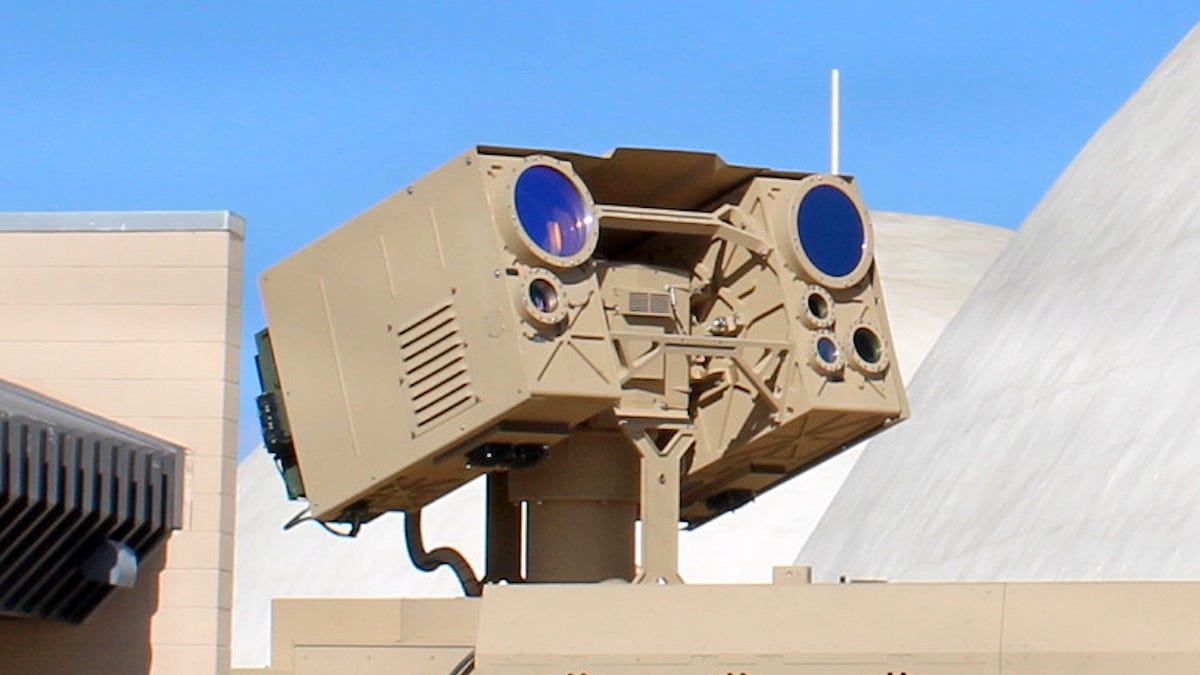
The Pentagon says high-energy laser weapons are approaching a new stage: not proving the science, but turning prototypes into systems that can be produced, deployed, and integrated at scale. Testifying before the Senate Armed Services Committee’s Emerging Threats and Capabilities Subcommittee on May 19, undersecretary of defense for research and engineering Emil Michael said the science of laser weapons “is largely done,” shifting the focus to manufacturing and systems engineering.
That is a consequential framing. Directed-energy weapons have long occupied a gray zone between laboratory promise and operational credibility. Claims about the future of laser systems are not new. What is new in this account is the confidence with which senior Pentagon leadership is describing the remaining obstacles as industrial rather than scientific.
From exquisite prototypes to mass production
Michael’s comments centered on what the Defense Department calls “scaled directed energy,” a critical technology area aimed at making these systems cheaper, smaller, and more proliferated. In practical terms, the challenge is to move from limited, high-cost prototypes toward equipment that can be fielded in larger numbers.
That distinction matters because many emerging military technologies stall at the prototype stage. They work under controlled conditions or in narrow test scenarios but fail to become durable procurement programs. If the Pentagon is serious about scaling lasers, it needs manufacturing discipline, supply-chain resilience, integration with existing platforms, and repeatable performance in contested environments.
Michael said the department already has a suite of directed-energy products spanning low to high end and that the task now is production scale. That suggests the Pentagon sees the technology portfolio as broad enough to support deployment across multiple use cases, rather than betting on a single flagship system.

Golden Dome is accelerating the push
The article says President Donald Trump’s planned “Golden Dome for America” missile shield is increasing urgency because of its heavy reliance on directed energy. Michael told lawmakers that funding associated with Golden Dome would support fundamental engineering work to make laser systems cheaper, smaller, and more widely deployable.
That is important for two reasons. First, it links laser development to a politically visible national defense architecture, which can strengthen budget momentum. Second, it suggests that missile defense is one of the strongest near-term drivers of directed-energy maturation. Traditional interceptors are expensive and can be limited by magazine depth. Laser weapons, at least in theory, offer a different cost and engagement model if power, targeting, thermal management, and reliability challenges can be solved.
Michael also said a directed-energy demonstration is expected in the summer of 2028 as part of a series of Golden Dome-related events. That provides a concrete milestone, even if it is still a demonstration rather than a promise of full operational deployment.
Recent conflict is influencing demand signals
Michael added that “our experience in Iran has also doubled our interest in these systems,” according to the source text. That comment shows how current operational pressures are shaping procurement priorities. Military technology adoption rarely follows technical logic alone. It accelerates when planners believe emerging threats expose a weakness in existing defenses.
Directed-energy weapons have often been discussed as a solution for low-cost aerial threats, saturation attacks, and missile-defense economics. If current conflict assessments are strengthening that case inside the Pentagon, laser programs could see more sustained backing than previous cycles of directed-energy enthusiasm.
Still, interest driven by conflict can cut both ways. Urgency can unlock funding, but it can also compress timelines and encourage overpromising. The Pentagon now has to demonstrate that its confidence reflects measurable engineering progress, not just strategic desire.
Why lasers remain attractive despite decades of hype
Military planners keep returning to laser weapons for a simple reason: the concept remains powerful. A system that can engage threats at the speed of light, with potentially deep magazines so long as power is available, has obvious appeal. It is especially compelling in scenarios involving drones, rockets, or missile-defense layers where conventional interceptors may be too costly for repeated use.
But the history of the technology is a warning. Field conditions are unforgiving. Atmospheric interference, beam control, thermal buildup, platform integration, target tracking, and power management all complicate deployment. That is why Michael’s shift from science to engineering is meaningful. It acknowledges that the hardest part of turning directed energy into a routine military capability may be building it economically and reliably rather than proving the basic physics.
The next test is credibility
For the defense sector, the most important question is whether the coming years produce repeatable demonstrations tied to realistic acquisition plans. A summer 2028 Golden Dome demonstration would be a visible benchmark, but the real test will be whether the Pentagon can show a path from high-profile events to procurement and fielding.
If that path materializes, laser weapons could finally move from futuristic promise into a standard part of layered defense planning. If it does not, the sector may add another chapter to the long history of directed-energy expectations outrunning deployment reality.
Based on Michael’s testimony, the Pentagon wants the debate to move past “can lasers work?” and toward “can lasers be built and deployed at scale?” That is a more mature question, and it reflects how far the field may have come. But it is also the point where ambitious defense technology meets the hardest part of innovation: manufacturing, integration, and operational trust.
For now, the message from Washington is clear. Directed-energy weapons are no longer being pitched only as futuristic science. They are being framed as near-term engineering programs with strategic urgency behind them. The next several years will show whether that confidence is justified.
This article is based on reporting by Fast Company. Read the original article.
Originally published on fastcompany.com