Personal climate control remains niche, but Sony is still refining it
Wearable air conditioning has always sounded slightly improbable, which is one reason Sony’s Reon Pocket line keeps attracting attention. The idea is not to cool an entire room or replace conventional HVAC. It is to regulate a small part of the body directly, enough to make a crowded train, overheated commute, chilly office, or outdoor work session more tolerable.
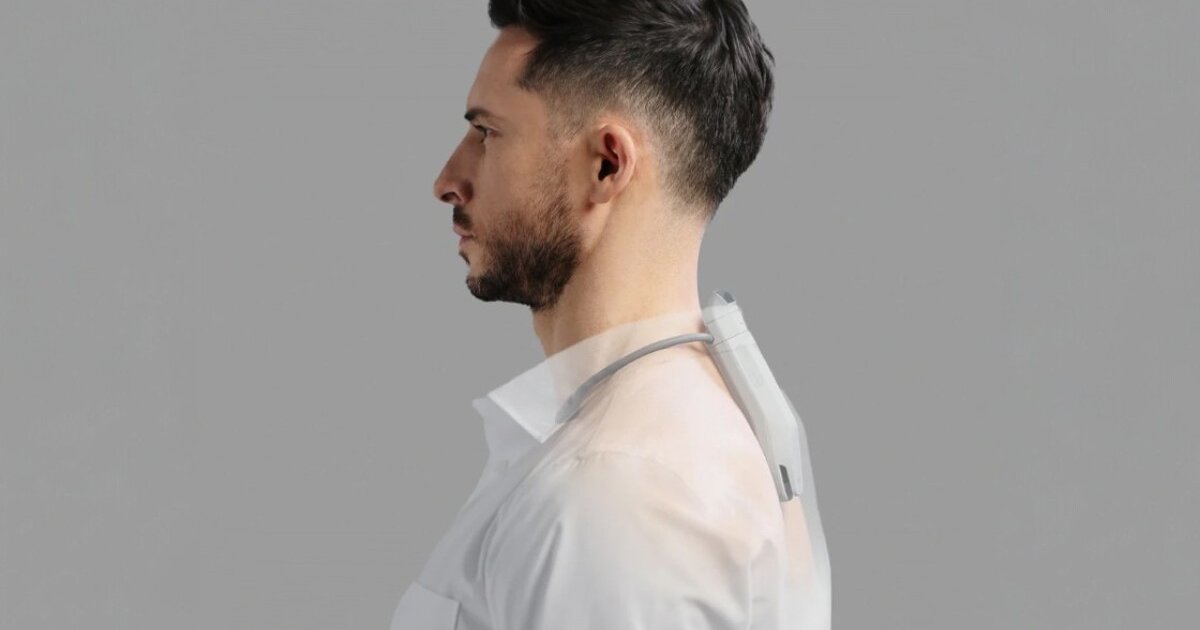
Now Sony has introduced an updated version, the Reon Pocket Pro Plus, that New Atlas reports improves both fit and cooling performance. The device still uses the Peltier effect, in which electric current across the junction of different conductors can create heating or cooling. Worn at the back of the neck between the shoulders, it aims to alter skin temperature by several degrees rather than change core body temperature.
The upgrade focuses on the problems that matter most
The most useful improvements are not flashy. They address the core weaknesses of wearable thermal devices: inconsistent contact with the body, awkward comfort, and performance that can be undermined by clothing or movement. According to the supplied source, the new model adds 3.6 degrees Fahrenheit, or 2 degrees Celsius, of extra cooling compared with the 2025 version. It also uses a redesigned neckband for a more secure fit.
That matters because these devices only work when physical placement is right. A secure fit means better thermal transfer and more predictable results. Sony also changed the upward-facing exhaust so it can rise above high collars more easily, a small but sensible design decision that suggests the company is iterating around actual daily use rather than simply publishing a new spec sheet.
In other words, the update appears to focus on usability. That is exactly what this category needs. Novel hardware concepts rarely fail because the science is impossible. They fail because the product remains too awkward for ordinary routines.

Why this product category is worth watching
The Reon Pocket does not solve climate control in the broad sense, but it points toward a different way of thinking about thermal comfort. Instead of treating entire rooms, buildings, or transit spaces as the only unit of intervention, personal thermal devices aim to manage comfort at the body level. That can be useful in spaces where environmental control is shared, limited, or expensive.
The concept is especially relevant in three situations described or implied by the source. One is commuting, where individual comfort is hard to optimize in packed public spaces. Another is office life, where one person’s comfortable temperature can feel too cold or too warm to someone else. The third is outdoor labor or travel, where portable relief matters more than ambient perfection.
There is also a health-adjacent use case in the supplied text: people dealing with hot flashes may find the device worth trying. That does not make it a medical device, and the source does not present it as one, but it does show how the appeal of personal thermal wearables can extend beyond general comfort.
The bigger challenge is mainstream adoption
Sony has been in this category since 2019, which already says something. The company has kept the product alive long enough to move beyond a one-off experiment. Even so, the category remains far from mainstream. New Atlas notes that only a couple of brands make this kind of device.
That raises the central question: can personal climate wearables become normal consumer electronics, or will they remain interesting niche accessories? The answer likely depends less on raw cooling power than on social acceptability, comfort, battery life, and the ability to disappear into a person’s routine. The product has to feel less like a gadget demonstration and more like something users forget they are wearing until they need it.
The Reon Pocket Pro Plus appears designed with that reality in mind. The companion tag reportedly acts as an ambient temperature and humidity sensor, and the device can run for hours on a charge. Those details suggest Sony is trying to reduce friction and automate more of the experience.

Incremental progress may be the right strategy
There is a temptation to judge unconventional hardware only by whether it becomes a mass-market breakout. That can miss the more useful lens. Some categories succeed by becoming essential to a smaller but stable group of users whose problem is real and poorly served by general-purpose products.
Sony’s latest update suggests the company understands that path. Better cooling, stronger fit, and more adaptable wearability are not dramatic reinventions. They are the sort of improvements that make an unusual product more practical. If personal climate tech is going to last, it will do so through exactly this kind of iteration.
The result is a reminder that innovation does not always arrive as a category-defining leap. Sometimes it shows up as a strange idea becoming steadily more usable until it no longer feels strange at all.
This article is based on reporting by New Atlas. Read the original article.
Originally published on newatlas.com