Not every tiny house is getting bigger
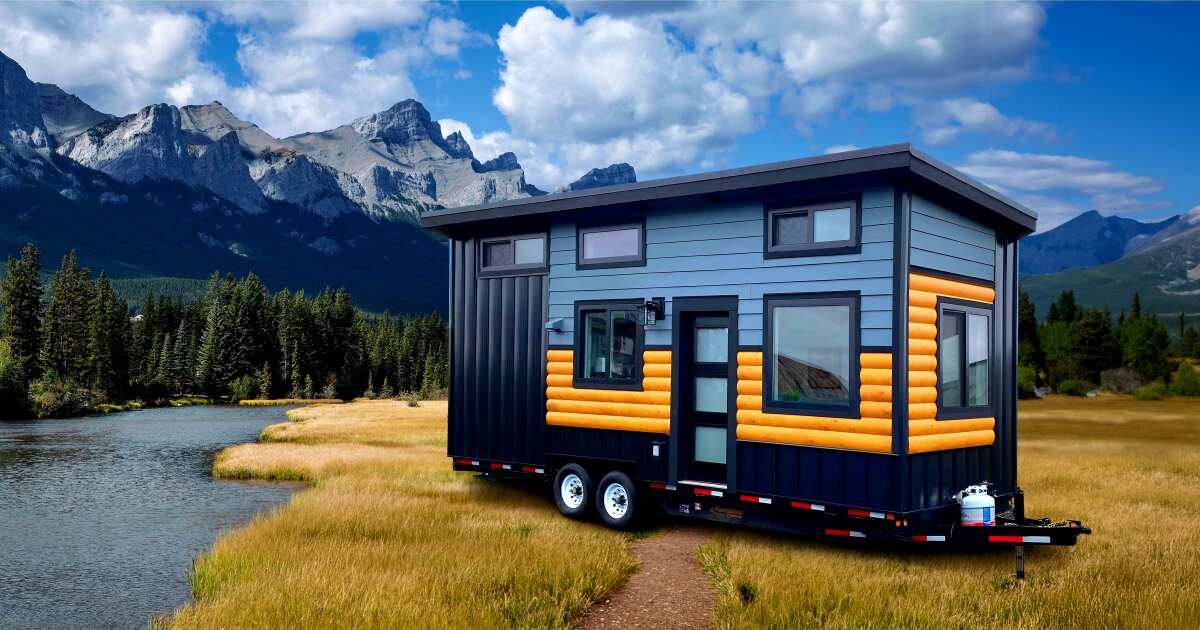
The tiny-house market often gravitates toward ever-larger models that function more like compact conventional homes than truly mobile dwellings. New Atlas highlights a different approach with the Koala Bear by Rolling Bear Tiny Homes, a 26-foot model built on a double-axle trailer and designed for one or two people who expect to move it regularly.
That positioning is what makes the project worth attention. In a segment where size creep can undermine the original promise of mobility, the Koala Bear leans back toward the roots of tiny living: small footprint, road-ready dimensions, and enough interior flexibility to support daily life without becoming a full-scale apartment on wheels.
A compact layout aimed at practical travel
New Atlas describes the exterior as black metal with pine log accents and painted fiber cement siding. Inside, the home uses shiplap, wooden beams, vinyl flooring, and a window-heavy layout that helps prevent the footprint from feeling too compressed. The living area includes a sofa and a small office setup with a drop-down desk, a useful detail for buyers who need basic work space without dedicating an entire room to it.
The kitchen is arranged in a galley format and includes a double sink, oven, propane cooktop, fridge/freezer, cabinetry, and shelving. The bathroom is accessed through a barn-style sliding door and includes a composting toilet, vanity sink, and a bathtub/shower combination, which is a relatively generous fit-out for a house this size. The bedroom sits in a loft reached by a staircase with integrated storage.

Why this matters for the category
The Koala Bear is not a technological breakthrough in the conventional sense. Its significance is more market-oriented. It reflects continued demand for tiny houses that prioritize portability rather than maximizing square footage. That distinction matters because tiny homes serve more than one customer type. Some buyers want a stationary or semi-stationary downsized residence. Others want a dwelling that can actually move with them.
At 26 feet, this model is clearly aimed at the second group. New Atlas notes that the dimensions make it especially suitable for regular travel or for owners who simply do not need the expanded floor area seen in larger rivals. In that sense, the Koala Bear represents product discipline. Instead of trying to stretch the concept, it works within the constraints that make a tiny house meaningfully tiny.
The enduring appeal of well-edited small living
There is also a broader design lesson in projects like this one. Tiny living only works when every feature earns its place. A drop-down desk instead of a permanent office, storage integrated into stairs, and a galley kitchen are all examples of a product shaped by limited space rather than pretending those limits do not exist. The result is less about luxury and more about efficient prioritization.
That may help explain why the smallest models still retain appeal even as the category matures. For some buyers, the attraction is not simply lower space consumption. It is the ability to live with fewer fixed obligations and more mobility. The Koala Bear does not redefine the sector, but it does reinforce one of its core ideas: compact homes can still be comfortable when the layout is intentional and the mission is clear.
This article is based on reporting by New Atlas. Read the original article.
Originally published on newatlas.com