Schneider, the energy-management and industrial-automation company, has put a quantum processor through a trial aimed at one of the least glamorous but most consequential problems in the power business: guessing how much electricity a household will actually draw. According to results reported by Interesting Engineering, combining the quantum chip with the company's forecasting pipeline improved the accuracy of home energy predictions by as much as 41 percent.
The hardware came from Silicon Quantum Computing (SQC), an Australian developer whose backers include Telstra, the country's dominant telecommunications carrier, and Commonwealth Bank. The company has also drawn support from the Australian government, a detail that places the effort squarely inside a broader national push to build sovereign capability in quantum technology.
A Quantum Assist for the Smart Home
Household electricity demand is notoriously difficult to pin down. Weather, occupancy patterns, appliance choices, the hour of the day, and abrupt changes in behaviour all push consumption up or down. Utilities, retailers, and grid operators, meanwhile, have to commit to supply decisions before they know what customers will do. Even modest gains in forecast accuracy can translate into less wasted generation, fewer emergency purchases on volatile spot markets, and ultimately smaller bills for consumers.
The Schneider trial suggests quantum hardware may be able to contribute at that margin. Rather than replacing conventional modelling outright, the approach folded a quantum chip into an existing forecasting workflow and measured how much the predictions sharpened. A gain of up to 41 percent in accuracy is a striking result for a domain where even single-digit improvements are usually treated as meaningful.

What Silicon Quantum Computing Brings to the Table
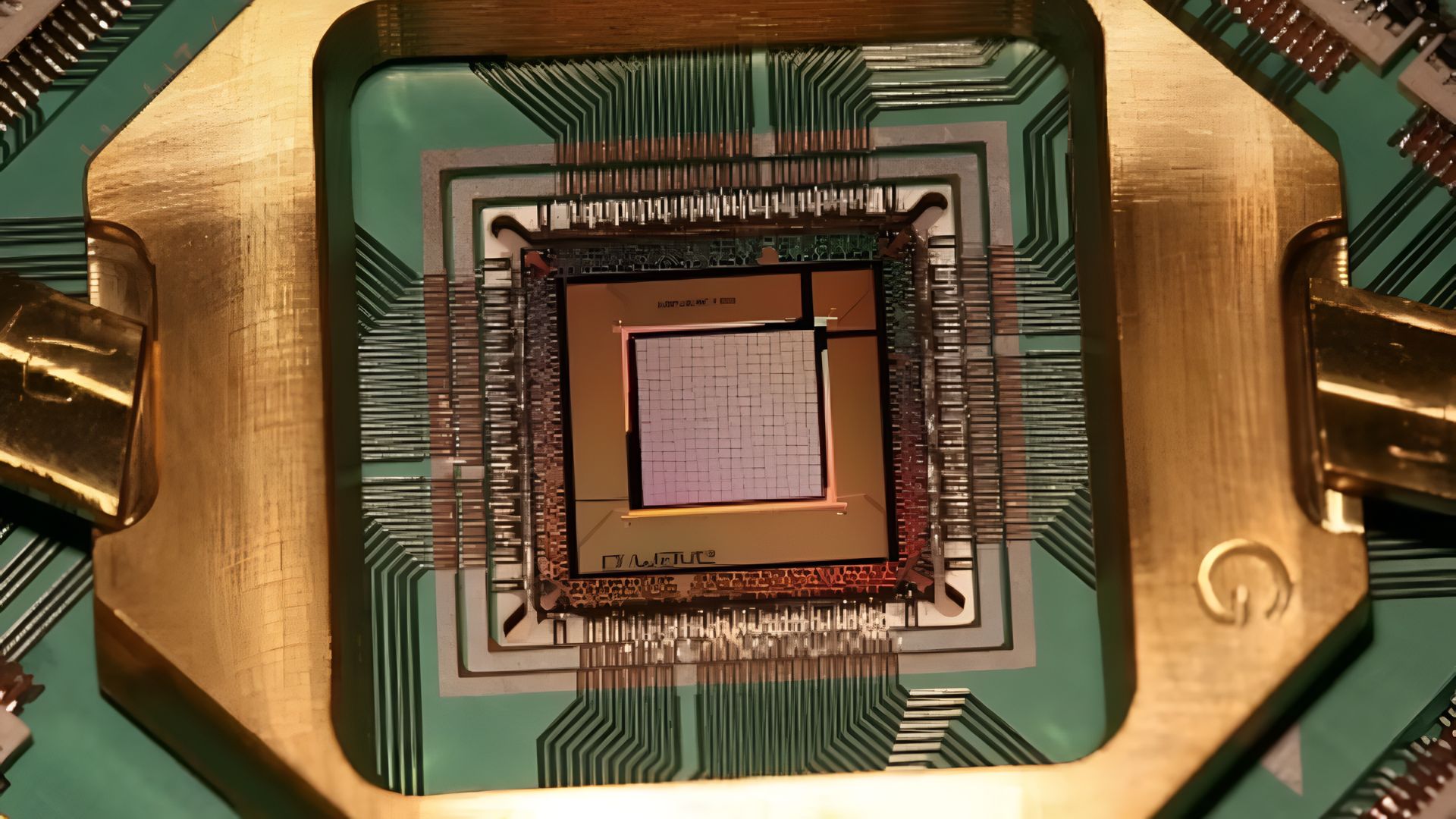
Silicon Quantum Computing has spent years building processors that use silicon-based qubits — an approach that has attracted attention precisely because it leans on manufacturing techniques the semiconductor industry already understands well. If that bet pays off, scaling quantum hardware could borrow from decades of existing fabrication expertise rather than requiring an entirely new industrial base.
Why Telecom and Banking Money Is Watching
The composition of SQC's investor base is telling. Quantum computing's most plausible near-term commercial value lies in optimisation, simulation, and statistical modelling — problems that telecoms networks and financial institutions confront constantly. Telstra grapples with routing, capacity planning, and demand prediction across a national network. Commonwealth Bank works with risk models, portfolio optimisation, and fraud detection. Both are the kinds of workloads where a faster or more expressive computational substrate could eventually matter.
An energy forecasting trial is therefore a useful bridge. It gives a quantum developer a concrete, measurable industrial problem to test against, and it gives an established industrial vendor a way to evaluate whether the technology is ready to touch real operations.
Why 41 Percent Is a Number Worth Examining
Accuracy improvements in load forecasting compound in ways that are easy to underestimate:
- Generation planning. Better demand estimates let operators schedule power plants more precisely, reducing the amount of capacity held in reserve purely as insurance against being wrong.
- Grid stability. As distributed solar, batteries, and electric vehicles spread, the gap between forecast and reality becomes harder to absorb. Sharper predictions ease that strain.
- Retail pricing. Suppliers that can predict household consumption more accurately can price contracts with less risk premium built in.
- Demand response. Programs that pay customers to shift consumption depend on knowing when peaks will arrive. Poor forecasts undermine the whole mechanism.
- Emissions. More accurate forecasts mean fewer peaking plants — often the dirtiest and most expensive units on the system — need to be fired up at short notice.
A 41 percent improvement, if it holds up outside the trial setting, would be large enough to affect all five of those areas at once.

Where Quantum Computing Touches the Grid
Quantum processors are not general-purpose replacements for the classical computers that already run utility operations. The realistic near-term role is narrower: solving specific classes of optimisation and sampling problems that grow unwieldy for conventional hardware as the number of variables climbs. Household-level energy forecasting fits that description well, because a utility modelling thousands or millions of individual homes is dealing with an enormous combinatorial space.
Forecasting Is the Bottleneck
Forecasting sits upstream of nearly everything else a utility does. It determines how much energy gets bought in advance, which assets are dispatched, when maintenance windows open, and how much reserve capacity is kept warm. That is why even incremental accuracy gains attract attention from operators — and why a quantum-assisted result in this area carries more weight than a benchmark score on an abstract problem.
The Caveats Worth Keeping in Mind
Enthusiasm should be tempered by the limits of what has been disclosed so far:
- The reported improvement is described as "up to" 41 percent, which generally indicates a best-case result rather than an average across all conditions.
- The trial appears to have been a test rather than a live deployment, meaning real-world noise, missing data, and operational constraints were likely controlled for.
- Details on the size of the dataset, the baseline model used for comparison, and the hardware configuration have not been fully laid out publicly.
- Reproducing the result independently — ideally across different grids and climate zones — will be the real test of whether the gain is general or specific to this setup.
None of these caveats invalidate the finding, but together they argue for treating it as a promising signal rather than a settled capability.
What Comes Next
The obvious next step is scale. Forecasting gains that appear in a controlled trial need to survive messy production data, seasonal swings, and the sheer volume of a real customer base. If the approach holds, the natural progression runs from household-level prediction to neighbourhood, feeder, and regional forecasting — layers where the computational burden grows and the operational payoff grows with it.
For Silicon Quantum Computing, the trial is also a commercial proof point. Demonstrating that its hardware can beat a classical baseline on a problem an established industrial company actually cares about is more persuasive to prospective buyers than any laboratory benchmark.
The Bigger Picture
Quantum computing has spent years hovering between laboratory promise and commercial reality. The most credible path forward runs through narrow, well-defined industrial problems where the hardware only has to be better than the alternative — not universally superior. Home energy forecasting is exactly that kind of problem: bounded, measurable, and attached to real money.
A 41 percent improvement in household demand prediction will not transform the grid on its own. But it does suggest that quantum hardware is edging closer to the operational side of the energy business, and that the companies funding quantum development — telecoms, banks, and governments among them — are beginning to see concrete returns on the problems they care about most.
This article is based on reporting by Interesting Engineering. Read the original article.
Originally published on interestingengineering.com