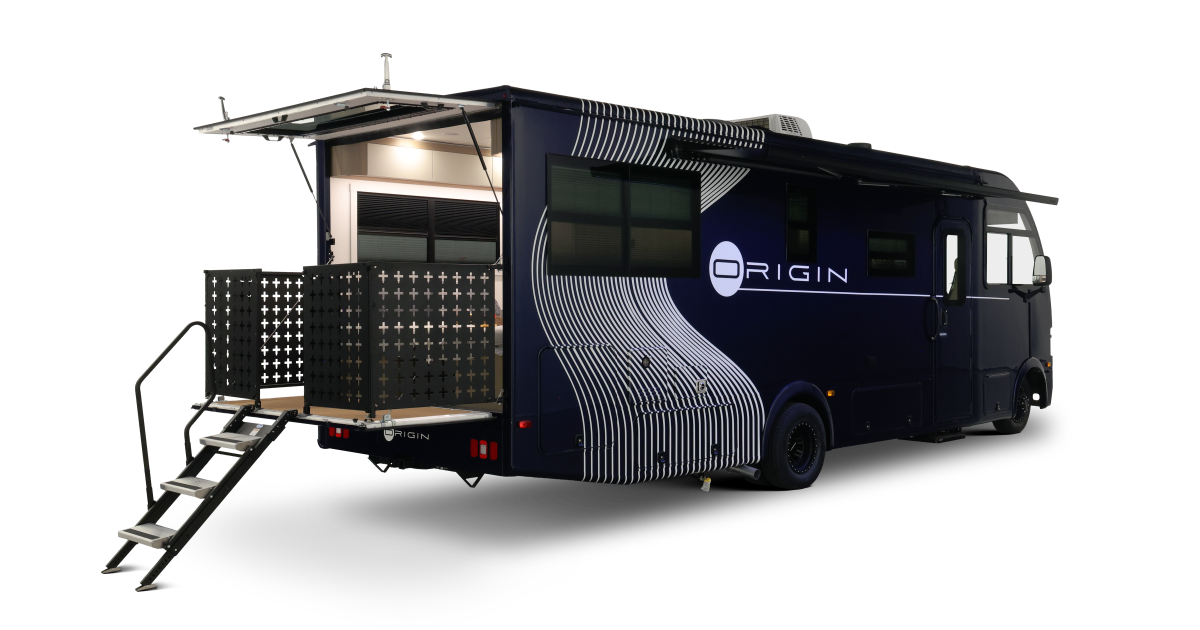
A Motorhome That Refuses to Pick a Class
Coachmen has unveiled a motorhome that deliberately sidesteps the labels the North American RV business has relied on for decades. The all-new Origin, from the Indiana manufacturer and its parent company Forest River, is framed as a Class A that takes a heavy dose of Class C and a meaningful sprinkle of Class B camper van DNA. Rather than settling into one category, the vehicle welds those traditions together into something the company presents as genuinely new.
The blurring is not cosmetic. Coachmen argues that the Origin effectively blows up the existing motorhome classification system and reassembles the pieces around a different set of priorities — usable space, flexible sleeping arrangements and a footprint that feels closer to a camper bus than a stretched interstate coach.
Built Differently Underneath
One of the clearest technical departures sits beneath the floor. The Origin is prepared on a Ford E-Series stripped chassis, the same family of underpinnings used across a wide range of commercial and recreational vehicles, but configured in a way that separates it from the typical Class C approach. Conventional Class C motorhomes are commonly built on an E-Series cutaway chassis, where the factory cab remains in place and the living box is grafted on behind it.
Coachmen went a different route. Instead of building into an existing Ford cab, the company developed its own cab for the Origin. That decision gives designers far more freedom over the driving environment and the transition between cockpit and living quarters — a seam that often exposes the compromises of a cutaway-based build.
The approach echoes what European manufacturers have done for years with integrated motorhomes, where the cab and body are conceived as one continuous shape rather than two separate assemblies joined together.

A Camper Van Layout Inside a Larger Shell
The most striking interior decision concerns what is missing. Where a buyer would normally expect a fixed bedroom tucked into the rear of a Class A motorhome, the Origin substitutes a dual-sofa lounge that converts into a bed. That layout is borrowed directly from camper van design, where every piece of furniture has to earn its place.
There is a practical payoff beyond sleeping. Removing a permanent rear bedroom opens up aisle space that runs through the vehicle, which in turn makes it easier to load and carry cargo — a consideration that matters to owners who use their motorhome for more than campground weekends.
Sleeping Space for Six
Coachmen has engineered three separate sleeping positions into the Origin, giving the motorhome a rated capacity of six people:
- A double bed that is stored above the cab and lowers into position when required.
- The rear dual-sofa lounge, which converts to form the primary sleeping area.
- A third bed formed from the sofa arrangement, rounding out capacity for larger groups or families.
Stacking beds vertically and converting seating at night is standard practice in camper vans, but applying the same logic inside a body that reads as a Class A represents a real shift in how volume is allocated.
Comfort Up Front and a Place to Sit Outside
The custom cab is fitted with quilted lounge seats that, in Coachmen's own imagery, look considerably more comfortable than the utilitarian chairs typical of stripped-chassis commercial vehicles. Above the driving position, the drop-down double bed stows out of the way, keeping headroom clear while the vehicle is on the road.
Owners also get a rear lounge that frames wide-open views, whether from inside the motorhome or from an outdoor deck area. That combination of an indoor social space and an exterior living zone follows the same philosophy as the convertible interior: make one area do more than one job.
Bathroom and Materials
The bathroom is fitted with a toilet and a vessel sink, a spec that signals the Origin is positioned as a fully self-contained coach rather than a weekend camper. Coachmen also notes a detail that speaks to long-term ownership: the Origin's furnishings are finished in laminate rather than paper. The choice is aimed at more durable performance in a vehicle that will see repeated use, temperature swings and the general wear that comes with travel.

Where the European Influence Comes From
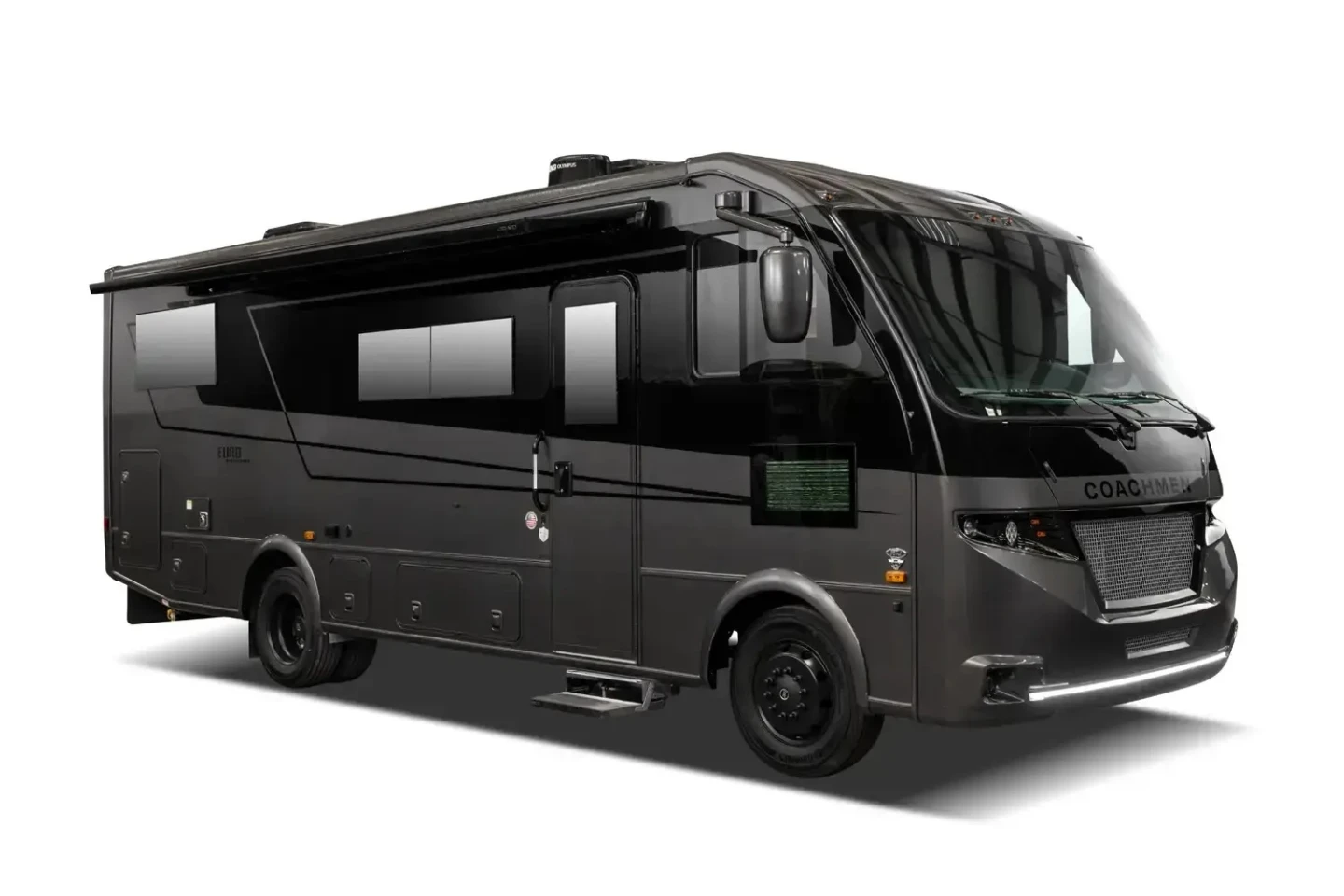
The Origin was conceived in the United States, but its design instincts lean noticeably toward Europe. Walking the halls of the Düsseldorf Caravan Salon, the contrast between the two markets becomes obvious. A large number of Class A-style integrated motorhomes on display in Germany measure closer in length to camper vans than to the stretched buses that carry the Class A label in the United States.
Those compact integrated models feel like genuine camper buses — closer in size to local passenger transporters than to triple-axle interstate coaches. Coachmen appears to have absorbed that lesson and then pushed further. The company's own framing places the Origin as a continuation of a road it began travelling with an earlier Euro-style motorhome, adding still more segment-blurring innovation along the way.
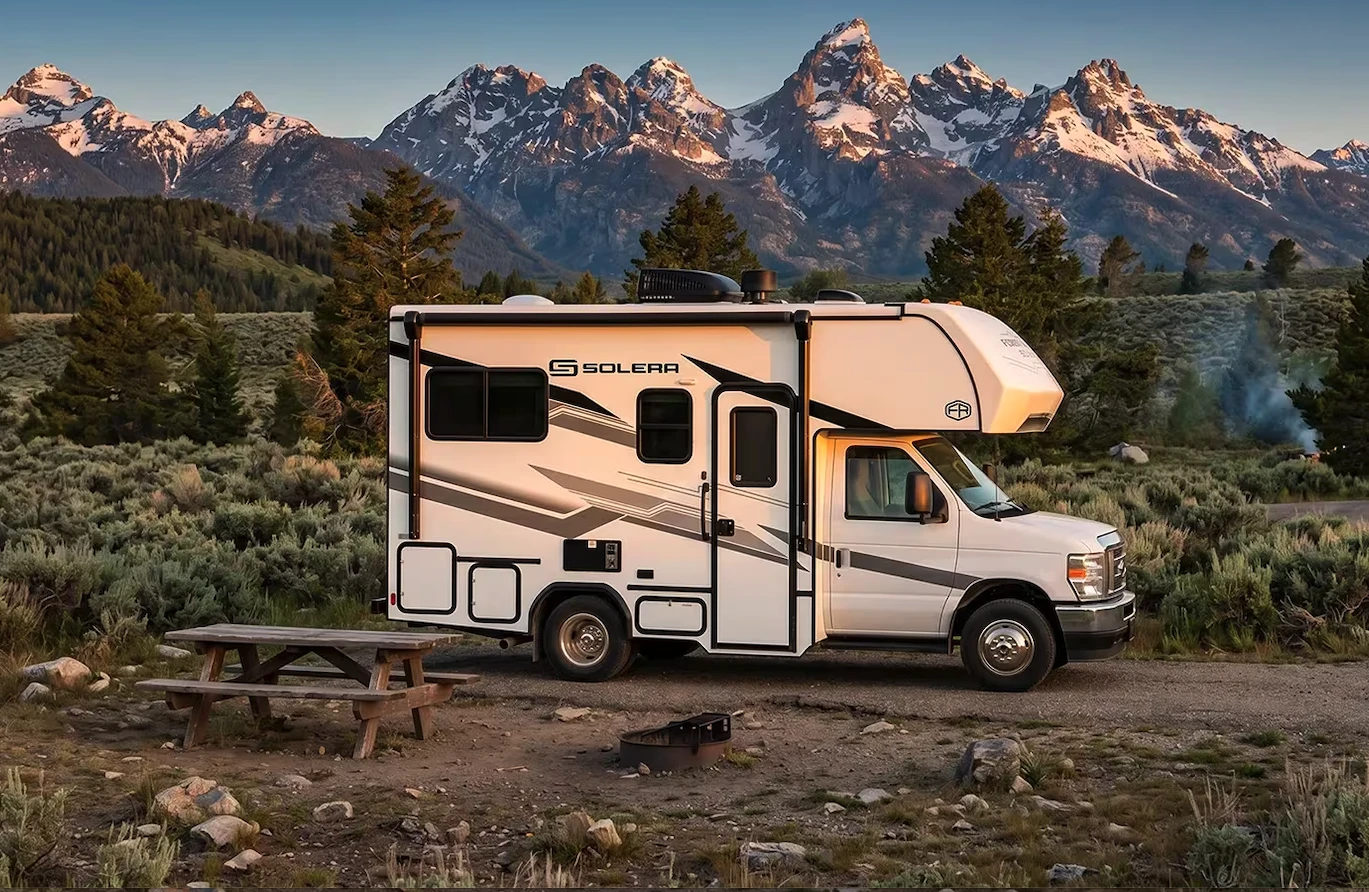
Anyone wanting a sense of what the Origin is rebelling against need only look at the Solera, a model from Forest River that illustrates the typical Class C formula: a conventional box built atop a Ford E-Series cutaway chassis. The Origin deliberately charts a different course.
Styling That Chooses a Side
The Origin is not a shy design. Its exterior colour palette and sweeping, curved body lines give it a look that departs from the slab-sided conservatism of traditional American motorhomes. Coachmen's own gallery invites viewers to weigh in on the colour and the swervy styling, which is a fair indication that the company expects strong opinions in both directions.
What the design does communicate clearly is intent. Between the integrated cab, the camper van lounge, the drop-down bed and the laminate finishes, the Origin reads as an attempt to answer a question the industry has mostly avoided: why should a motorhome buyer be forced to choose between the space of a Class A, the flexibility of a camper van and the accessibility of a Class C?

Why Segment-Blurring Rigs Matter
Category labels exist for a reason — they help buyers compare, insurers price and dealers stock. But they can also harden into assumptions that limit what gets built. When a manufacturer combines a stripped chassis, a proprietary cab, European proportions and a camper van floor plan, it tests whether those boundaries still serve anyone.
The Origin is unlikely to be the last vehicle to make that test. As integrated, camper-bus-sized motorhomes gain visibility on the international show circuit, the pressure on North American classifications will only grow. For now, Coachmen has produced a machine that, by its own description, transcends its origins and simply looks like somewhere worth spending time.
This article is based on reporting by New Atlas. Read the original article.
Originally published on newatlas.com