Drivers are being urged to think about the digital systems inside their cars as potential surveillance equipment, after the Dutch General Intelligence and Security Service (AIVD) published a document calling for greater "awareness of espionage risks around modern vehicles." The translated report, released on Wednesday, warns that features many motorists treat as ordinary conveniences could be turned against them by hostile states.
The AIVD did not name any individual country in its warning. Even so, the alert arrives in the middle of a widening debate in the United Kingdom about the growing number of Chinese-built and Chinese-owned vehicles on British roads, and about what data those cars generate, where it is stored, and who might be able to demand access to it.
Convenience features that double as sensors
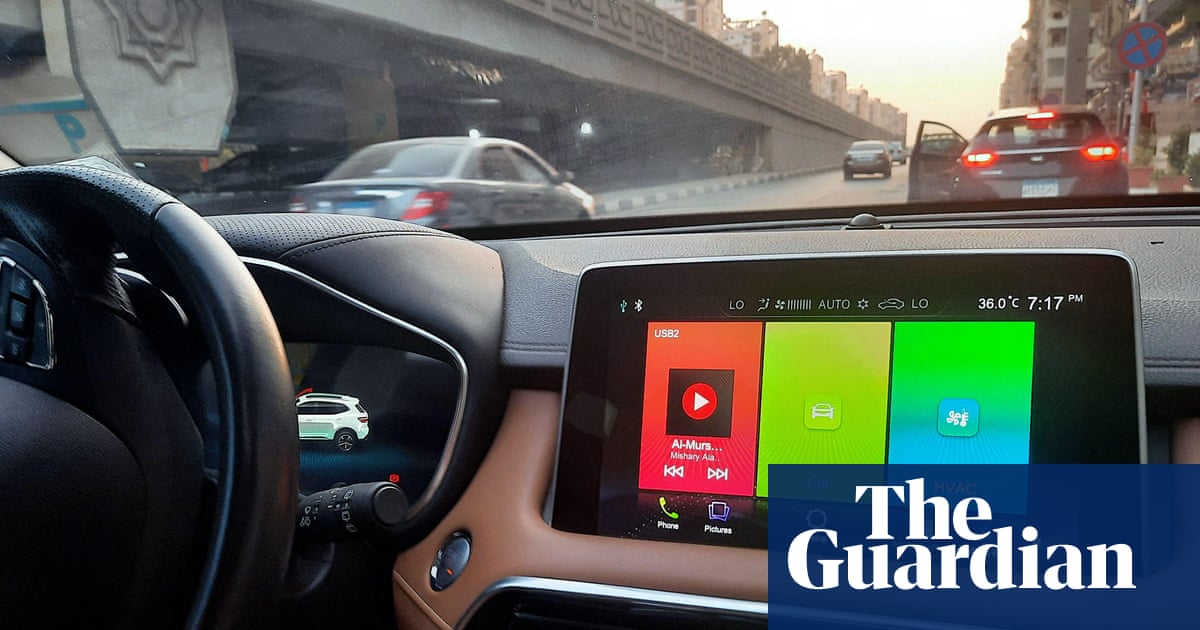
According to the agency, cars have become "increasingly smart," fitted with digital systems that gather information and maintain connections to the internet. That connectivity brings obvious practical gains, from live navigation and remote diagnostics to software updates delivered over the air. The same architecture, however, produces a continuous stream of data.
The AIVD's document groups that information into three broad categories: details about the people inside the vehicle, data about the vehicle itself, and information about objects and people in the surrounding area. In the agency's assessment, a range of parties — state actors among them — could gain access to this material.
Its most striking example concerns the microphones built into modern cabins, which the agency says can be switched on remotely so that conversations inside the car can be listened to. That warning turns an everyday piece of hardware, used for hands-free calls and voice commands, into a potential listening device.
Cameras raise comparable questions. Systems that support parking assistance, reversing views and driver monitoring depend on cameras pointing outward as well as inward, capturing imagery of streets, pedestrians and neighbouring vehicles. GPS receivers, meanwhile, build a detailed record of where a car has been and when — a log that is valuable to anyone interested in the movements of a specific driver.

Why the warning is landing now
The alert reflects broader unease about the car's transformation from a mechanical machine into a computer on wheels. Vehicles now ship with cellular modems, app-based remote control, over-the-air update pipelines and cloud accounts tied to their owners. Each of those layers is a potential route into the cabin.
The Dutch agency framed its message as a call for awareness rather than evidence of a specific ongoing campaign. But it lands at a moment when governments across Europe are scrutinising the supply chains behind connected products, and when the vehicle fleet itself has become a subject of national security interest.
Chinese brands are reshaping the UK market
Context matters here. Chinese-owned brands now account for roughly 15% of all new cars registered in the UK, according to figures from the Society of Motor Manufacturers and Traders. That amounted to almost 175,000 vehicles in the first half of 2026 — more than double the number recorded in the same period a year earlier.
The models behind the surge
Three marques have led the charge: MG, BYD and Jaecoo. The latter's parent company, Chery, is part-owned by the Chinese state. Their appeal rests largely on aggressive pricing paired with generous in-car technology, a combination that has proved potent with British buyers. The Jaecoo 7, for instance, was the UK's bestselling car in March.
Sales success of that scale means the technology described by the AIVD is no longer a niche concern. It is embedded in hundreds of thousands of vehicles that families use daily for school runs, commutes and long motorway journeys.

Legal questions about state access
Parliamentarians have raised concerns that China's national intelligence law requires companies to assist the state's intelligence services when requested. That obligation, critics argue, could in principle extend to data held by a carmaker or its subsidiaries, even when the vehicle is thousands of miles away.
The UK Ministry of Defence has said it is working alongside other government departments "to understand and mitigate any potential threats to national security" arising from vehicles. The wording is cautious, but it signals that the issue has moved beyond consumer-privacy circles into security planning.
Defence contractors tighten their own rules
The unease is not confined to government. Reports last year indicated that British defence firms working for the UK government had warned their staff against connecting or pairing their phones with Chinese-made electric cars. The concern was that Beijing could extract sensitive information from the paired devices, turning a personal vehicle into an unexpected bridge between a secure workplace and an outside network.
The AIVD's intervention effectively extends that logic to the general public. Its message is that any connected car — regardless of badge — collects more about its occupants and surroundings than most drivers realise.

What the alert means for drivers
The agency's central recommendation is awareness. The warning highlights several areas where connected vehicles differ from the cars of a generation ago:
- Microphones in the cabin can potentially be activated remotely, allowing conversations to be monitored.
- Cameras supporting assistance and monitoring functions capture footage of the road, bystanders and nearby property.
- GPS systems create detailed movement histories that reveal routines, destinations and associations.
- Vehicle data is transmitted and stored off-board, meaning it can be held by parties other than the owner.
For motorists, the practical implication is that a car should be understood less as private property and more as a networked device. The questions worth asking are the same ones applied to phones and smart speakers: what is being collected, where does it travel, and under whose legal jurisdiction does it sit?
A wider debate about smart vehicles
It is worth keeping the AIVD's warning in proportion. The agency pointed to risk, not to proven interception, and it deliberately avoided naming a country — a reminder that connected-car vulnerabilities are a feature of the technology itself, not the property of any single manufacturer.
Still, the direction of travel is clear. As vehicles gain more sensors, more processing power and more persistent connections, the gap between a transport product and a surveillance platform narrows. Regulators, intelligence agencies and carmakers are now operating in the same space, and the pressure for clearer rules on vehicle data — who may collect it, who may request it, and how drivers are told — is only likely to grow.
This article is based on reporting by The Guardian. Read the original article.
Originally published on theguardian.com