The End of Digging Up Streets
A Google spinoff called Taara is deploying a technology that could fundamentally change how cities get connected to the internet. Instead of tearing up roads to bury fiber optic cables, Taara's Beam devices transmit data using invisible light between small units mounted on rooftops and poles, achieving speeds of up to 25 gigabits per second with ultra-low latency.
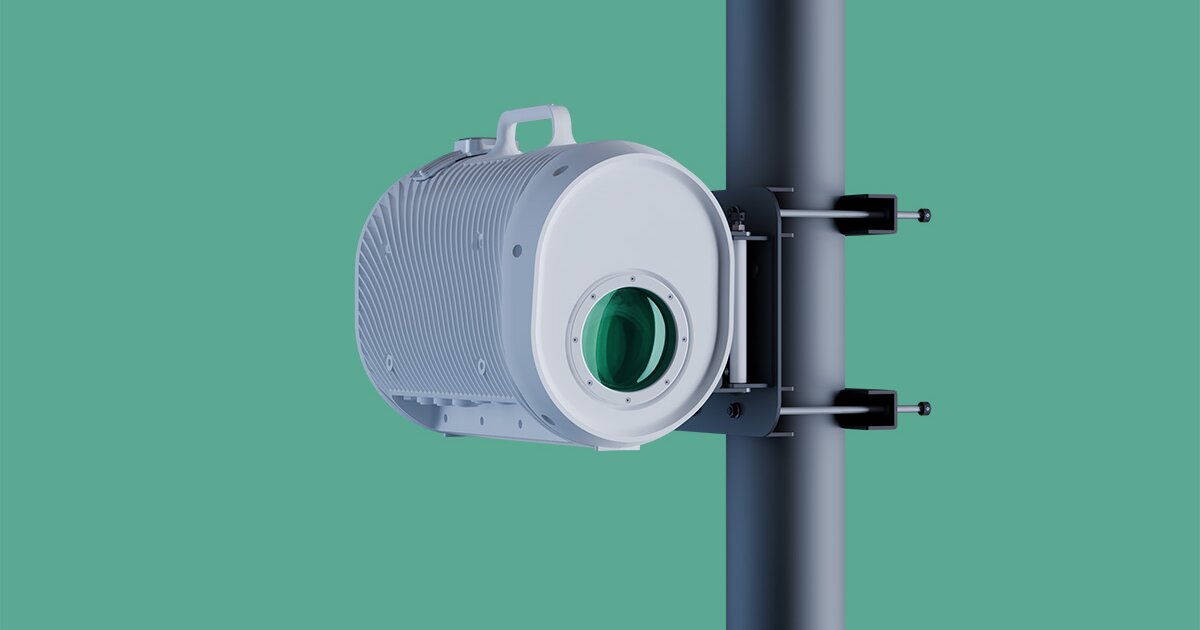
The concept sounds almost too simple: point two devices at each other and let light carry the data. But the engineering behind it is anything but simple. Each Beam device contains an optical phased array mounted on a silicon board with more than a thousand miniature light emitters. This array shapes and steers light beams with enough precision to maintain a stable connection over distances of up to 6.2 miles (10 kilometers), even as buildings sway, temperatures change, and atmospheric conditions fluctuate.
Speed and Specifications
At 25 Gbps bidirectional, Taara's Beam system rivals the fastest fiber optic connections available to commercial and residential customers. For context, the average U.S. broadband speed in 2026 is roughly 200 Mbps — Taara's system is 125 times faster. Even gigabit fiber, the gold standard of home internet, is just four percent of what Beam can deliver.
The physical hardware is remarkably compact. Each unit is roughly the size of a shoebox, weighs 17.6 pounds (8 kilograms), and can go from unpacked to operational in a matter of hours. Compare this to fiber optic deployment, which requires permits to dig up streets, months of construction, and significant capital expenditure. In dense urban environments where underground infrastructure is already crowded with water, gas, and electrical conduits, avoiding excavation altogether is a transformative advantage.

Two Systems for Different Challenges
Taara actually offers two complementary products. The Beam system targets densely populated urban areas where buildings and infrastructure provide abundant mounting points for rooftop and pole installations. Its 6.2-mile range covers most urban scenarios where line-of-sight connections between buildings are feasible.
For more challenging terrain, Taara developed Lightbridge, a longer-range system capable of spanning up to 12 miles (20 kilometers). Lightbridge is designed for connecting communities separated by water, valleys, or other difficult terrain where neither fiber nor standard wireless solutions are practical. According to Taara, Lightbridge infrastructure already operates in 20 countries, providing connectivity in regions where traditional infrastructure would be prohibitively expensive or logistically impossible.
Competing With Satellites and Fiber
Taara enters a connectivity market that is increasingly crowded. SpaceX's Starlink and Amazon's Project Kuiper are racing to provide global broadband coverage via satellite constellations, while traditional fiber providers continue to expand their networks. Taara's proposition is that it sits in a sweet spot between these options.
Compared to satellite internet, Taara offers dramatically lower latency because signals travel a few miles through the atmosphere rather than tens of thousands of miles to orbit and back. Compared to fiber, Taara offers comparable speeds without the enormous upfront infrastructure cost and multi-month deployment timelines. For cities and communities that need high-speed connectivity now, waiting years for fiber to be laid or accepting the latency penalties of satellite service may no longer be necessary.

The AI Infrastructure Connection
Taara positions its technology not just as a consumer broadband solution but as critical infrastructure for the AI era. As artificial intelligence applications demand ever more bandwidth and lower latency for cloud computing, edge processing, and real-time data transfer, the need for high-speed connectivity is growing faster than traditional fiber can be deployed. Taara argues that its rapid deployment model is essential for scaling AI infrastructure globally, particularly in regions where fiber networks are sparse or nonexistent.
This framing aligns with a broader industry trend of recognizing that AI adoption is constrained not just by compute power and model capability, but by the connectivity infrastructure that links users, data centers, and edge devices. Companies that can bridge this connectivity gap stand to capture significant value as the AI economy grows.
From Moonshot to Market
Taara originated as a project within X, Alphabet's moonshot factory, before being spun out as an independent company. The transition from research lab to commercial product is often where ambitious technology projects falter, but Taara's deployment in 20 countries suggests the technology has survived the journey from prototype to operational reality. Whether it can scale from rural and developing-market deployments to the dense, competitive urban markets of North America and Europe will be the next test of its potential.
This article is based on reporting by New Atlas. Read the original article.

Originally published on newatlas.com