Google is treating home electrification as grid infrastructure
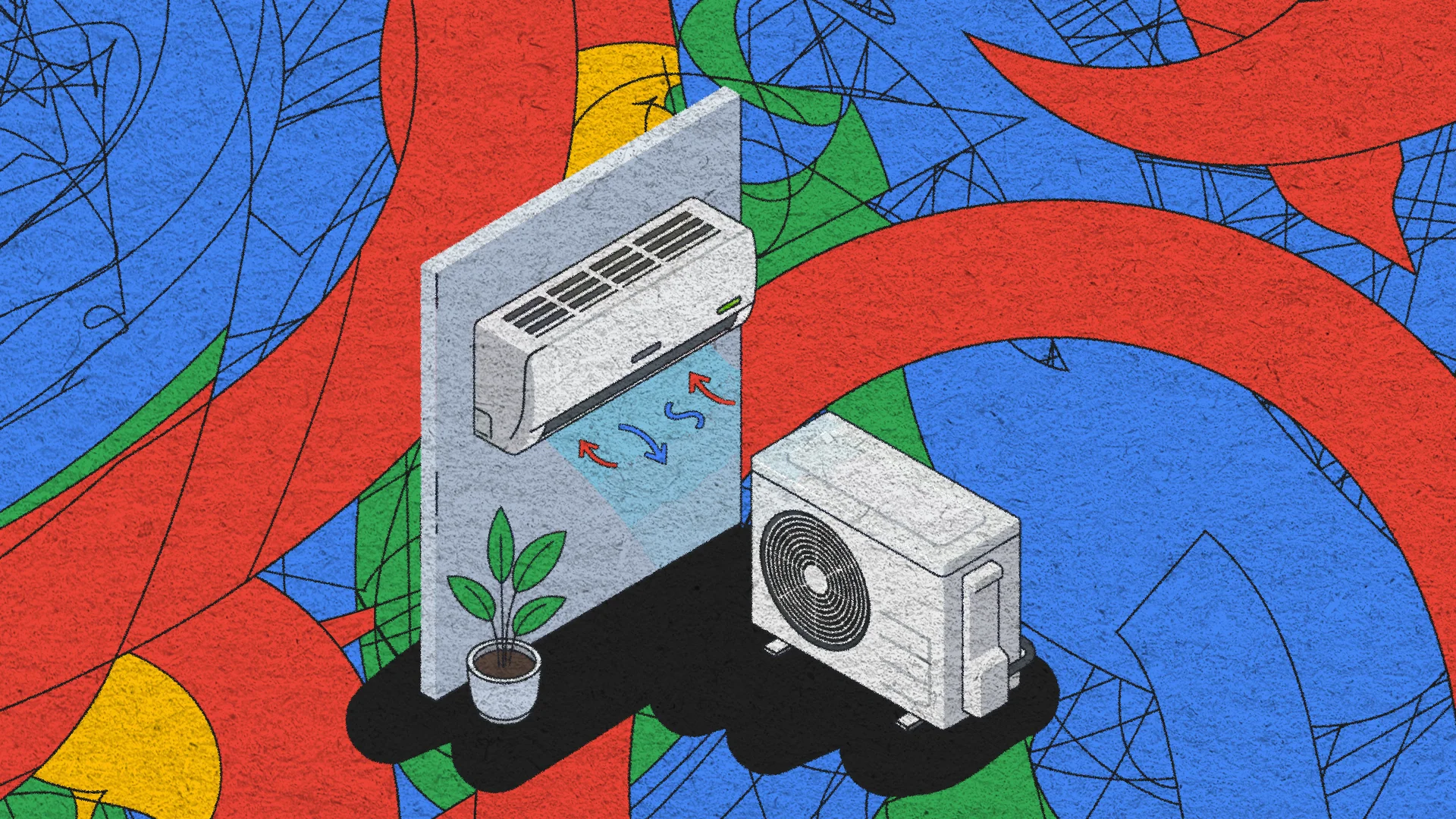
Heat pumps are usually sold as consumer appliances: efficient replacements for furnaces and air conditioners that can cut emissions and lower energy use. A new effort in California is trying to position them differently. Google, working with PG&E and the nonprofit Rewiring America, is supporting a program that uses heat pumps and other connected home devices as tools for relieving stress on the electric grid.
The idea is notable because it links household upgrades to a problem that has become increasingly urgent for utilities, data center operators, and regulators: how to unlock more electricity capacity without waiting years for major new infrastructure. In this case, the first product being rolled out is a Carrier heat pump that includes a battery. It can charge when excess solar power is available on the grid and then draw on that stored energy later, including during periods of heavy demand.
That turns a home comfort device into a flexible energy asset. Instead of simply consuming power whenever a resident needs cooling or heating, the unit can shift when it draws from the grid. In practical terms, that could reduce strain on the system during hot afternoons or other high-demand windows while still serving the household.
The SHARE program aims at a grid bottleneck
The initiative is part of a program called SHARE, short for Smart Home Assets for Reliability and Efficiency. According to the supplied source text, the project is focused on a part of PG&E territory where electricity demand is growing and where the utility is planning a new transmission line. That makes the area a useful test bed: if distributed equipment in homes can reliably provide support there, planners may be able to reduce pressure on parts of the system that would otherwise require more conventional expansion.
Rewiring America proposed the broader concept a year earlier. The argument is that large power users and other stakeholders looking for more grid capacity do not always need to think first in terms of new generating plants. They can also help build virtual power plants, networks of batteries, solar systems, and smart appliances coordinated so they behave collectively like a power resource.
This approach is attractive because it stacks benefits. Utilities get flexible demand and potentially more resilience. Households can gain bill savings, comfort improvements, and some backup capability. And grid planners may get another option besides long lead-time construction.

Why Google is involved
Google’s role makes the program more than a standard utility pilot. The company is helping homeowners acquire new technology, including incentives that can reach as much as $10,000 for some eligible customers, according to the supplied candidate text. It is also funding incentives for certain PG&E customers who already own relevant equipment but are not yet participating in a virtual power plant.
That participation matters because virtual power plants only work at meaningful scale if many devices can be coordinated. PG&E already has experience here, including a partnership with Sunrun that connects more than 100,000 home batteries. The new effort extends that model by trying to bring additional categories of home technology into the same grid-support framework and by directly stimulating adoption in strategic locations.
For Google, the logic aligns with a wider industry problem. Electrification is accelerating, and power demand is rising in many regions. Any approach that can quickly surface new usable capacity is valuable. Supporting flexible devices in homes may be faster, and in some cases cheaper, than waiting for entirely new infrastructure to come online.
How the technology changes the role of a heat pump
A conventional heat pump is already important in the energy transition because it can both heat and cool efficiently, helping homes move away from fossil-fuel heating. The battery-equipped version described in the source text adds another layer. It lets the device charge when the grid has surplus solar generation and use that energy later when the grid is under strain.
That feature addresses one of the persistent challenges in modern electricity systems: supply and demand do not always line up neatly. Solar power can be abundant at some hours and less available at others, while air-conditioning demand can surge at exactly the wrong time. A device that shifts its effective load can help bridge that mismatch.
It also suggests a broader strategic shift. Clean appliances are increasingly being evaluated not just on efficiency or emissions, but on controllability. If a device can respond intelligently to grid conditions, it becomes part of system operations rather than just end use.
What success would look like
The immediate test is operational. PG&E will study how the virtual power plant performs in the target area and whether the additional flexibility does what planners need it to do. The source text says the utility is working with Sunrun, Tesla, and Renew Home to enroll around 20,000 households with existing equipment. Together, those participants are expected to provide 12 megawatts of additional capacity when the grid is strained.
That number is not a replacement for the entire grid, but it is large enough to matter in local reliability planning. More importantly, it would demonstrate that aggregated household devices can contribute measurable, dispatchable value when utilities need it most.
If the concept works, it could influence how utilities, technology companies, and policymakers think about electrification programs. Subsidies for home upgrades might be justified not only as climate or consumer-benefit measures, but also as targeted capacity investments. A heat pump, battery, or smart thermostat could be treated partly as infrastructure.
A wider shift in energy planning
The deeper significance of the program is that it blurs the line between consumer energy products and utility assets. That boundary has been eroding for years as rooftop solar, home batteries, and connected devices spread. SHARE pushes the model further by using incentives and coordination to direct adoption where the grid needs help most.
The result is a more strategic form of electrification. Instead of asking only how to get cleaner equipment into more homes, the program asks where those upgrades create the most system value and how they can be orchestrated after installation. For a grid under pressure from rising demand, that may become an increasingly important question.
- Google, PG&E, and Rewiring America are testing the SHARE program in part of the Bay Area.
- The first highlighted product is a Carrier heat pump with an integrated battery.
- Google is helping fund incentives, including up to $10,000 for some eligible homeowners.
- PG&E is also working with Sunrun, Tesla, and Renew Home to enroll households with existing equipment.
- The utility expects roughly 12 megawatts of added capacity from around 20,000 enrolled homes during grid stress events.
For now, the program remains a proof of concept. But it captures an emerging energy thesis with implications well beyond one utility territory: the fastest way to add useful grid capacity may sometimes be inside people’s homes.
This article is based on reporting by Fast Company. Read the original article.
Originally published on fastcompany.com