A New Kind of Tunnel Boring Machine
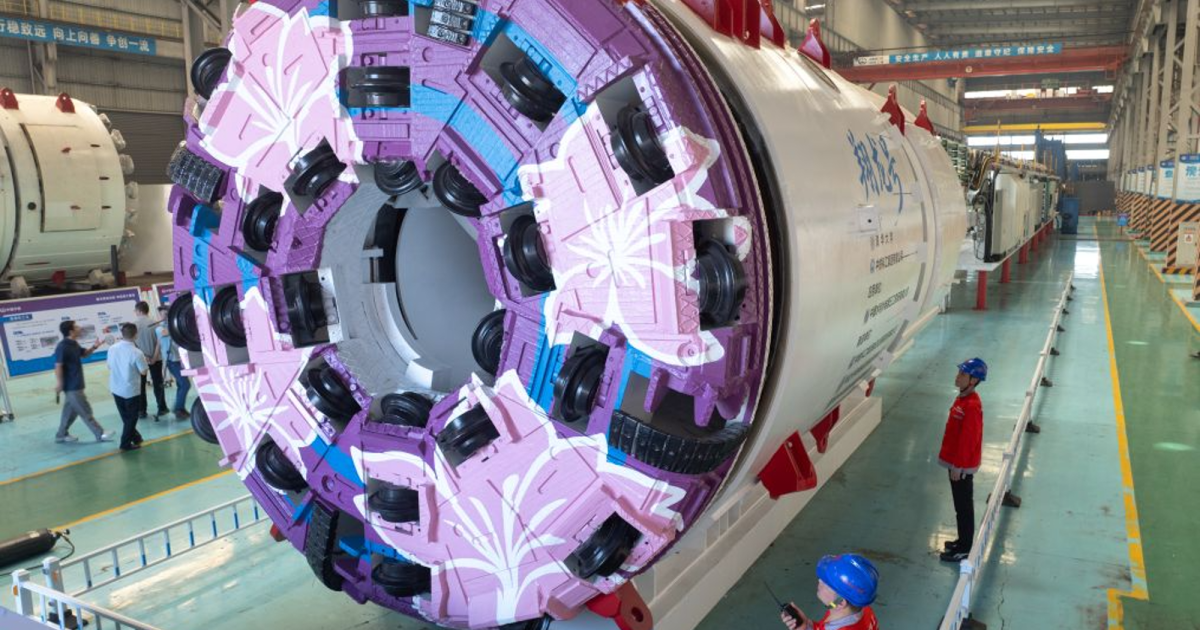
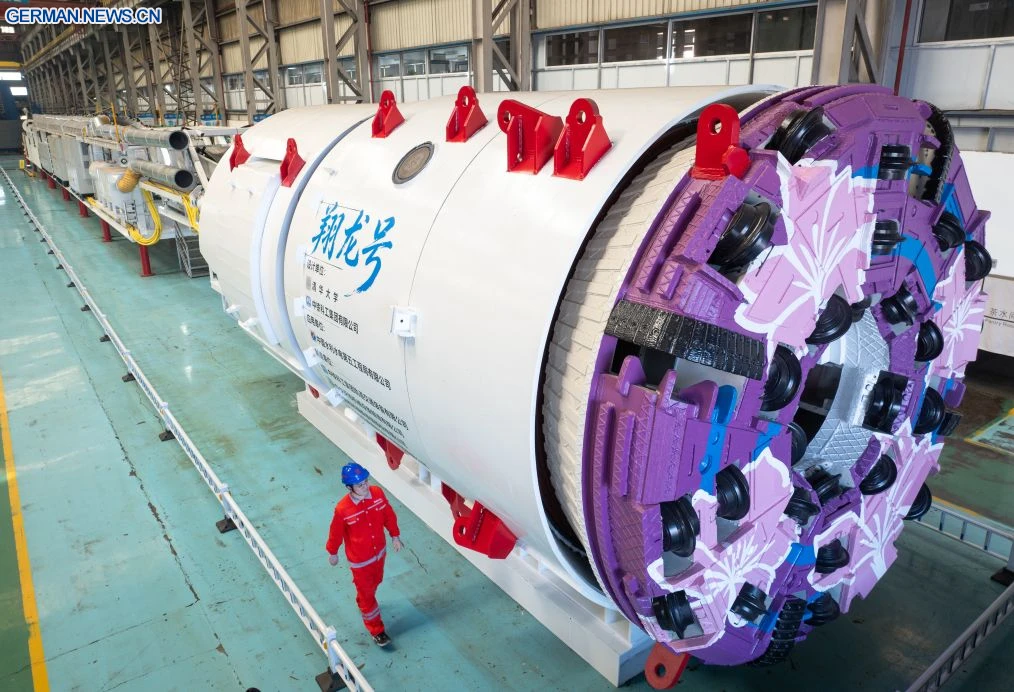
China has unleashed a tunneling machine that blends two distinct excavation methods into one platform. Named Xianglong, or Lucky Dragon, the machine is the world's first Boring and Blasting Machine (BBM), according to a rollout by its developers. It combines a conventional tunnel boring system with the ability to set explosives, allowing it to adapt to changing ground conditions without halting operations.
The machine was developed by China Railway Science & Industry Group (CRSIC) in collaboration with Tsinghua University. With a diameter of 14.76 ft (4.5 m), it is described as the world's largest multi-tool tunneling machine. Its arrival addresses a fundamental challenge in underground construction: how to efficiently tunnel through ground that alternates between loose soil and unyielding rock.
Two Traditional Approaches
Tunnel boring machines generally fall into two categories, each suited to specific geological conditions.
Soft Ground TBMs
Soft ground tunnel boring machines use a large rotating shield equipped with cutting tools. These machines are designed to excavate soil, clay, sand, and gravel, including water-bearing strata. The rotating shield simultaneously cuts the earth and supports the tunnel face, preventing collapses as material is removed by a screw conveyor. To further stabilize unstable ground, operators can inject pressurized bentonite slurry into the face. This allows tunneling to proceed safely in soft, shifting environments.
Hard Rock TBMs
Hard rock TBMs are entirely different. They are built for massive, intact rock formations such as granite, basalt, and sandstone. Instead of a shield, these machines rely on gripping the rock walls to anchor themselves. Heavy-duty cutters grind away at the solid rock slowly and methodically. While this approach is reliable in uniform rock, it is significantly slower than soft ground tunneling and cannot operate in soil, which provides no secure grip for the machine's anchorage.
There exists a third category, a hybrid machine intended for ground that is predominantly soft but interrupted by boulders. As the source notes, this hybrid is a compromise, enabling continued excavation but with reduced efficiency compared to purpose-built machines.
Introducing the Boring and Blasting Machine
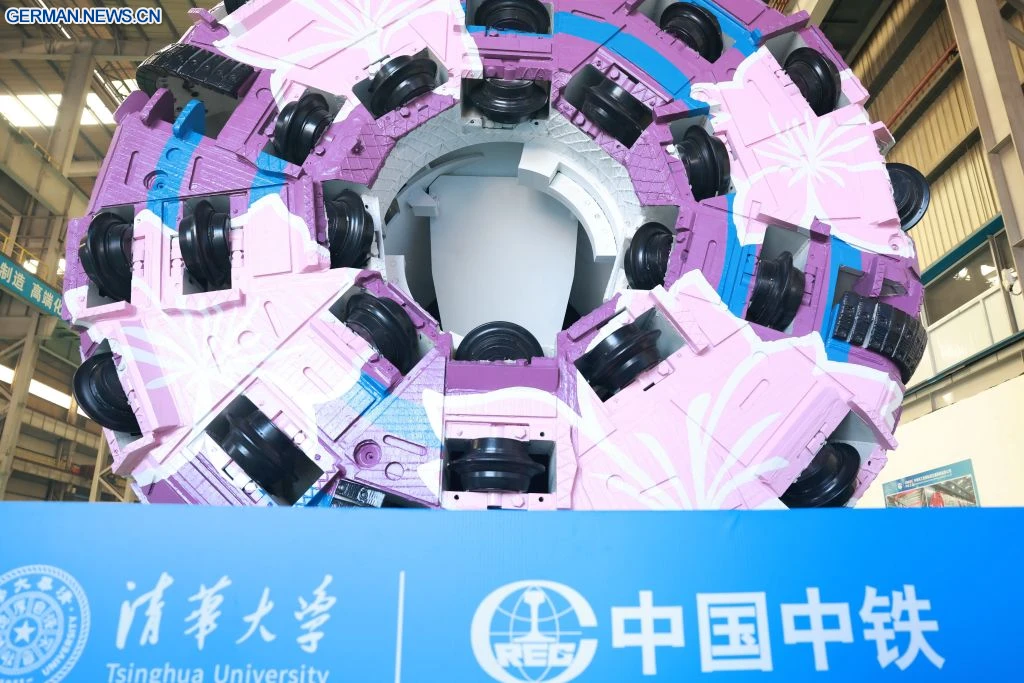
The Xianglong BBM bridges the gap between these methods. Its defining feature is a specially designed cutterhead with a hollow point in the center. This design appears to be a key to its dual functionality. Also, the cutterhead has the ability to pull back slightly against the machine. This retraction is likely what creates space for workers to install explosive charges.
In practical terms, the machine can operate in soft ground like a conventional TBM, using its rotating cutterhead to slice through soil and debris. When the tunnel face transitions to solid rock, the cutterhead retreats, allowing explosives to be placed. After the blast breaks the rock, the machine clears the muck and resumes boring. This combined capability means a single machine can handle mixed geology without the need to stop and bring in specialized equipment.
Why This Matters for Tunneling Projects
Tunneling projects in mountainous or urban regions often encounter varied geology. A tunnel might pass through earth, weathered rock, and fresh bedrock within a few hundred meters. Traditionally, this required either a hybrid machine with limited performance or the use of multiple methods, increasing cost and schedule risk.
The BBM concept offers a possible solution. By integrating blasting into the boring cycle, the Xianglong can maintain progress across diverse terrain. This could prove especially valuable in China, where extensive rail and road networks require thousands of kilometers of tunnels through complex geology.
The machine also reflects a broader trend in engineering: the merging of mechanical and explosive techniques to optimize performance. While controlled blasting has long been used in mining and construction, combining it directly with a tunnel boring machine is a novel approach.
The Road Ahead
The Xianglong was showcased at a rollout ceremony with a number of images displaying its massive cutterhead and shield system. Its developers have not yet released detailed performance metrics, but the successful construction of such a machine proves that the concept is viable.
As the world's first BBM, the Xianglong could set a precedent. If it performs well in real-world conditions, similar machines may be developed elsewhere, particularly for projects that cut through alternating soft and hard ground. The integration of blasting capability also raises questions about safety and precision, as any explosive charge set near a complex machine requires careful coordination. Still, the potential payoff in speed and flexibility is substantial.
China's push into tunnel-boring innovation is part of a wider effort to modernize its infrastructure. By partnering with Tsinghua University, CRSIC is bringing academic research into practical heavy machinery. The result is a machine that could become a mainstay for future tunneling projects, not just in China but around the world.
The Xianglong's name, Lucky Dragon, suggests the hope that it will bring good fortune to the projects it undertakes. Whether that luck plays out will depend on how well it handles the unpredictable underground world. But the very creation of such a hybrid marks a milestone in tunneling technology, providing a new tool for engineers grappling with the most challenging rock and soil conditions.
This article is based on reporting by New Atlas. Read the original article.
Originally published on newatlas.com