The Army turns a long-running laser effort into a procurement program
The U.S. Army has taken a step that directed-energy advocates have pursued for decades: it has moved a high-energy laser effort out of the experimental lane and into a formal acquisition track. According to the supplied source material, the service awarded defense contractor AV a $464.8 million contract to produce 26 laser weapons under the Enduring High Energy Laser, or E-HEL, program. The award is notable not simply for its size, but because the Army described E-HEL as the military’s first formal directed-energy program of record.
That distinction matters. For years, laser weapons have occupied an ambiguous space inside defense planning. They have appeared in prototypes, demonstrations, special notices, and limited deployments tied to urgent operational problems, especially the growing danger posed by inexpensive drones. What they have lacked is the durable procurement structure that signals a system is no longer just a promising technology but something the Pentagon intends to buy, field, sustain, and scale.
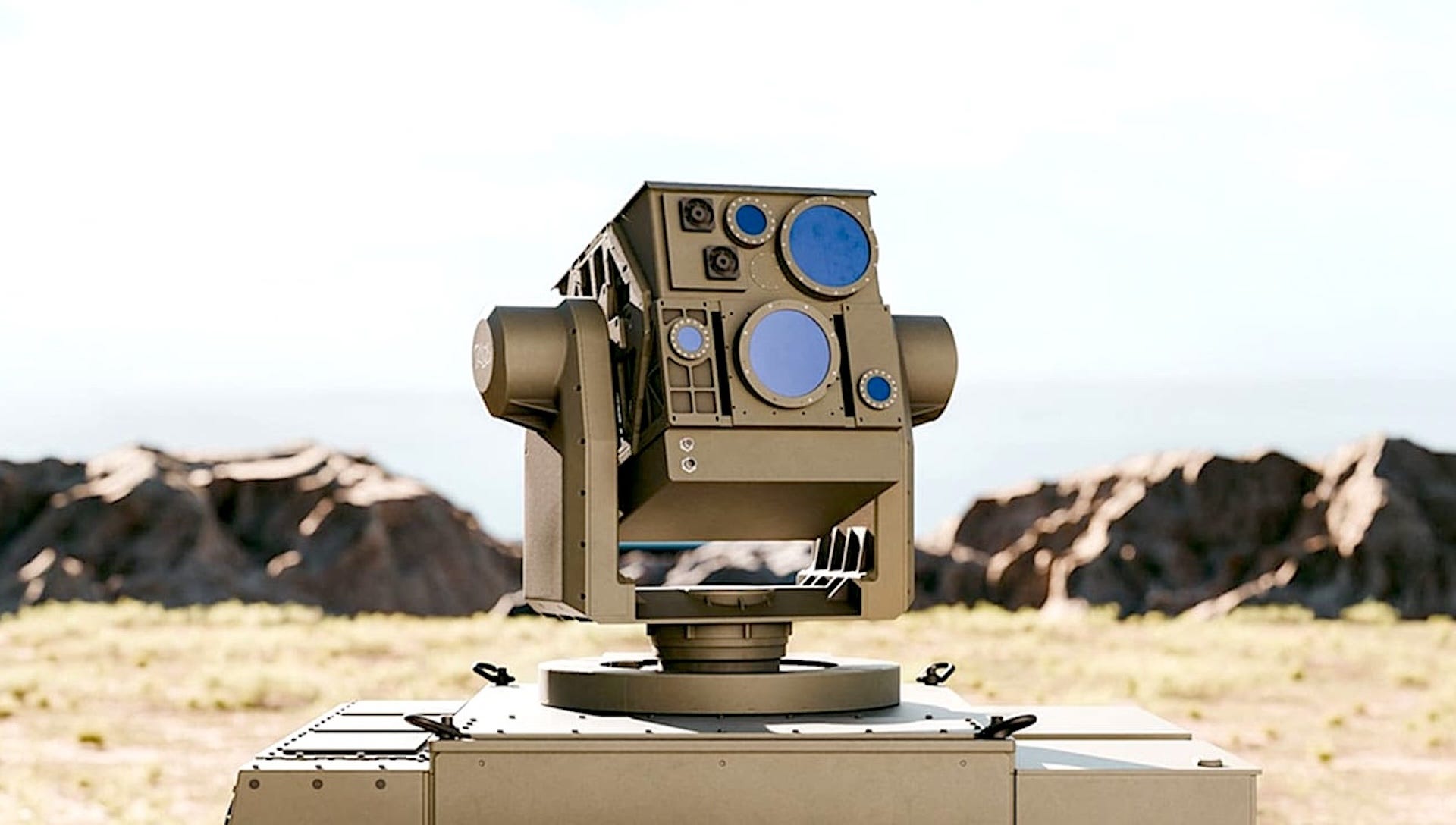
The E-HEL award suggests that threshold has now been crossed. AV said it will deliver 26 30-kilowatt LOCUST X3 laser weapons over the next five years. The stated mission is counter-drone defense, an area where military demand has accelerated as low-cost aerial threats proliferate faster than traditional air-defense economics can comfortably handle. A laser does not eliminate every tactical problem, but the military attraction is clear: if the system works reliably in the field, it offers a reusable defensive tool against targets that can be cheap, numerous, and difficult to engage efficiently with missiles.
Why this contract stands out
The Army has experimented with laser systems before, but experiments do not necessarily become enduring capabilities. In the source text, E-HEL is framed as the point where years of research, testing, and limited operational use begin translating into a repeatable production plan. The award follows earlier reporting that the Army’s fiscal 2027 budget request sought procurement funding for two E-HEL systems at $17.4 million apiece, alongside plans to produce and rapidly field as many as 24 additional units over roughly five and a half years.
That planning trail matters because it shows the award was not an isolated announcement. It links a budget request, a draft solicitation path, and an identified production quantity to a specific operational need. In acquisition terms, that is more consequential than another test firing or concept demonstration. It means the Army is beginning to treat high-energy lasers less as one-off technology bets and more as equipment it expects to integrate into force structure.
AV’s chief executive, Wahid Nawabi, called the award a defining moment and described it as a transition from experimentation to fielded capability. Corporate language aside, the underlying point is supported by the facts in the source material. A five-year production arrangement for 26 units is different in character from the trial deployments and developmental efforts that previously defined much of the laser weapon story.
The counter-drone logic
The operational backdrop is straightforward. The Army and the broader Defense Department have spent years confronting the threat of low-cost weaponized drones. Those threats have altered the cost equation of air defense. Defending against relatively inexpensive unmanned aircraft with high-priced interceptors is difficult to sustain at scale, especially when attackers can launch multiple targets or use cheap systems to force a defensive response.
The E-HEL program is aimed directly at that mismatch. The 30-kilowatt LOCUST X3 is described in the source text as the latest version of a system American service members have already used in counter-drone missions in the Middle East and along the U.S. southern border. That operating history does not mean the problem is solved, but it does indicate the Army is building on a family of systems that has moved beyond the white-paper phase.
The modular framing is also significant. The Army reportedly envisioned E-HEL as a system that incorporates design and sustainment lessons from earlier efforts. That implies the service is not just buying a beam generator; it is trying to standardize a maintainable capability informed by what earlier deployments and tests exposed about logistics, integration, and performance.
From prototypes to a system family
The path to E-HEL runs through previous LOCUST-based programs. The source material cites two in particular: the 20-kilowatt Palletized-High Energy Laser, or P-HEL, and the Army Multi-Purpose High Energy Laser, or AMP-HEL. P-HEL conducted live-fire testing from the deck of the aircraft carrier USS George H.W. Bush in October 2025. AMP-HEL, mounted on Army vehicles including the Infantry Squad Vehicle and Joint Light Tactical Vehicle, has undergone domestic testing over the past year.
Those earlier systems show how the Army and industry have been trying to adapt laser weapons to different deployment models. One configuration emphasizes a more palletized, transportable form. Another explores vehicle integration for maneuver units. E-HEL appears to consolidate lessons from those efforts into a program intended for broader production and fielding.
That does not automatically resolve the technical and tactical challenges that have historically slowed directed-energy adoption. Reliability, power management, weather effects, sustainment, and realistic deployment conditions remain central questions for any operational laser system. But the Army’s decision to award a production contract indicates it believes the technology has matured enough to justify a formal next step.
What this means for defense procurement
E-HEL may end up being remembered less as the moment laser weapons suddenly arrived than as the moment the Pentagon changed how it buys them. A program of record carries institutional weight. It creates a framework for budgeting, contracting, planned fielding, and sustainment. It also sends a signal to other parts of the defense ecosystem that directed energy is no longer confined to demonstration portfolios.
The contract therefore matters at two levels. At the tactical level, it is about countering drones with a potentially more scalable defensive tool. At the institutional level, it is about whether the Pentagon can convert a heavily discussed future technology into a real procurement line with measurable output.
The source text does not claim lasers will replace conventional air defenses, nor does it suggest they have solved every battlefield problem associated with unmanned threats. What it does show is that the Army has moved from studying and trialing the concept to ordering systems in meaningful numbers. That shift alone marks one of the clearest milestones yet in the long effort to operationalize directed energy.
- The U.S. Army awarded AV a $464.8 million contract under the Enduring High Energy Laser program.
- AV said it will produce 26 30-kilowatt LOCUST X3 laser weapons over five years.
- The Army described E-HEL as the military’s first formal directed-energy program of record.
- The program is aimed at countering low-cost weaponized drones.
This article is based on reporting by Fast Company. Read the original article.
Originally published on fastcompany.com