
Taiwan's HIMARS Live-Fire Drills Signal New Deterrent to China's Amphibious Assault Plans
Taiwan has conducted its first live-fire exercise using the U.S.-made M142 High Mobility Artillery Rocket System (HIMARS), marking a significant milestone in the island's self-defense capabilities. The drills, which took place in early June 2026, are seen as a direct response to China's growing amphibious assault capabilities and a signal that Taiwan is enhancing its deterrence posture.
Background on HIMARS and Its Strategic Importance
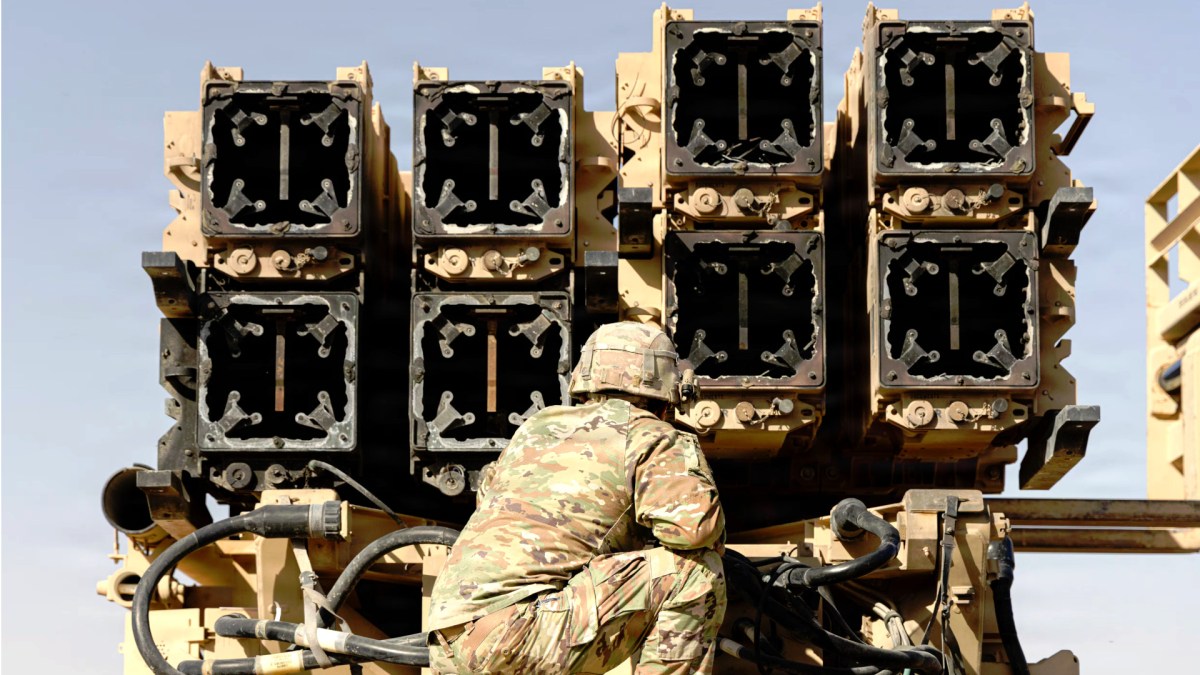
The M142 HIMARS is a highly mobile, wheeled artillery system capable of launching guided rockets and missiles. It can fire the M31 Guided Multiple Launch Rocket System (GMLRS) with a range of up to 70 kilometers, as well as the Army Tactical Missile System (ATACMS) with a range of up to 300 kilometers. The system's mobility allows it to shoot and scoot, making it difficult for enemy forces to target. Taiwan's acquisition of HIMARS is part of a broader effort to modernize its military and counter potential Chinese aggression.
Details of the Live-Fire Exercise
The live-fire exercise involved multiple HIMARS launchers firing precision-guided rockets at simulated targets. The drills were designed to test the system's accuracy, mobility, and integration with Taiwan's existing command and control networks. According to military sources, the exercise was successful, with all rockets hitting their intended targets. The drills also included coordination with reconnaissance units and air defense assets to simulate a realistic combat scenario.
Implications for Cross-Strait Deterrence
The HIMARS live-fire exercise sends a clear message to China that Taiwan is capable of striking amphibious assault forces before they can land on the island. The system's long range and precision allow it to target landing craft, supply ships, and staging areas, potentially disrupting a Chinese invasion. Military analysts believe that HIMARS could be a game-changer in the Taiwan Strait, as it provides a cost-effective way to hold Chinese forces at risk. The drills also demonstrate Taiwan's commitment to self-defense and its ability to integrate advanced U.S. weaponry.
China's Response and Regional Reactions
China has condemned the exercise, calling it a provocation and a violation of the One-China principle. Chinese state media have warned that such actions could escalate tensions and lead to unintended consequences. In response, China has conducted its own military drills in the Taiwan Strait, including amphibious assault exercises and live-fire training. Regional allies, including Japan and the United States, have expressed support for Taiwan's right to self-defense. The U.S. State Department reiterated its commitment to providing Taiwan with the means to defend itself, while urging restraint from both sides.
Technical Capabilities of HIMARS
- Mobility: HIMARS is mounted on a 5-ton truck chassis, allowing it to travel at speeds up to 85 km/h and be rapidly redeployed after firing.
- Firepower: It can carry a single pod of six GMLRS rockets or one ATACMS missile. The GMLRS has a circular error probable (CEP) of less than 10 meters.
- Reload Time: The system can be reloaded in under 10 minutes by a crew of three.
- Range: GMLRS reaches 70 km, while ATACMS can strike targets up to 300 km away.
- Guidance: GPS and inertial navigation systems ensure high accuracy in all weather conditions.
Strategic Context: Taiwan's Defense Modernization
Taiwan has been steadily modernizing its military in response to China's increasing military buildup. In addition to HIMARS, Taiwan has acquired F-16V fighter jets, M1A2T Abrams tanks, and advanced air defense systems. The island has also invested in indigenous defense technologies, including submarines and missile systems. The HIMARS live-fire exercise is part of a broader strategy to create a layered defense that can deter or defeat an amphibious assault. Taiwan's defense officials have stated that the goal is to make any invasion costly and uncertain.
Challenges and Limitations
Despite its capabilities, HIMARS is not a silver bullet. The system relies on accurate targeting data, which may be difficult to obtain in a contested environment. China's electronic warfare capabilities could potentially jam GPS signals, reducing accuracy. Additionally, HIMARS launchers are vulnerable to counter-battery fire if they remain in one position too long. Taiwan must also ensure a sufficient supply of rockets and missiles, which may be limited by U.S. production capacity. Nevertheless, the system adds a new dimension to Taiwan's defense and complicates China's planning.
Future Prospects
Taiwan plans to conduct additional HIMARS live-fire exercises in the coming months, including night operations and joint drills with other branches of the military. The U.S. is expected to provide further training and support, including the possible sale of longer-range ATACMS missiles. Some analysts suggest that Taiwan could eventually deploy HIMARS on offshore islands to extend its reach. The success of the initial exercise has boosted confidence among Taiwan's military and public, though challenges remain.
Conclusion
Taiwan's first HIMARS live-fire exercise represents a significant step in its efforts to deter Chinese amphibious assault. The system's mobility, precision, and range make it a potent tool for disrupting an invasion force. While not a panacea, HIMARS enhances Taiwan's deterrence and signals to China that any attack would face serious resistance. As tensions in the Taiwan Strait continue, such capabilities will be crucial for maintaining stability and preventing conflict.
This article is based on reporting by Interesting Engineering. Read the original article.
Originally published on interestingengineering.com