Immunotherapy has become a cornerstone of modern cancer care, yet the field still struggles with a stubbornly simple question: which patients will actually benefit? A study highlighted in Nature Medicine on 13 September 2026 contends that the answer lies not in any single test, but in many working together. According to the published record, the work shows that integrating numerous multimodal, patient-level biomarkers enhances the prediction of cancer immunotherapy response.
Why Single Biomarkers Keep Falling Short
For years, the clinical conversation around immunotherapy response has leaned on a handful of familiar measurements. Tumor expression of immune checkpoint proteins, mutational burden, mismatch-repair status and a small set of clinical variables have all been used to guess who is likely to respond. Each carries real signal. Each also carries substantial noise, and none captures the full picture of how a tumor and an immune system negotiate with one another.
That gap matters clinically. Immunotherapies can produce durable, sometimes curative responses, but they also expose patients to immune-related toxicities and consume considerable resources. A prediction tool that is merely directionally correct leaves physicians weighing real harms against uncertain benefits. The Nature Medicine article's premise is that the missing ingredient is breadth: rather than searching for a better single marker, capture many kinds of patient-level data and let them inform one another.
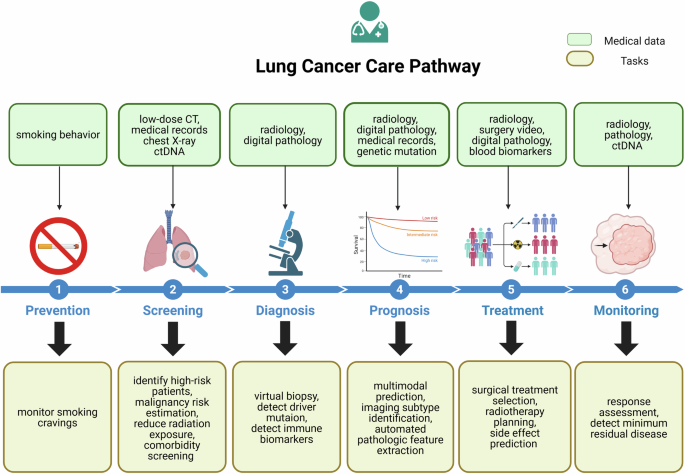
What "Multimodal" Means in Practice
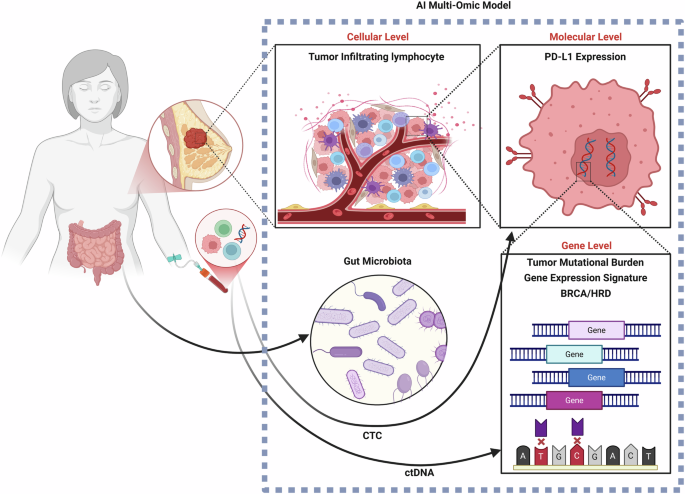
The term multimodal is doing a lot of work here. In the context of immunotherapy prediction, it refers to biomarkers drawn from fundamentally different measurement technologies and biological layers, each describing a different facet of the same patient.
- Genomic features — mutations, copy-number changes and mutational signatures within the tumor.
- Transcriptomic profiles — which genes the tumor and surrounding immune cells are expressing, and in what proportions.
- Proteomic and circulating markers — proteins and cell populations measurable in blood.
- Imaging characteristics — radiologic features that reflect tumor burden, heterogeneity and the tumor microenvironment.
- Clinical and demographic variables — the patient-level context that shapes both exposure and tolerance.
Individually, each of these streams is partial and noisy. Together, the argument goes, they begin to describe a system rather than a snapshot.
The Murmuration Metaphor
The article's title borrows from the language of starling flocks. A murmuration has no conductor: each bird follows local rules, yet the group moves as a single coherent shape, shifting direction faster than any centralized control could manage. The analogy is deliberate. No single biomarker governs whether a patient responds to immunotherapy. Instead, many modest signals, aggregated and allowed to interact, can produce a prediction more stable — and more accurate — than any of its parts.
That framing is important because it reframes the research agenda. The goal is not to crown a new champion biomarker, but to build systems that can hold heterogeneous measurements together without collapsing them prematurely into a single number.

Why Integration Should Beat Isolated Markers
The biology is layered
Response to immunotherapy depends on whether the immune system can recognize the tumor, reach it, and sustain an attack. Those conditions are governed at different levels — the tumor's antigenic landscape, the local immune microenvironment, systemic immune competence, and the host's tolerance thresholds. A marker that samples only one level is structurally blind to the others.
Aggregation suppresses noise
Any single assay carries technical variability, sampling error and biological chance. When several partially independent measurements point the same direction, the shared signal survives and the idiosyncratic noise cancels out. That is the statistical case for multimodality, and it echoes the logic behind ensemble methods used across data science.
Missing data stops being fatal
Real-world patients rarely have every test performed. Multimodal frameworks can be designed to degrade gracefully, still generating useful estimates when a modality is unavailable — a practical advantage that rigid single-marker rules typically lack.
Implications for Care and Clinical Trials
Smarter trial enrichment
If multimodal integration improves discrimination between likely responders and non-responders, trial designers gain a sharper tool for enrichment — the practice of enrolling patients most likely to show benefit. Smaller, faster trials with stronger signals become conceivable, which matters for rare tumor types where large enrollment is impractical.
Toward composite scores in the clinic
A validated multimodal score would not replace clinical judgment. It would give oncologists a structured, quantitative input to place alongside performance status, comorbidity and patient preference — particularly in the ambiguous middle ground where current markers offer little guidance.
Discovery as a side effect
Integration also carries an interpretive payoff. When a model leans on an unexpected combination of features, that pattern itself becomes a hypothesis about tumor-immune biology worth testing at the bench.

The Caveats That Still Apply
- Validation: performance in a study cohort does not guarantee performance across institutions, ancestries and treatment regimens.
- Standardization: assays must be reproducible and comparable before they can be combined reliably across sites.
- Cost and access: broad multimodal profiling is expensive, and the added predictive power must justify the added burden on patients and laboratories.
- Interpretability: complex integrative models can be difficult to explain to patients or regulators, which slows adoption.
The Bottom Line
The message from this Nature Medicine article is less about a single discovery than about a shift in method. Immunotherapy response is a systems-level phenomenon, and the field's measurement strategy is beginning to match that reality — moving from one test to a coordinated murmuration of them. The promise is a more honest prediction of who benefits. The work that remains is the unglamorous kind: replication, standardization and prospective trials that prove the ensemble travels well beyond the dataset that inspired it.
This article is based on reporting by Nature Medicine. Read the original article.
Originally published on nature.com