From Automaker to Energy Company
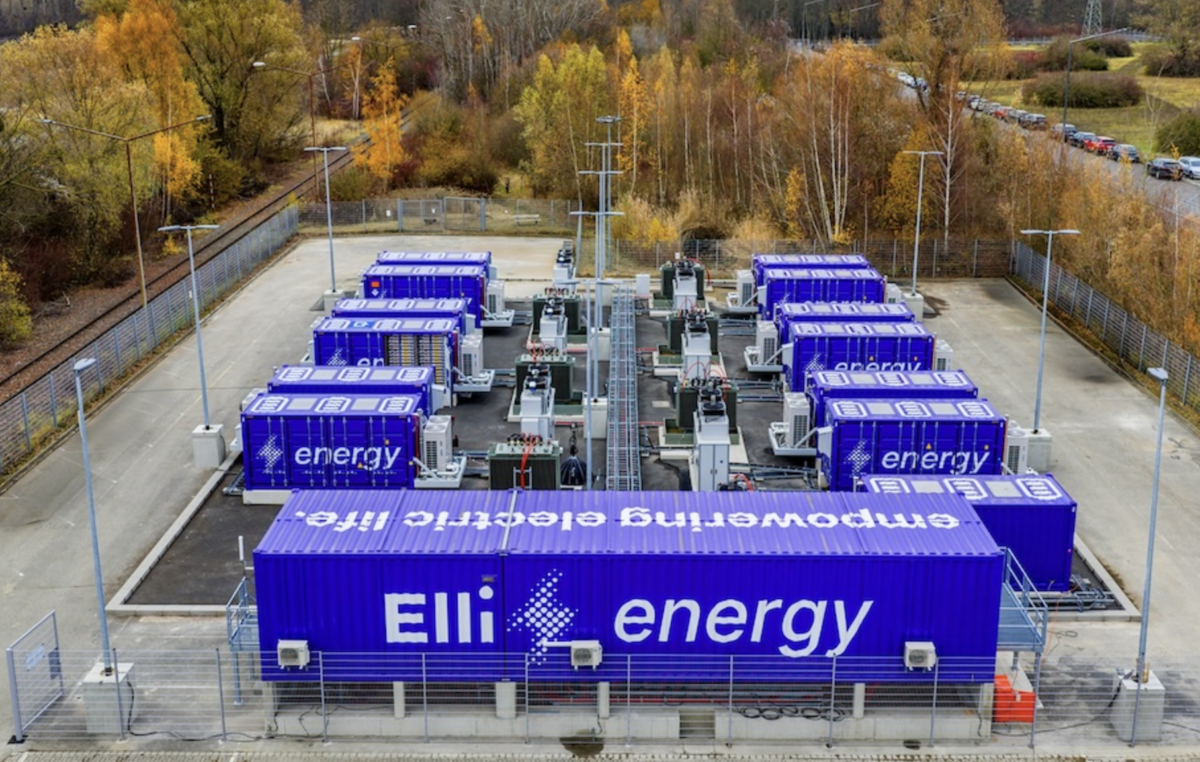
Volkswagen has connected its first large-scale stationary battery storage system at its Salzgitter facility in Germany, marking the beginning of an ambitious plan to integrate battery cell production, grid-scale energy storage, and energy trading within a single corporate structure. The 20 MW/40 MWh system represents a significant step in the automaker's transformation beyond vehicle manufacturing into the broader energy sector.
The Salzgitter installation uses battery cells produced at the same facility by PowerCo, Volkswagen's battery subsidiary. This vertical integration, from cell manufacturing to grid-scale deployment, gives Volkswagen a unique position in the rapidly growing stationary storage market and creates a new revenue stream for its battery operations.
How the System Works
The battery storage system consists of standardized battery containers filled with cells manufactured on the PowerCo production lines at the Salzgitter gigafactory. The system is connected to the local electricity grid and can perform multiple functions:
- Storing excess renewable energy when generation exceeds demand
- Releasing stored energy during peak demand periods
- Providing frequency regulation services to stabilize the grid
- Participating in energy trading markets to generate revenue
- Serving as a buffer for the factory's own energy consumption
The 40 MWh capacity is sufficient to power approximately 4,000 average German households for one hour or to provide two hours of output at the system's full 20 MW power rating. While modest compared to the largest grid-scale storage projects, the installation is designed as a proof of concept for much larger deployments planned for the future.

Strategic Significance
The storage project reflects Volkswagen's recognition that the transition to electric vehicles creates opportunities beyond car manufacturing. As the company invests billions of euros in battery production capacity through PowerCo, it makes strategic sense to find additional markets for those batteries beyond automotive applications.
Stationary energy storage is one of the fastest-growing segments of the energy industry, driven by the increasing penetration of intermittent renewable energy sources like wind and solar. As grids incorporate more renewable generation, the need for large-scale storage to balance supply and demand grows proportionally. Volkswagen sees an opportunity to leverage its battery manufacturing capabilities to serve this market.
The energy trading dimension adds another layer of value. By actively trading stored energy on wholesale markets, Volkswagen can optimize the financial returns on its storage investments, buying electricity when prices are low and selling when they are high. This arbitrage opportunity is particularly attractive in Germany, where electricity prices can vary dramatically throughout the day as renewable generation fluctuates.
The Broader EV-to-Grid Vision
Volkswagen's stationary storage ambitions are part of a broader vision that includes vehicle-to-grid technology, where electric vehicles themselves serve as distributed energy storage when parked and plugged in. The company has been developing bidirectional charging capabilities for its electric vehicles, which would allow them to feed energy back to the grid or to a home during peak demand.
Combining stationary storage at manufacturing facilities with a fleet of millions of connected electric vehicles could give Volkswagen a significant presence in the energy sector. The company has described this as a transition from being purely an automaker to becoming an integrated mobility and energy company.
Competition and Market Context
Volkswagen is not the first automaker to enter the stationary storage market. Tesla has been building and deploying large-scale battery storage systems through its Tesla Energy division for several years, with projects ranging from individual home batteries to massive grid-scale installations. BMW, Nissan, and other automakers have also explored second-life battery applications, where batteries retired from vehicles are repurposed for stationary storage.
However, Volkswagen's approach of manufacturing cells specifically for stationary applications alongside automotive cells, rather than relying solely on second-life batteries, could give it advantages in terms of performance and reliability. Purpose-built stationary storage cells can be optimized for the cycling patterns and operational demands of grid applications, which differ from those in vehicles.
Looking Forward
The Salzgitter installation is explicitly described as the first in a planned series of large-scale storage projects. Volkswagen has indicated that it intends to deploy similar systems at other manufacturing facilities and potentially at standalone sites as well. The company's PowerCo subsidiary is building gigafactories in Germany, Spain, and Canada, each of which could serve as a hub for both automotive battery production and stationary storage deployment.
As the energy transition accelerates and the demand for grid-scale storage continues to grow, Volkswagen's early entry into the market positions it to capture a share of what is expected to become a multi-hundred-billion-dollar global industry. The Salzgitter project is a small but significant first step in that direction.
This article is based on reporting by PV Magazine. Read the original article.
Originally published on pv-magazine.com