A Surprising Recovery Mechanism
Researchers from Nanchang University and Trina Solar have discovered that TOPCon solar modules exhibit a remarkable self-healing behavior: after experiencing performance degradation under ultraviolet exposure, the modules can fully recover their output through a process of light soaking. The finding, which challenges conventional assumptions about UV damage in solar panels, could lead to revised industry testing standards and greater confidence in TOPCon technology's long-term reliability.
TOPCon, short for tunnel oxide passivated contact, has emerged as the dominant next-generation solar cell architecture, rapidly displacing older PERC technology in manufacturing lines worldwide. The technology achieves higher efficiencies by using an ultra-thin tunnel oxide layer and a doped polysilicon contact to reduce electron recombination losses at the cell surface. However, questions about its long-term stability under various environmental stresses have persisted as the technology scales.
The Degradation-Recovery Cycle
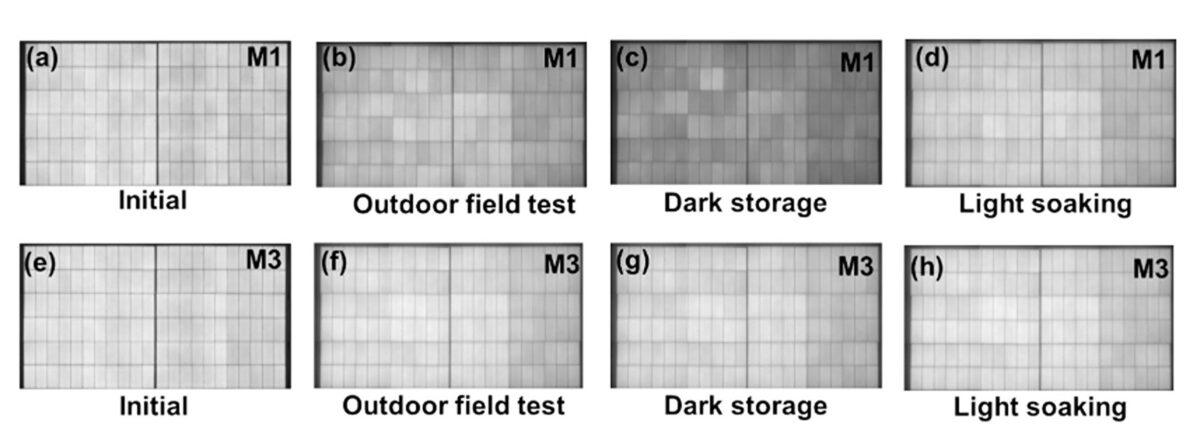
The research team subjected TOPCon modules to accelerated UV exposure tests designed to simulate years of outdoor operation in a compressed timeframe. As expected, the modules showed measurable performance degradation during UV exposure, with power output declining by several percent — a result consistent with previous studies that raised concerns about TOPCon's UV stability.
What the researchers discovered next was unexpected. When the UV-stressed modules were subsequently exposed to broad-spectrum light — simulating normal outdoor operating conditions — their performance recovered fully. The degradation proved to be metastable rather than permanent, meaning the UV-induced changes to the cell's electronic properties were reversible under normal operating illumination.
This degradation-recovery cycle could be repeated multiple times without apparent permanent damage, suggesting that TOPCon modules in real-world installations would naturally self-heal during normal daytime operation, even as UV exposure causes temporary performance dips.

What Causes the Metastable Behavior
The researchers attribute the metastable degradation to reversible changes in the charge state of defects at the interface between the tunnel oxide layer and the silicon substrate. UV photons, which carry more energy than visible light, can alter the electronic configuration of these interface defects, temporarily increasing recombination losses and reducing cell efficiency.
During light soaking with broad-spectrum illumination, the additional energy from visible and infrared photons helps the defects return to their original, lower-recombination state. The process is driven by the injection of charge carriers into the silicon, which stabilizes the interface and restores the passivation quality that gives TOPCon cells their high efficiency.
This mechanism is distinct from the light-induced degradation observed in PERC cells, which involves different defect types and is partially irreversible. The TOPCon recovery mechanism appears to be more complete, suggesting that the technology may actually be more stable than its predecessor in long-term outdoor operation.
Implications for Testing Standards
Current industry testing standards for UV durability, codified in IEC 61215, evaluate module performance after UV exposure but do not include a subsequent light-soaking recovery step. This means that modules exhibiting metastable UV degradation may appear to fail UV tests even though their real-world performance would be unaffected.
The researchers argue that testing protocols should be updated to include a light-soaking step after UV exposure, providing a more accurate assessment of how modules will perform in actual installations. Without this update, UV test results may unfairly penalize TOPCon technology and create misleading comparisons with other cell architectures that show different degradation profiles.
Industry standards organizations, including the International Electrotechnical Commission, periodically review and update testing protocols, and the new findings could inform the next revision cycle.
Real-World Energy Yield Unaffected
To validate their laboratory findings, the researchers analyzed energy yield data from TOPCon installations in the field. Their analysis confirmed that the UV-induced degradation observed in accelerated tests did not translate into measurable energy yield losses in real-world conditions, consistent with the self-healing mechanism operating continuously during normal operation.
This finding is important for the bankability of TOPCon technology. Solar project developers and financiers rely on degradation rate assumptions to model 25-to-30-year energy production and revenue projections. If UV degradation were permanent, it would increase the assumed degradation rate and reduce the projected financial returns of TOPCon-based projects. The demonstration that UV effects are metastable and self-healing removes this concern.
A Boost for TOPCon Adoption
The self-healing discovery arrives at a critical moment for the solar industry. TOPCon has rapidly gained manufacturing market share, with major producers including Trina Solar, Jinko Solar, and Longi converting production lines from PERC to TOPCon. Confidence in the technology's long-term reliability is essential for this transition to continue, and the new research provides a significant data point in TOPCon's favor. As the solar industry pushes toward higher efficiencies and lower costs, understanding the real-world durability of new cell architectures becomes as important as their peak laboratory performance.
This article is based on reporting by PV Magazine. Read the original article.
Originally published on pv-magazine.com