Big Tech’s power problem is becoming an infrastructure problem
Meta’s agreement with Noon Energy is notable not only for its size, but for what it says about the changing relationship between artificial intelligence and the power system. Energy Monitor reports that Meta has reserved up to 1 gigawatt of energy storage capacity, equivalent to 100 gigawatt-hours, from Noon Energy for its data centers.
The arrangement begins with a 25MW/2.5GWh project expected to conclude by 2028. After that initial phase, the companies expect to proceed toward the much larger 1GW/100GWh supply arrangement. The stated aim is to support data-center operations with continuous power from renewable sources, especially during periods when renewable generation is low.
That makes this more than a clean-energy procurement headline. It is an example of how AI-era computing demand is forcing major technology companies to seek not just more power, but more durable and controllable power.
Why the duration matters
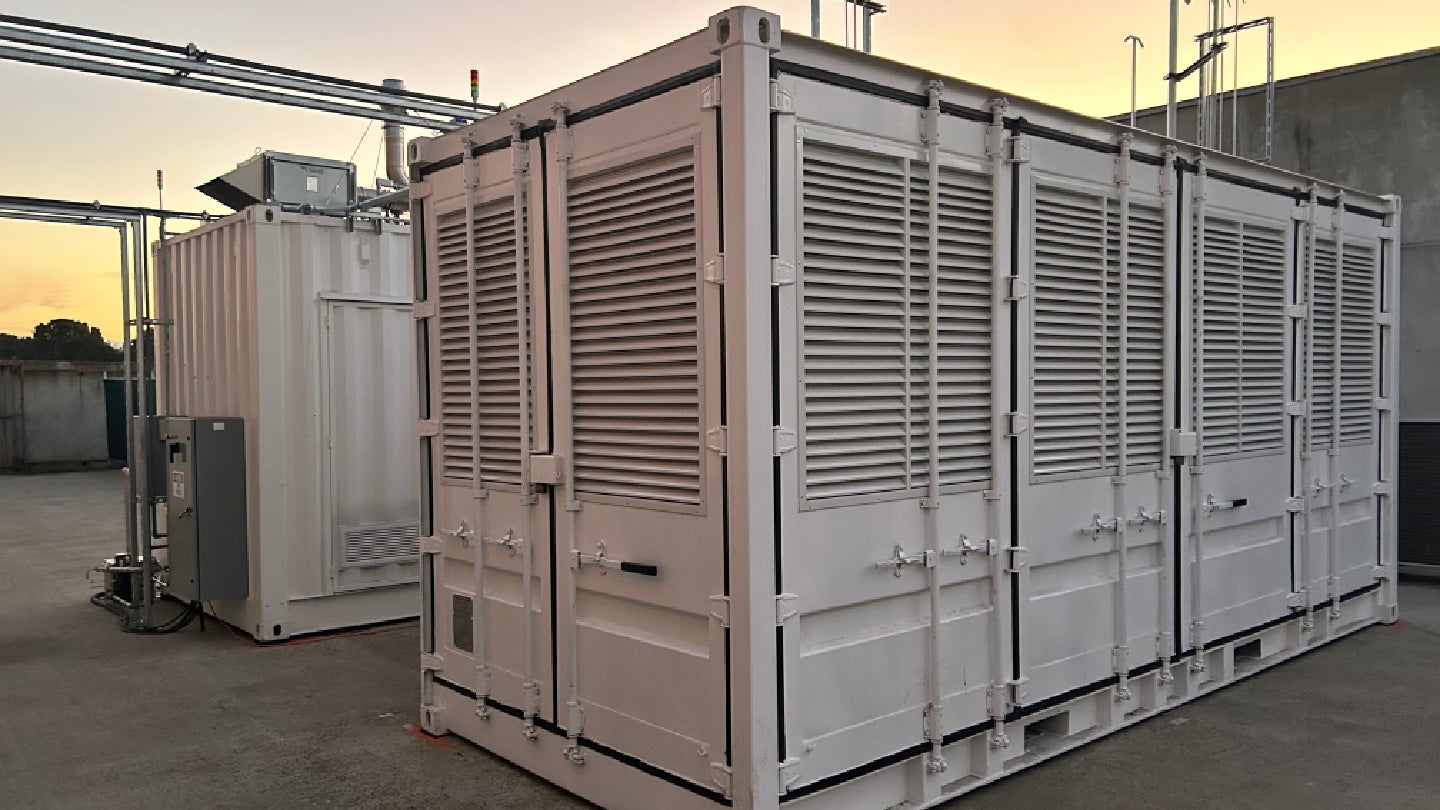
The core feature in the supplied report is duration. Noon Energy’s system is described as an ultra-long-duration energy storage technology capable of storing and discharging energy over multi-day periods. The company’s modular, reversible solid oxide fuel cell system is positioned as a way to bridge the long gaps when wind or solar output drops.
That is a different proposition from short-duration storage built mainly for brief balancing or peak shaving. Multi-day storage aims to provide a firmer backbone for variable renewable systems. For data centers, which require highly reliable supply, that distinction is critical.
Meta Energy and Sustainability Vice President Nat Sahlstrom said the agreement advances the goal of bringing data centers online faster by deploying reliable energy sources. In the supplied text, he also described the technology as delivering grid resilience and firm power.

Why AI changes the equation
Data centers have always required dependable electricity, but the AI buildout is pushing the issue harder. Training, inference, and large-scale digital infrastructure expansion are increasing pressure to secure capacity quickly. Energy has become a gating factor for computing growth.
The Meta-Noon deal reflects that shift directly. Energy Monitor says the agreement supports Meta’s AI infrastructure and ongoing efforts to integrate more renewable sources while maintaining dependable supply. In other words, the company is not treating clean energy and reliability as separate boxes to check. It is trying to solve both at once.
That is significant because it hints at a future in which hyperscalers behave less like ordinary electricity buyers and more like strategic infrastructure planners.
A pilot first, scale later
The phased structure also matters. Starting with 25MW/2.5GWh allows the companies to prove development, integration, and operational performance before moving to the headline-scale 1GW/100GWh arrangement. For a storage technology positioned as ultra-long duration, that kind of stepwise ramp is pragmatic.
Noon Energy will oversee development of the initial project. The provided report presents the project as part of Meta’s effort to provide round-the-clock power for data-center operations. That language signals the growing importance of hourly and multi-day reliability, rather than relying only on annual renewable accounting.
If the first phase succeeds, the larger rollout would be among the clearest examples of a technology company directly shaping the future market for long-duration storage.
What the deal says about the grid
The agreement also captures a broader energy-system reality. Renewable generation is expanding, but intermittency remains a major constraint when electricity demand needs to be both clean and continuous. Data centers are one of the most demanding cases because downtime is unacceptable and load profiles can be substantial.
By backing storage aimed at 100-plus-hour operation, Meta is effectively endorsing the idea that renewable-heavy grids will need more than solar panels, wind farms, and short batteries. They will also need assets capable of carrying power across long low-generation windows.
That is why this story matters beyond Meta. It points toward the kinds of technologies that may gain advantage as AI infrastructure growth collides with decarbonization targets.
Why Noon Energy benefits too
For Noon Energy, the partnership is an industrial validation moment. Chief executive Chris Graves said Meta recognizes the promise in the company’s 100-plus-hour storage technology and described data centers as one of the best applications for the system. He also said the two companies would work on building production capacity and an ultra-long-duration energy storage supply chain in the years ahead.
That indicates the deal is not just a reservation contract. It is also a demand signal for manufacturing scale. Emerging storage technologies often struggle to cross the gap between technical promise and large commercial deployment. A hyperscaler-backed agreement can help narrow that gap.
The wider significance
Meta’s storage reservation is a useful marker of where energy procurement is headed for large technology companies. The old model of simply buying electricity and renewable credits is giving way to a more involved approach centered on reliability, speed to deployment, and infrastructure shaping.
That is especially true in an AI market where compute expansion is time-sensitive and energy bottlenecks can delay capacity coming online. If reliable low-carbon power becomes a competitive advantage in AI, then storage procurement could become as strategic as chip procurement.
The supplied report does not claim the entire 1GW/100GWh system is finalized today; it describes an initial project followed by expectations for a larger arrangement. Even so, the direction is unmistakable. Meta is looking for ways to pair renewable generation with multi-day resilience, and it is willing to back a storage platform designed for exactly that purpose.
That makes this one of the clearer signs yet that the AI buildout is no longer just a computing story. It is a power-systems story too.
This article is based on reporting by Energy Monitor. Read the original article.
Originally published on energymonitor.ai