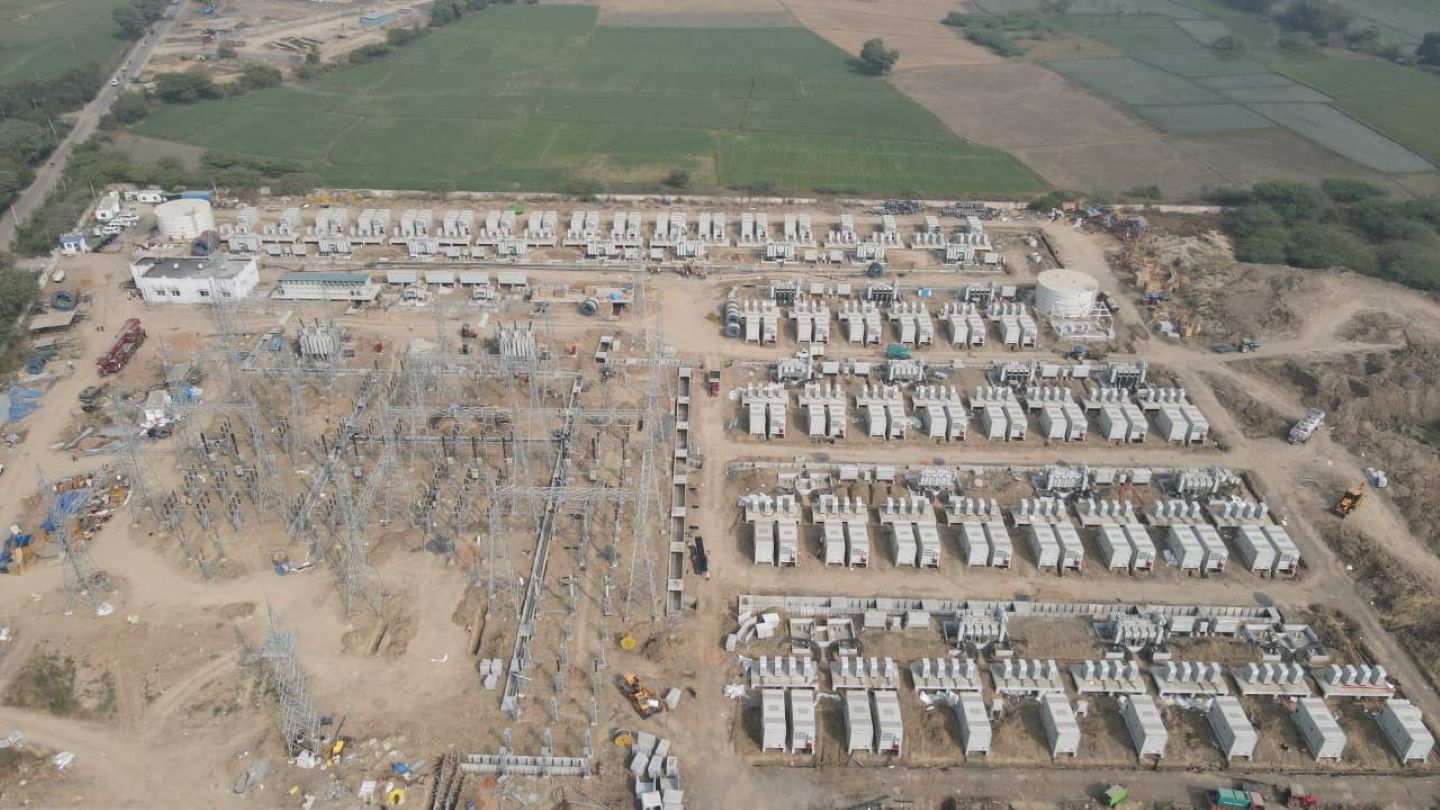
India has added a major new piece of grid infrastructure with the start of operations at a 180MW/360MWh battery energy storage system in Gujarat. Developed by IndiGrid with technology support from AmpereHour Energy, the project is described as the largest stand-alone utility-scale battery energy storage system in India and among the largest of its kind in Asia.
A milestone for grid-scale storage
The facility is located at a Gujarat Energy Transmission Corporation substation, and Gujarat Urja Vikas Nigam serves as the offtaker. IndiGrid won the project in early 2024 through tariff-based competitive bidding, and the system was built under a build, own, and operate model. A 12-year battery energy storage agreement was signed in June 2024, with the term beginning from the commercial operation date.
Those project details matter because they show how battery storage is moving from pilot status toward long-duration commercial integration into utility systems. The combination of competitive bidding, a long-term offtake structure, and concessional financing from the International Finance Corporation gives the project a financial architecture closer to mainstream power infrastructure than experimental deployment.

Why Gujarat matters
Gujarat has been expanding its renewable energy footprint and, according to AmpereHour, has launched 870MW of battery storage capacity projects in recent years. In that context, the new plant is not an isolated installation. It is part of a broader attempt to build flexibility into a grid that must absorb growing shares of renewable generation while managing reliability, timing, and dispatch.
Battery storage becomes especially important when systems need to smooth variable output, relieve local constraints, and make renewable electricity more useful at the moments demand actually peaks. The source report does not provide a dispatch profile for the Gujarat project, but its scale alone makes it a meaningful marker for where India’s storage buildout is heading.
Technology and execution
AmpereHour said it provided technological support and used its ELINA EMS and AH Suite software for data integration and execution. The company said that approach helped with quality control, logistics, and a one-step commissioning process. It also described the project as a "lighthouse" moment for India’s energy sector, arguing that a flexible integration architecture helped IndiGrid deploy a technically strong and commercially optimized system.
Constructing the site required scaling lessons from AmpereHour’s earlier 40MWh Delhi project to a 360MWh facility. That jump is significant. Grid-scale battery deployment is not only about cell procurement or site construction; it also depends on software integration, operational controls, and commissioning discipline. Large battery systems are infrastructure, not gadgets, and execution risk rises quickly with size.
What the launch signals
The startup of this project reinforces a larger trend across energy systems: battery storage is becoming central to how utilities plan for renewable-heavy grids. In India, where electricity demand, industrial growth, and clean energy expansion are all rising at once, storage increasingly serves as the connective technology between ambitious generation targets and workable grid operations.
The Gujarat system will not settle every question about market design, duration requirements, or future chemistry choices. But it does show that large, utility-backed battery assets are moving into service at meaningful scale. That matters for India, for regional storage markets in Asia, and for the broader energy transition debate, which increasingly turns on whether grids can store, shift, and deliver power as effectively as they can generate it.
With 180MW/360MWh now online, Gujarat has gained a major new flexibility asset, and India has gained a new reference point for what utility-scale storage looks like in practice.
This article is based on reporting by Energy Monitor. Read the original article.
Originally published on energymonitor.ai