A residential storage play focused on simplicity
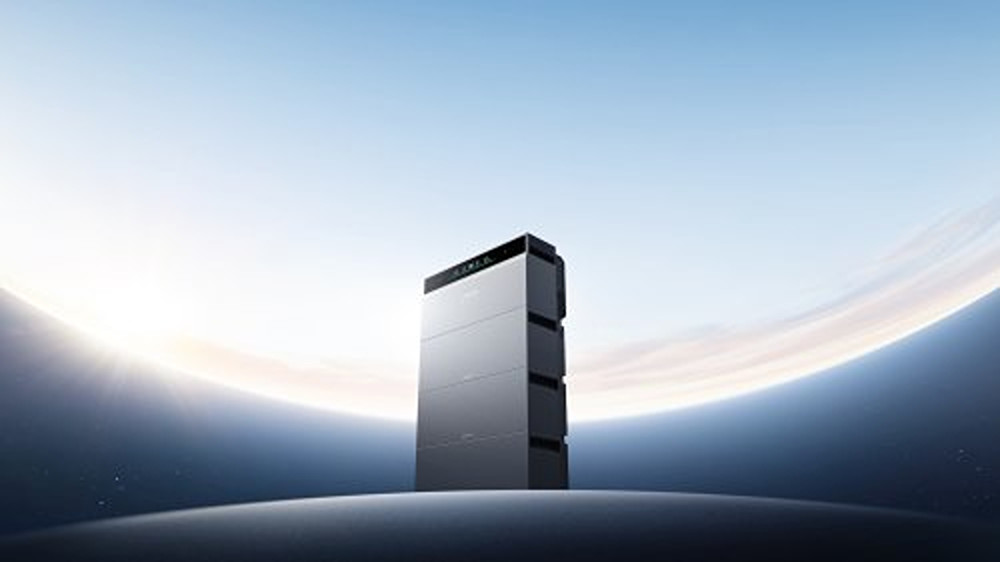
Anker Solix has launched a new all-in-one home energy storage system aimed at a residential market that increasingly wants battery backup without a complicated installation process. The product, called Anker Solix XE, combines a 7 kWh usable battery with up to 5,000 watts of AC output and up to 10 kW of solar input in a single integrated design.
On paper, the headline specifications are important. In practice, the company is making an equally strong pitch around ease of deployment. Anker says the system integrates the inverter, storage, and wiring into one structure, uses screwless terminals, and includes an adjustable base. The company claims this can improve installation efficiency by up to 80% and cut commissioning time to about five minutes.
That framing reflects a larger shift in residential storage. The market is no longer competing only on battery chemistry or headline capacity. Vendors are also trying to reduce labor, streamline setup, and make systems easier for installers to standardize across homes. In that context, packaging and deployment speed can matter almost as much as raw technical performance.
What the system offers
The XE is designed as a modular platform rather than a one-off box. The base unit provides 7 kWh of usable capacity, but the architecture is intended to scale up significantly. According to the launch details, expansion can reach as high as 126 kWh, positioning the product for households that want more than emergency backup and may be considering whole-home energy management or larger self-consumption setups.
Anker also says the system supports full discharge capability, enabling 100% depth of discharge. That specification has become more common in premium residential storage products because it allows homeowners to use more of the installed capacity per cycle. The practical value is straightforward: more of the battery becomes available for backup or load shifting instead of being held back as unusable reserve.
The company further claims a 10,000-cycle battery life and AI-driven energy management. Those two claims point toward a familiar strategy in energy storage launches: pair durability messaging with software optimization. The battery has to look bankable over years of use, while the control layer is expected to make the system feel smarter than a passive backup pack.
Why installation is becoming a competitive feature
Residential energy storage is often sold with aspirational language about resilience, self-sufficiency, or optimized solar use. Yet in many markets, customer experience still depends heavily on how easy a product is to install and commission. Integrators face rising labor costs, variable home configurations, and pressure to complete projects quickly without repeated site visits.
That is why Anker’s emphasis on integrated wiring and fast commissioning deserves attention. An installation that takes less time is not just a convenience for contractors. It can lower project cost, reduce bottlenecks in busy installer networks, and make it easier for vendors to scale distribution.
If the claimed setup improvements hold up in field use, the product could appeal to installers looking for a more repeatable workflow. For homeowners, that may translate into shorter project timelines and potentially lower soft costs, though the source material did not include pricing or market rollout details that would confirm how much of that benefit reaches end customers.
Balancing backup and higher-demand loads
Anker says the XE architecture is built to support typical household needs such as lighting, entertainment systems, and heating circulation, while also accommodating more demanding appliances. That positioning matters because buyers increasingly want a battery system that can do more than keep a few sockets alive during an outage.
The stronger the product’s ability to bridge ordinary daily use and backup resilience, the broader its appeal. A modular system that starts at a modest capacity but scales sharply higher can target entry-level buyers and more energy-intensive households with the same platform. That kind of flexibility is attractive in a market where customer needs vary widely and future expansion is often a selling point.
The inclusion of a bidirectional inverter is also notable. It reflects a market direction in which storage systems are expected to manage energy more dynamically, supporting solar input, household loads, and potentially additional use cases as power electronics and grid interaction evolve.

A crowded market with room for differentiation
Residential storage has become highly competitive, especially in categories where many products now offer respectable capacity, lithium-based performance, and app-based control. That makes differentiation harder. Some brands lean on cell chemistry, some on design, some on warranty language, and some on ecosystem integration.
Anker appears to be leaning on packaging, scalability, and installer friendliness. The system’s unified design and high expansion ceiling could help it stand out if those features work as advertised and if the company can back them with dependable support. The challenge is that claims about ease of installation and intelligent management are easy to make at launch and harder to prove across real deployments.
Still, the product speaks to where the market is heading. Home batteries are being sold less as niche resilience products and more as central components in a managed household energy stack. The more a system can combine solar input, usable capacity, fast installation, and software-driven control, the stronger its position in that transition.
The broader takeaway
The Anker Solix XE launch does not redefine residential storage on its own, but it does capture the sector’s current priorities. Homeowners want usable energy, backup capability, and expandability. Installers want hardware that is faster and easier to deploy. Vendors want platforms that can scale from straightforward residential projects to larger, software-managed energy systems.
By combining a 7 kWh starting point, a 5 kW bidirectional inverter, and a design built around modular expansion, Anker is trying to address all three demands at once. The result is less a single battery product than a statement about how residential storage is being packaged for the next phase of adoption.
Whether the XE becomes a major contender will depend on execution in the field. But the launch makes one thing clear: in home energy storage, the next competitive edge may come as much from installation design and system architecture as from battery cells alone.
This article is based on reporting by PV Magazine. Read the original article.
Originally published on pv-magazine.com