Mining is becoming a proving ground for larger and more integrated microgrid architectures
Sungrow has released a white paper focused on power systems for mining operations, laying out solution paths from 2.5 megawatts to projects above 100 megawatts. The document, produced with TUV Rheinland and the China Electrotechnical Society, is notable less for a single product announcement than for the scale logic it advances: mining sites, especially large ones, may increasingly be served by coordinated clusters of microgrids rather than isolated power assets.
The paper divides the market into three bands. Medium-scale projects run from 2.5 MW to 20 MW. Large-scale installations span 20 MW to 100 MW. Beyond that, Sungrow proposes multi-microgrid clusters for sites above 100 MW. That framing treats mining not as a niche off-grid use case, but as a complex high-load environment that increasingly demands system-level orchestration.
From fragmented systems to integrated control
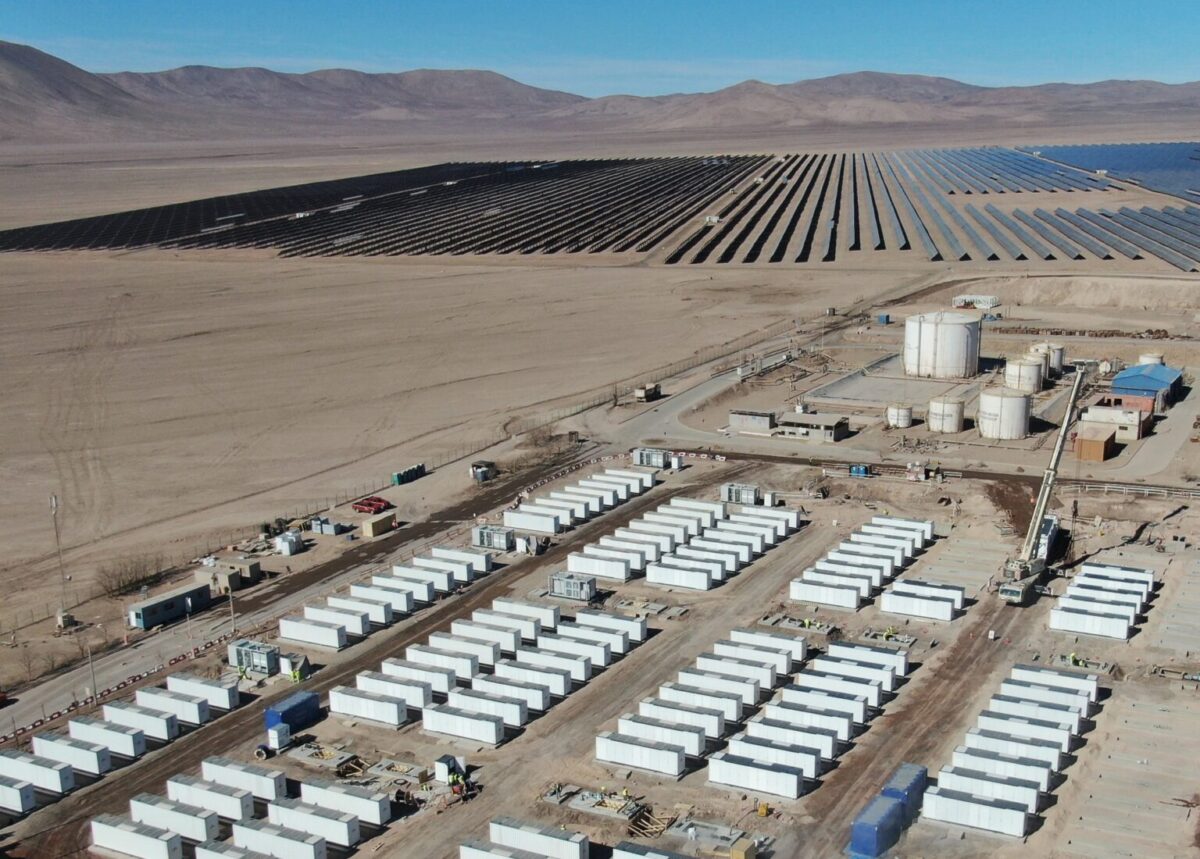
According to Sungrow, the proposed solutions are built on an integrated system architecture covering solar, wind, storage, charging, and energy management systems. The stated goal is coordinated asset operation and broader control at the system level. That is an important point because the technical challenge in large mining power setups is not just generating energy. It is balancing multiple sources and loads with enough reliability to support industrial activity where downtime can be extremely expensive.
Sungrow Grid Technology General Manager Rui Sun said mining operators are facing growing pressure around both energy security and decarbonization. The white paper's answer is a move away from fragmented power arrangements and toward fully integrated microgrid solutions. In practice, that means treating generation, storage, charging, and control software as parts of a single operational architecture rather than standalone additions layered onto an existing site.
Why mining matters in the energy transition
Mining is a strategically revealing sector for distributed energy because its power requirements are large, its sites are often remote, and its operators face increasing scrutiny over emissions. Those conditions make it a strong test case for whether hybrid systems can scale beyond campus-level deployments into heavy industrial settings. A solution that works reliably for a mine above 100 MW is operating in a very different class from a conventional commercial microgrid.
That is why Sungrow's emphasis on multi-microgrid clusters stands out. Above a certain size, a mine may not be well served by a single monolithic configuration. Clusters offer a way to segment operations while still managing them as a coordinated fleet. The white paper does not present this as a theoretical design exercise. It frames it as a practical architecture for real-world mining loads.
An industry signal, even if it is still a vendor-led one
Because the release comes in the form of a white paper from an equipment manufacturer, it should be read as both market analysis and strategic positioning. Sungrow is clearly making a case for its own approach to storage, inverters, and integrated control. But vendor-led documents can still be useful indicators of where the industry expects demand to move. In this case, the direction is toward larger, more tightly integrated power systems for industrial customers that need resilience as much as they need lower-carbon energy.
The inclusion of charging within the architecture is also a useful clue. It suggests the company is treating electrified equipment and vehicle support as part of the same energy design problem, not a separate downstream consideration. That matters as more mining operations evaluate how far they can shift from fossil-fuel-heavy logistics and equipment systems.
What the paper says about the next wave of microgrids
The broader takeaway is that microgrids are maturing from specialized backup or remote-site tools into configurable power platforms for large industrial demand. The mining sector is forcing that evolution because it combines the operational intolerance of heavy industry with the geographic challenges of remote development. If suppliers can deliver reliable hybrid systems there, the model may travel well to other energy-intensive sectors.
Sungrow's paper does not prove that multi-microgrid clusters will become the default answer for every mine above 100 MW. It does, however, show how vendors increasingly think about the problem: integrated, multi-asset, software-managed, and sized for industrial loads that once would have pushed users toward more conventional grid or thermal solutions. That alone makes the release a useful marker in the ongoing expansion of microgrid ambition.
This article is based on reporting by PV Magazine. Read the original article.
Originally published on pv-magazine.com