Corrosion is moving up the solar risk list
In utility-scale solar, rust has often been treated as a manageable maintenance issue. The latest analysis highlighted by PV Magazine argues that view is too narrow. Over a 30-year asset life, corrosion can become a structural, electrical, and even fire-safety problem, raising operations and maintenance costs and, in some cases, forcing major replacement or early decommissioning.
The warning reflects a maturing industry. As larger solar fleets age in harsher environments, small weaknesses in coatings, fasteners, joints, and material selection have more time to compound. A project designed to operate for decades cannot afford to treat corrosion as a purely aesthetic issue or as something to address only after visible damage appears.
Where corrosion causes the most trouble
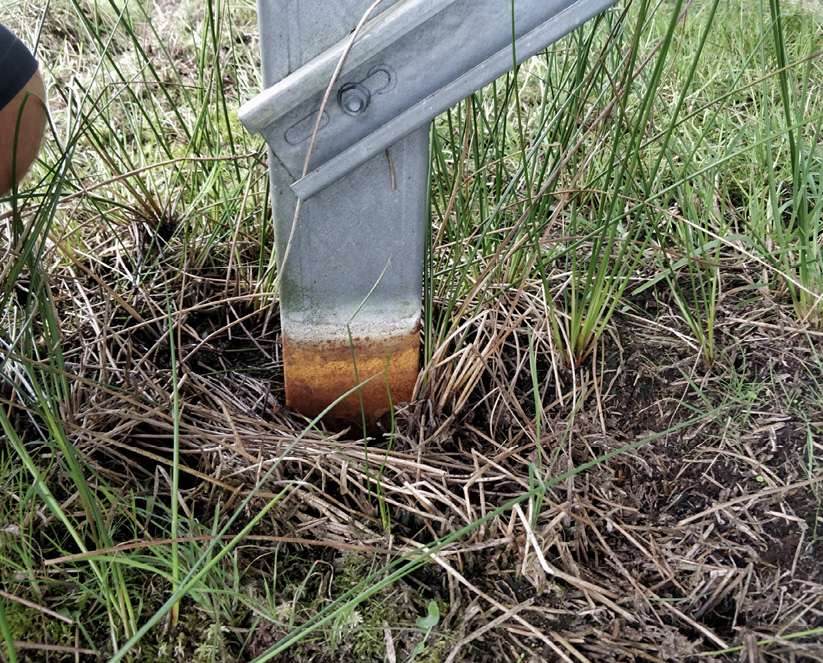
According to the source text, the most vulnerable points are often interfaces: bolted connections, weld seams, cut edges, and other locations where moisture, debris, and movement gradually compromise protective layers. Fasteners are a recurring problem. Once rust seizes a bolt, what should have been routine servicing can turn into labor-intensive cutting and replacement work.
The article also points to a deeper operational risk. Corrosion does not just remove metal over time; it can alter tolerances, friction, and contact quality at joints. In structural systems, that can erode confidence in long-term load performance. In electrical connections, the stakes are higher, because deteriorating contact surfaces can move the issue from reliability into safety.
That distinction matters for project owners and insurers alike. A corroded frame member may degrade slowly and visibly. A compromised electrical interface may quietly create heat, failure points, or conditions associated with fire risk before the problem is obvious in routine walkthroughs.

Why reactive maintenance is often too late
One of the clearest messages from the source is that periodic checks are advisable because reactive repairs may come too late. By the time corrosion is obvious, the damage may already be embedded in the hardware, and mitigation options may be more expensive and disruptive. Replacing isolated parts is one thing; widespread structural remediation across a large plant is something else entirely.
This is a familiar lifecycle problem in infrastructure. Degradation tends to be cheap to prevent early and expensive to reverse late. Solar has sometimes benefited from perceptions of low maintenance compared with other generation assets, but that should not be mistaken for immunity to materials science. Exposure to salt, humidity, thermal cycling, mechanical stress, and debris does not spare photovoltaic installations simply because their operating principle is elegant.
The challenge is especially acute in environments where corrosion pressure is high, including coastal regions, polluted industrial corridors, and sites with frequent wet-dry cycles. In those settings, design margins and coating assumptions deserve more scrutiny from the beginning.
Design and procurement implications
The analysis suggests that corrosion management has to start upstream, not just in field repairs. Material choice, surface treatment quality, fabrication methods, drainage, galvanic compatibility, and the treatment of cut edges all influence long-term survival. So do procurement decisions that may look economical at installation but prove costly over decades.
Developers and asset owners increasingly have to ask whether balance-of-system components are being evaluated with sufficient realism for 30-year use. A small saving on steelwork, fasteners, or protective finishes can be erased quickly if access crews later need to replace seized hardware or rehabilitate support structures at scale.
That has implications for contract structures as well. Warranty assumptions, inspection schedules, and maintenance reserves may need to reflect a more serious view of corrosion. If the issue is only addressed after commissioning, owners can end up carrying technical risk that was baked into manufacturing and design choices long before the site went live.
Resilience and extreme weather
The source text also links corrosion to reduced resilience during extreme events. That is an important shift in framing. Solar assets are increasingly expected not just to produce under normal conditions, but to survive storms, flooding, heat, and other climate-related stresses. Corrosion weakens that resilience by reducing the margin between ordinary wear and structural failure.
A racking or connection system that has slowly degraded for years may still appear serviceable in calm weather. Under extreme wind or compounded loading, however, hidden losses in material performance or joint integrity matter much more. In that sense, corrosion is not just an aging problem. It is a multiplier of other risks the energy sector is already trying to model.
A sign of solar’s industrial maturity
The broader significance of this discussion is that solar is entering a more industrial, asset-management-heavy phase. Early growth was driven by deployment speed, falling module prices, and financing scale. The next era will be judged more by how well fleets hold up over decades in the field. That shifts attention toward engineering details that once seemed secondary.
Corrosion management belongs in that category. It is not as visible as battery breakthroughs or module efficiency records, but it is exactly the kind of issue that determines whether a project meets its promised lifetime economics. The industry’s low-cost narrative only holds if long-term reliability is real.
For owners, operators, and engineers, the message is simple: rust in solar is not merely cosmetic and should not be normalized. It is a measurable operational, safety, and financial risk that needs to be designed against, inspected for, and acted on early. As solar infrastructure ages, that message will become harder to ignore.
This article is based on reporting by PV Magazine. Read the original article.
Originally published on pv-magazine.com