Agrivoltaics Meets Water Stress
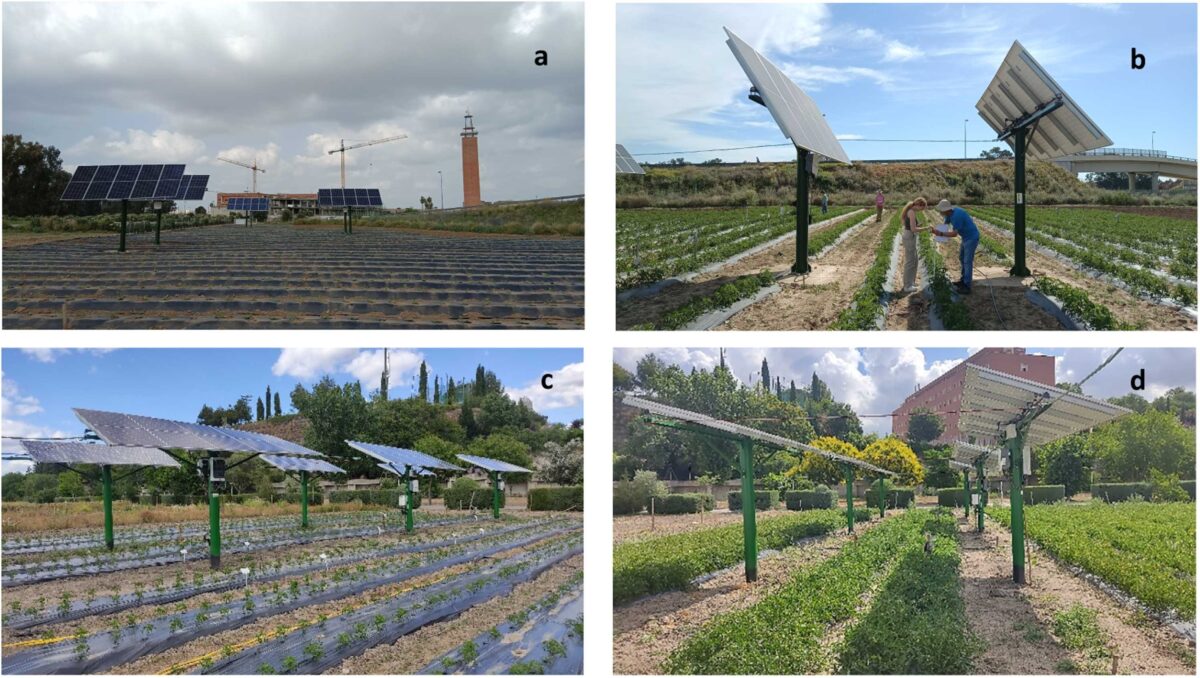
Researchers in Spain say a field trial combining agrivoltaics with regulated deficit irrigation could sharply reduce water use in tomato cultivation without giving up the dual-use benefits of solar power. According to pv magazine’s report on April 30, the team tested the approach in Madrid and Seville and found irrigation demand could be cut by about half.
The work centers on a practical problem facing agriculture across hot, dry regions: water is becoming harder to secure at the same time that growers are being pushed to improve land productivity. Agrivoltaics, which places solar panels above or around crops, has often been promoted as a way to make one parcel of land do two jobs at once. The Spanish study adds a second lever by pairing that setup with regulated deficit irrigation, or RDI, a technique that intentionally reduces watering during less sensitive growth periods.
In the reported trials, researchers monitored leaf water potential to keep plants from entering excessive stress while still using less water. The shade from photovoltaic panels lowers evaporative demand, which can help crops retain moisture for longer. That interaction is central to the project’s logic: if the panels reduce the heat and radiation load on the plants, then a carefully managed irrigation shortfall may be possible without causing severe yield penalties.
Why the Pairing Matters
Neither agrivoltaics nor deficit irrigation is new on its own. What makes the study notable is the attempt to use them together as a system-level response to two separate constraints, land and water. In places where solar deployment competes with farmland, agrivoltaics offers a political and economic argument for coexistence rather than conversion. In places where drought pressure is intensifying, irrigation efficiency is no longer a marginal gain; it is a condition of staying in production.
The researchers said the panel shade reduced available radiation, but the design of the system still improved land-use efficiency by supporting crop production and electricity generation on the same site. That framing matters because agrivoltaics is often judged only on crop performance or only on energy output. A dual-use system has to be evaluated on both sides at once.
If the irrigation reduction reported in the trial holds up across broader deployments, the approach could become especially relevant in Mediterranean climates and other regions where growers face both high solar potential and chronic water scarcity. Tomatoes are also a commercially important crop, which makes them a useful test case for whether agrivoltaics can move beyond demonstration plots into mainstream farm operations.
Limits Still Matter
The source text does not claim that shading is universally beneficial or that all crop types would respond the same way. In fact, the researchers explicitly note that the panels reduce available radiation. That means system design remains crucial. Too much shade could suppress growth, while too little could leave water savings on the table. The reported outcome depends not just on placing modules over crops, but on tuning layout and irrigation timing to plant physiology.
That detail points to the more important conclusion: agrivoltaics is not one technology but a design space. Row spacing, panel height, crop choice, local climate, and irrigation controls all change the result. The Spanish group’s contribution is to show that water management can be treated as an active variable in that design space rather than as a fixed input.
For energy developers, that may broaden the commercial case. Solar projects that can demonstrate agricultural compatibility have a stronger answer to land-use criticism. For growers, the appeal is different: a structure that moderates heat stress while reducing irrigation demand may offer resilience benefits beyond electricity revenue.
A More Constrained Future for Farming
The larger significance of the trial is that it reflects the direction of modern agricultural technology. Instead of chasing yield through a single input, researchers are increasingly trying to optimize whole systems under climate constraints. Water, land, and energy are being treated as interdependent resources.
That does not make agrivoltaics a universal fix. It does suggest that future farm infrastructure may need to do more than one job at a time. In that sense, the Spanish result is less about tomatoes alone than about what adaptation looks like when farms must produce food under tighter environmental limits.
The next question is whether the approach scales economically and agronomically across seasons, crop varieties, and farm sizes. But even at the trial stage, the reported 50% reduction in irrigation use is large enough to attract attention in regions where every cubic meter of water is contested.
This article is based on reporting by PV Magazine. Read the original article.
Originally published on pv-magazine.com