Renewables are changing the shape of Spain’s power costs
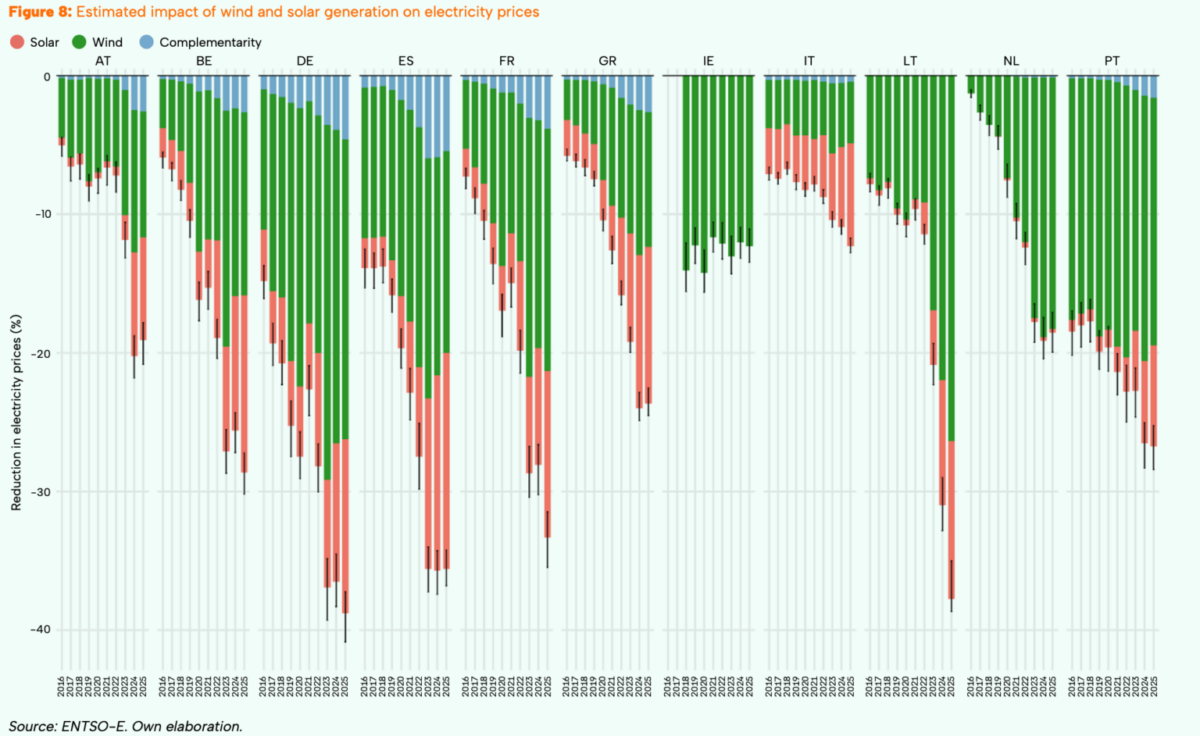
Spain’s rapid expansion of renewable generation is translating into a measurable drop in electricity costs, according to a new report highlighted by pv magazine. The study, Towards Cheaper Electricity, from Positive Money, argues that the Iberian power system is becoming less vulnerable to the fuel-price shocks that rattled Europe during the past several years.
The headline figure is striking: growth in renewable generation cut Spain’s electricity bills by 24.2% over the past two years. Just as important, Spain and Portugal are said to be 53% less exposed to gas-price volatility than they were three years ago. That matters because gas has often been the fuel that sets marginal electricity prices in European markets, even when large shares of total power come from cheaper sources.
The report arrives after a period in which Europe’s energy system was stress-tested by multiple geopolitical disruptions. The fallout from Russia’s war in Ukraine and tensions in the Middle East exposed how dependent many European economies remain on imported fossil fuels. That dependence fed through to household bills, industrial costs and inflation, while undercutting the competitiveness of energy-intensive businesses.
Why Spain has been better positioned
Spain’s experience suggests that adding more wind and solar can do more than lower emissions. It can also shift the structure of the electricity market by reducing the amount of gas-fired generation needed to balance demand. When renewables supply more of the mix, fewer hours are left in which gas plants need to set the market-clearing price.
That does not mean gas disappears from the system. It still plays an important role in reliability and flexibility. But the report’s framing is that renewables are weakening gas’s power to dictate overall price levels. In a region that has learned how quickly imported-fuel costs can spike, that reduction in exposure has become an economic strategy as much as a climate one.
The broader European comparison helps explain why the report emphasizes competitiveness. It notes that electricity prices in the European Union have risen well above those in other major economies, including the United States, especially for energy-intensive industry. For policymakers, that gap has become a strategic concern. High energy prices do not just strain consumers; they shape investment decisions, manufacturing output and where future industrial projects are built.
More than an environmental argument
One of the most consequential points in the study is that the energy transition is being presented as a buffer against volatility, not simply a long-term decarbonization pathway. That argument is likely to resonate in governments that have struggled to explain why expensive clean-energy buildouts are worth the political effort. If the payoff can be framed in terms of lower bills and lower geopolitical exposure, the case becomes more immediate.
Spain is a useful test case because it combines strong solar resources, growing wind capacity and a market that has lived through Europe’s recent power-price turbulence. The new figures suggest that, at least in this instance, renewable deployment is delivering practical system-level benefits. Lower bills and reduced sensitivity to gas markets are concrete indicators, even if they do not capture every cost within the energy transition.
There are still limits to how far the lesson can be generalized. Electricity systems differ in interconnection, storage, demand patterns and industrial load. Europe’s market design also means the relationship between renewable penetration and retail bills is not always simple or immediate. Still, the Spanish case adds weight to a broader claim now taking hold across the continent: clean generation can function as a form of price defense.
That matters politically because Europe’s energy debate has shifted. The central question is no longer only how quickly countries can cut carbon, but how they can do it while restoring affordability and reducing strategic dependence on imported fuel. Spain’s recent numbers will likely be used as evidence that these goals can reinforce one another rather than compete.
For utilities, regulators and industrial power buyers, the implication is that renewable capacity is increasingly tied to macroeconomic resilience. For households, the message is simpler. A grid with more wind and solar appears to have left Spanish consumers paying less and worrying less about global gas shocks than they did just a few years ago.
This article is based on reporting by PV Magazine. Read the original article.
Originally published on pv-magazine.com