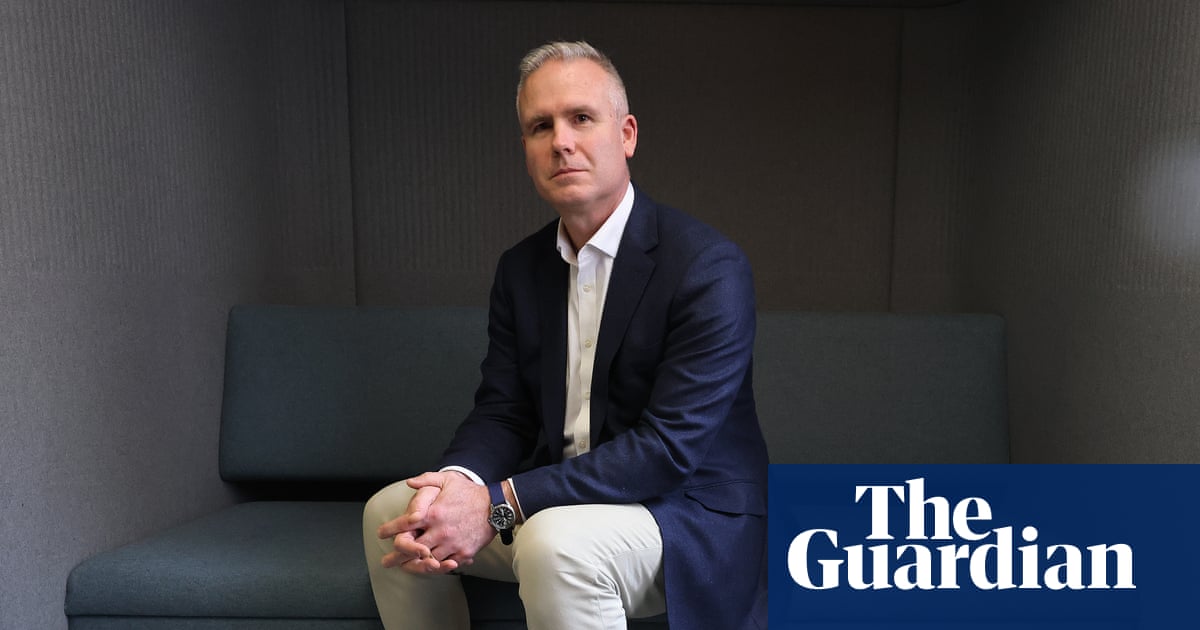
The United Kingdom should avoid becoming dependent on foreign artificial intelligence systems that could be restricted or withdrawn, according to George Williamson, the head of the Alan Turing Institute. His argument places AI capability alongside a growing list of national-resilience concerns as the technology becomes more deeply embedded in public services, security and infrastructure.
Williamson said the UK needs a stronger domestic position in AI while the United States and China extend their lead. The Alan Turing Institute, the country’s leading AI research body, is under new leadership after the government, its principal funder, sought a strategic change in its direction.
Control matters in critical services
The central issue is not simply whether British organisations can buy or access advanced AI. It is whether they can understand, govern and continue using the systems on which essential functions may come to rely.
Williamson identified defence, national security, critical infrastructure and healthcare as areas where dependence on systems that cannot be inspected or controlled carries particular risks. In those fields, an interruption is more than a commercial inconvenience. It could affect the continuity of public services or the ability of institutions to respond to a crisis.
That concern is sharpened by the concentration of cutting-edge AI development in a relatively small number of companies and countries. Models, computing infrastructure and access policies are largely determined outside the UK. A country can be an enthusiastic customer of those systems and still have little influence over whether access continues, what terms apply or what technical changes are made.

Recent access restrictions inform the warning
Williamson pointed to events that he said showed how political and commercial pressures can shape access to advanced AI. In June, Washington temporarily blocked the release of Anthropic’s latest models outside the United States. The report also said that leading AI laboratories had reportedly been asked to withhold models from testing by the UK’s AI Security Institute until examination by its US counterpart.
Those developments do not mean overseas AI can never be used safely. Rather, they illustrate a procurement and security problem: organisations that depend exclusively on externally controlled systems may have limited options if a supplier or government changes the conditions of availability.
For Williamson, the implication is that national resilience requires capabilities that Britain does not need to seek permission to use. Domestic AI capacity could include research expertise, trusted evaluation, technical infrastructure and models that can be examined by the institutions deploying them.
A strategic shift for the institute
The Alan Turing Institute’s role is important because it sits at the intersection of research, government interest and the practical deployment of AI. Williamson said national resilience would be a focus for its work, reflecting both geopolitical concern and anxiety about the risks associated with increasingly capable systems.
That emphasis comes as policymakers are trying to balance two pressures. One is the desire to capture economic and scientific benefits from AI. The other is the need to ensure that systems used in sensitive contexts are dependable, accountable and available when needed.
The policy challenge is likely to extend beyond building a British-branded model. A resilient AI strategy would have to address questions such as where systems are hosted, who can audit them, how they are tested, how data is governed and what fallback arrangements are available if an external service changes or fails.

Security and capability are converging
The discussion is also taking place amid wider warnings about disinformation and advanced AI risk. The UK prime minister, Andy Burnham, announced a new national centre intended to tackle state-backed disinformation last month. Separately, Anthropic has said it believes there is a greater than 10% chance that AI could wipe out humanity by 2030.
Those are very different concerns, but both reinforce the argument that AI is no longer solely a consumer or productivity technology. It is increasingly viewed as a strategic capability whose use can influence information environments, public safety and national security.
Williamson’s intervention does not set out a complete industrial programme, nor does it suggest that the UK can quickly match the scale of AI investment in the US or China. It does, however, define the strategic standard he believes the country should meet: the ability to retain meaningful control over AI used in its most consequential domains.
What comes next
The test will be whether the resilience framing leads to durable investment and concrete operating choices. Research institutions can strengthen domestic expertise, but public and private users will also need to decide when external systems are appropriate and when critical tasks require greater visibility and control.
As AI becomes routine in healthcare, infrastructure, security and government operations, those choices will become less abstract. The debate outlined by the Alan Turing Institute is therefore not only about technological competitiveness. It is about how much autonomy the UK retains when AI systems become part of the machinery of everyday national life.
This article is based on reporting by The Guardian. Read the original article.

Originally published on theguardian.com


