A near-perfect score leads to an AI cheating confession
The top scorer on South Korea’s national examination for aspiring tax accountants has admitted using generative AI to cheat, according to a report by the Guardian. The case has intensified concerns about exam integrity only days before the country’s annual college entrance examination.
The candidate, identified by the surname Han, ranked first in both rounds of the qualification examination, which were held in April and July. His first-round result of 397.5 out of 400 points, with one incorrect answer out of 160, had drawn months of suspicion. He initially denied allegations involving smart glasses, but later confessed through his lawyer that he had used electronic devices and a generative AI tool during the tests.
Han said he photographed examination questions with a microcamera, sent the images to an AI tool, and checked the answers on a smartphone. In a video appearance on the YouTube channel Attorney Lee Don-ho, he apologized and said that his top score had not resulted from fair effort. He also said he had submitted a written confession to Seoul police.
Seoul’s metropolitan police agency said it had received a written confession through the candidate’s lawyer and assigned the case to investigators. The report does not establish the eventual legal or administrative outcome. What it does show is a concrete way consumer-scale AI tools can be paired with concealed imaging and communications devices to undermine a controlled examination setting.
The threat is a system, not just a chatbot
The case is not simply about whether an AI model can answer a difficult question. The reported method combined several components: a microcamera to capture content, a means of transmitting that content to an AI tool, a smartphone to receive or review answers, and the candidate’s ability to use the equipment during the exam. Each element matters.
Generative AI has become part of a wider set of academic-integrity concerns because it can produce responses quickly and in natural language. In this instance, the allegation is more direct than questions about homework assistance or unattributed writing. The candidate said he used the tool to obtain answers during a high-stakes professional qualification examination.
That distinction also changes the institutional challenge. An exam organizer may attempt to make questions harder, but difficulty alone does not address unauthorized capture and outside assistance. The relevant safeguards include the conditions under which questions are viewed, the ability to detect prohibited devices, procedures for responding to suspected misconduct and an investigation process that can establish what happened after the fact.
The report does not describe the particular AI system used, nor does it detail its answer accuracy across the exam. It would therefore be unwarranted to treat this event as a broad measurement of any model’s performance on tax-accounting questions. The confirmed significance lies in the confessed use of generative AI as part of an alleged cheating workflow and in the pressure that places on testing authorities.

A sensitive moment for South Korea’s exam system
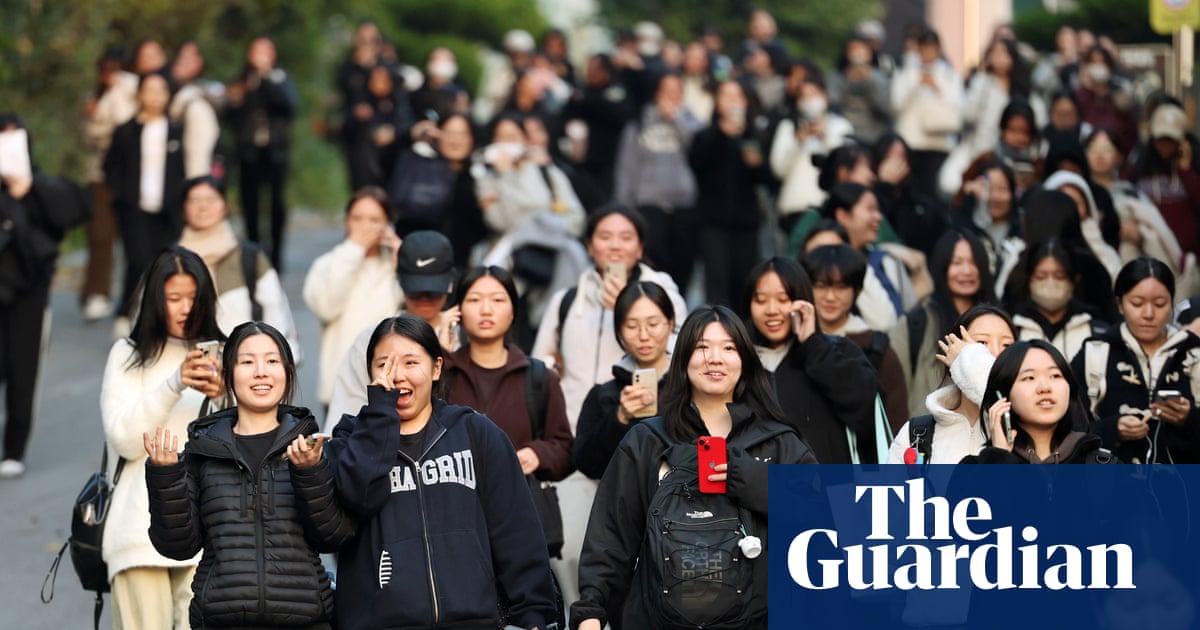
The scandal comes shortly before South Korea’s annual college entrance examination, which was scheduled for Thursday in the source report. The Guardian described that test as a high-pressure event for which many students spend much of their lives preparing. In a country where standardized tests can strongly shape educational and career opportunities, an allegation of technologically enabled cheating carries consequences beyond one candidate’s result.
The report says the presidential office viewed the matter seriously and had been preparing countermeasures because the entrance examination was approaching. No specific measures are set out in the supplied report. That absence is important: the public concern may be clear, but the effectiveness of any response depends on the details of implementation.
High-stakes assessments depend on more than the perceived quality of their questions. Participants must believe that candidates are subject to substantially similar conditions and that violations can be detected and addressed. A highly visible near-perfect score followed by a confession can damage that confidence, especially when the method involves tools that may be small, familiar and widely available.
The technology challenge is likely to be iterative. If organizers focus on one form of device, candidates may seek another; if they rely on a single screening method, the method may be tested for gaps. At the same time, a response that is overly broad can create burdens for legitimate candidates and proctors. The reported case does not prescribe the right balance, but it makes the trade-off more urgent.
What institutions can learn from the case
The most immediate lesson is that exam security must be treated as an end-to-end process. Unauthorized AI use requires an opportunity to obtain questions, communicate with an external service and access the resulting response. Reducing risk can therefore involve multiple layers rather than dependence on one device ban or one monitoring practice.
- Question handling matters because photographed prompts can become external inputs.
- Device controls matter because concealed cameras and phones can connect the test room to outside assistance.
- Proctoring procedures matter because unusual behavior may be the first observable sign of a breach.
- Investigation and consequence procedures matter because credibility depends on a response after a suspected violation.
None of these layers eliminates risk on its own. Nor does the case mean that generative AI is uniquely responsible for cheating. The reported conduct involved a person making deliberate choices and using several devices and services together. But the speed and accessibility of AI-assisted answers can alter the practical threat model for tests that once assumed outside consultation would be slower or more difficult.

A test of trust as well as technology
For examination authorities, the central task is maintaining trust while technology evolves. The tax accountant case has placed that challenge in public view at a particularly sensitive moment. The candidate’s admission, the police referral and the presidential office’s reported concern ensure that the issue will not remain an abstract warning about future AI misuse.
It is also a reminder to distinguish supported facts from speculation. The supplied account supports that a candidate confessed to using generative AI, described a method involving a microcamera and smartphone, and that police received a written confession. It does not establish how widespread comparable conduct may be, how other candidates performed, or whether forthcoming countermeasures will work.
Those questions will matter as institutions respond. For now, the scandal shows that the integrity of a high-stakes exam can depend on whether its safeguards keep pace with a fast-changing ecosystem of compact devices, networked tools and generative AI.
This article is based on reporting by The Guardian. Read the original article.
Originally published on theguardian.com