
Meta smartglasses are pushing surveillance concerns into everyday life
Meta’s smartglasses have become successful enough to move privacy concerns out of the realm of theory and into ordinary social settings. According to the supplied Guardian report, people say they have been secretly filmed in homes, at concerts, and at work, while a parallel market of vendors now offers modifications that disable the small flashing LED meant to signal when the glasses are recording.
That combination matters. Recording glasses have existed in various forms for years, but social acceptance and commercial scale change the stakes. The Guardian report says Meta sold roughly 7 million pairs in 2025 alone, nearly tripling the combined sales numbers from 2023 and 2024. When a device is no longer niche, the question shifts from whether abuse is possible to how often it will happen, what norms it will disrupt, and whether the built-in safeguards are strong enough to survive real-world incentives.
A warning light that can be defeated
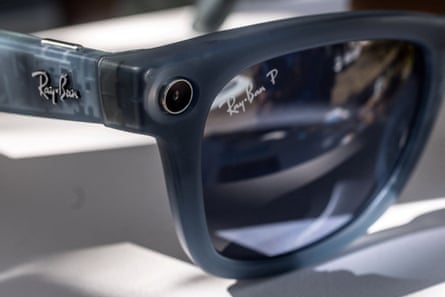
The central detail in the report is the existence of businesses that specialize in disabling the LED that blinks when Meta’s glasses capture photos, video, or audio. One vendor, operating under the name Ghost Metas, told the Guardian he has worked on about 100 pairs and that each pair takes only 15 to 20 minutes to alter. The report describes a simple workbench setup and a process aimed at making the indicator effectively disappear.
If that account is representative, Meta’s visible-recording safeguard has a basic weakness: it depends on the hardware remaining intact and unmodified. Once a cottage industry emerges to defeat the indicator, the protective value of the light falls sharply. A bystander can no longer rely on the design signal itself, because the very people most interested in covert recording also have a service pathway for removing it.
The problem is not merely technical. It is social and legal. The visible indicator functions as a consent cue. It tells other people that a recording device is active, allowing them to react, object, move away, or alter their behavior. If that cue can be removed, the technology begins to operate less like a visible camera and more like a concealed surveillance tool worn on the face.


Why glasses change the privacy equation
Smartphones can record discreetly, but they still require a gesture that is usually legible to others: lifting the phone, aiming it, holding it in place. Glasses collapse that distance between looking and recording. In practice, they turn ordinary eye-line and head movement into a potential capture mechanism. That ambiguity is what gives the devices much of their power and much of their controversy.
The Guardian report underscores this point through examples of people wanting the modification specifically because the glasses are more convenient than a phone for covert filming. That convenience is not incidental. It is the product feature. Hands-free capture, constant availability, and social camouflage are exactly what make the device attractive to buyers who want frictionless documentation. Those same qualities also make it easier to misuse.
As a result, familiar privacy boundaries become harder to interpret. Public spaces already involve low expectations of privacy in many jurisdictions, but expectations are not the same as indifference. People still respond differently to being casually present in the background of someone’s phone video than to being intentionally recorded at close range through wearable hardware they may not even notice. The distinction becomes sharper in semi-private settings such as workplaces, parties, classrooms, stores, ride shares, and private homes, where social norms often matter as much as formal law.
Success at scale raises the stakes
The report ties this privacy debate to Meta’s broader commercial momentum. Celebrity endorsements, influencer promotion, and partnerships with established eyewear brands helped turn the glasses into a breakout product rather than a novelty. That success gives Meta a stronger foothold in wearables, especially after the company’s expensive struggles to make virtual-reality and metaverse products mainstream.
But mainstream success changes the company’s responsibilities. At low scale, companies can frame misuse as exceptional or marginal. At high scale, misuse becomes predictable. If millions of devices are circulating and an easy modification can disable the recording light, then covert recording is not an edge case. It is an expected abuse path that product design, policy, and enforcement need to address directly.
The Guardian report also references a class-action suit over Meta’s privacy assurances. Without going beyond the supplied text, that signals a second front in the debate: not only whether people can be secretly recorded, but whether the company’s public claims about notice and transparency are adequate if the notice mechanism is easily bypassed.

The larger signal for consumer tech
This story is not just about Meta. It is about the next phase of consumer electronics, where cameras, microphones, and AI features are embedded in more intimate and less conspicuous forms. Smartglasses are especially sensitive because they sit at eye level and blur the difference between attention and capture. But the same design logic is spreading across pins, earbuds, vehicle systems, and ambient assistants.
That creates a policy challenge. The market often rewards convenience, discretion, and constant readiness. Privacy protections, by contrast, require friction: lights, sounds, prompts, restrictions, conspicuous form factors, and enforceable consequences for tampering. Companies routinely promise both seamless use and strong safeguards, yet the two goals are often in tension. The easier a device is to use invisibly, the harder it is for others to know when they are being recorded.
For regulators, venues, employers, and consumers, the practical issue is whether social rules can keep pace with hardware that is designed to disappear into everyday life. A blinking light may be better than no signal at all, but the Guardian report suggests it is not enough if the signal can be cheaply and quickly removed.
What comes next
The supplied reporting leaves no doubt about the direction of travel: smartglasses are no longer experimental, and the arguments around covert recording are becoming more concrete. As adoption rises, privacy disputes are likely to move from abstract fear to evidence, complaints, and litigation centered on specific incidents and specific product claims.
That makes this a defining test for the wearable-tech industry. If companies want socially acceptable always-available cameras, they will need safeguards that are harder to defeat and clearer rules for how the devices can be used. Otherwise, the appeal of frictionless capture may collide with a simple public conclusion: when no one can tell whether recording is happening, everyone has to assume that it might be.
- The Guardian reports that vendors offer modifications that disable Meta glasses’ recording light.
- One vendor said he had worked on about 100 pairs and could alter a pair in 15 to 20 minutes.
- Meta’s glasses reportedly sold about 7 million units in 2025, sharply increasing the technology’s reach.
- The issue raises pressure on product safeguards, privacy claims, and rules around covert recording.
This article is based on reporting by The Guardian. Read the original article.

Originally published on theguardian.com


