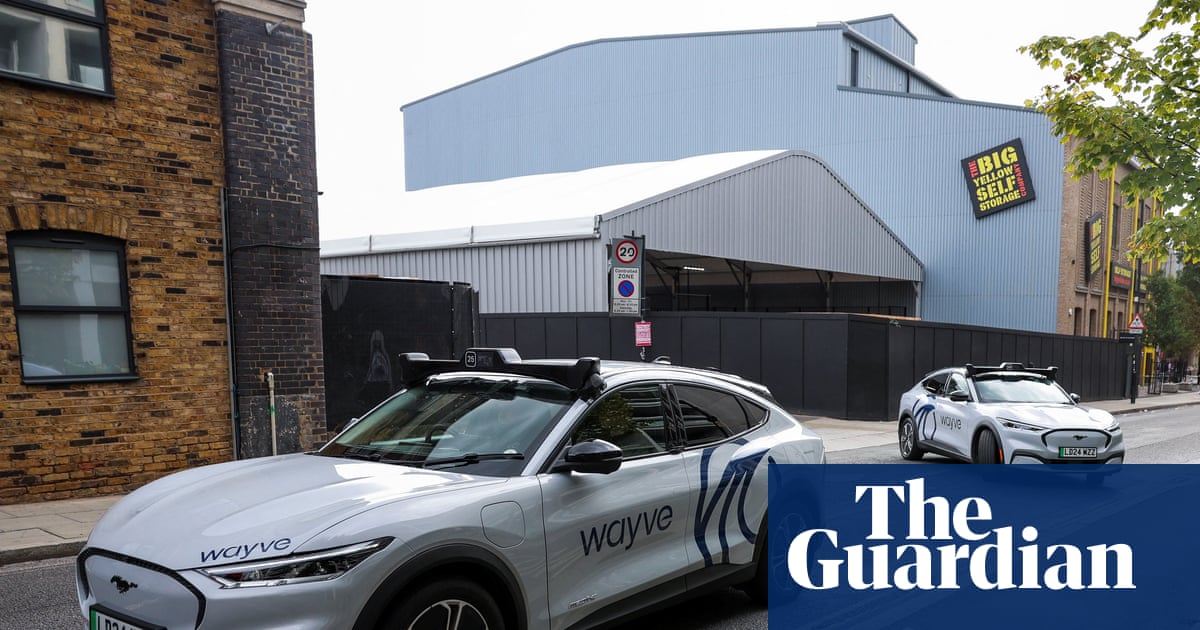
London’s early robotaxi rollout is becoming a test not only of autonomous-driving technology, but also of who gets to govern it. The capital’s first autonomous passenger rides began last month through Uber and Wayve, and more than 100,000 people have joined Uber’s London waitlist, according to reporting by the Guardian. Yet the launch has been accompanied by growing opposition from drivers, unions and politicians who say local authorities need clearer powers over services operating on the city’s streets.
The dispute brings a familiar technology-policy question into focus: whether a service can move from limited deployment to public use faster than the rules and institutions designed to oversee it can adapt. Advocates see autonomous taxis as a potentially useful new transport option. Critics, however, are asking how the vehicles will affect jobs, congestion, public transport, accessibility and passenger safety—and whether Transport for London should be able to intervene if problems emerge.
A launch met with resistance
Wayve has partnered with Uber to provide London’s first autonomous cabs for hire. The Guardian reported that only a small number of driverless vehicles are currently operating, but the symbolic significance of the launch is much larger. It places autonomous ride-hailing in one of Europe’s most complex urban transport systems, where black cabs, buses, rail, cyclists, delivery vehicles and private cars all compete for constrained road space.
Uber drivers are planning a protest outside Wayve’s headquarters and depot. Their concern is not simply about the handful of vehicles now on the road, but about what a much larger deployment could mean for livelihoods. The report notes that Wayve’s trials expanded to Manchester this week, while Uber has said it plans to deploy 100,000 Nvidia robotaxis globally from next year. Uber executives have also discussed a future in which new cars are autonomous by 2040.

Those ambitions make the debate less about a novelty service and more about the long-term shape of urban work. Drivers fear that automated fleets could displace large numbers of people who currently earn income from ride-hailing and taxi services. The concerns echo earlier clashes between platform companies and transport workers, but autonomy raises the stakes because the technology aims to remove the driver from the operating model altogether.

Pressure for Transport for London powers
London’s mayor, Sadiq Khan, and Transport for London have expressed unease about the rollout. A report from the London Assembly’s transport committee has called for the UK government to devolve authority over autonomous taxi services so that TfL can permit or suspend operations.
The committee’s position is rooted in uncertainty around several of the benefits claimed for autonomous passenger vehicles. Its report cited questions about impacts on public transport and congestion, as well as safeguarding and accessibility for disabled passengers. These are practical issues in a city where transport policy is designed around a system, not just individual trips. A service that makes point-to-point rides easier to book may be attractive to passengers, but policymakers must also consider whether it draws people away from buses, trains and walking, or adds more vehicles to already crowded streets.
Giving TfL explicit authority would create a clearer local accountability mechanism. It could allow the body that manages much of London’s transport network to assess robotaxi operations against local conditions and pause them if necessary. The Guardian reported that the committee chair, Caroline Russell, said the assembly was not convinced London should simply welcome the autonomous passenger-service model proposed by operators.
Technology is only part of the deployment
The London debate shows why autonomous driving cannot be evaluated solely through vehicle performance. Even if a system can navigate safely in a defined set of conditions, public deployment involves wider decisions: where vehicles operate, how incidents are handled, what data are shared with regulators, how passengers receive assistance, and whether the service supports or undermines broader transport goals.
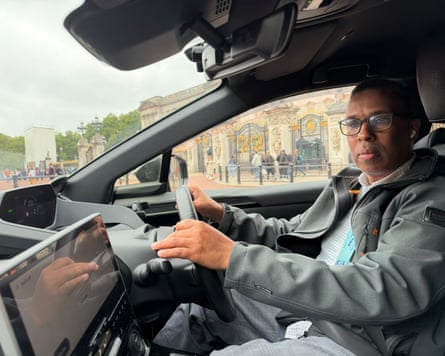
London is also a particularly demanding environment for any automated system. Its streets include dense pedestrian areas, irregular road layouts, frequent construction, complex junctions and a mix of transport modes. That does not make automation impossible, but it makes operating rules, monitoring and enforcement central to public confidence.
For riders, a waitlist of more than 100,000 people suggests substantial curiosity about trying robotaxis. For drivers, the prospect looks more immediate and threatening. Both reactions can be true at the same time. The policy challenge is to avoid treating enthusiasm for a new service as a substitute for a plan to manage its social and transport consequences.

What comes next
The immediate issue is whether national policy will give London greater control over autonomous taxi services. The longer-term issue is how that control should be used. A meaningful local framework would need to address public reporting, safety oversight, accessibility, traffic effects and the relationship between autonomous ride-hailing and mass transit.
London’s experience may also influence other UK cities as trials expand. The contest is not simply between supporters and opponents of robotaxis. It is over the conditions under which an emerging technology earns permission to scale in public space. As autonomous vehicles move beyond demonstrations and into passenger service, that question will matter as much as the software inside the car.
This article is based on reporting by The Guardian. Read the original article.
Originally published on theguardian.com