Brain organoids processed electrical patterns from Braille letters
Researchers have demonstrated that human brain organoids can classify electrical stimulation patterns derived from Braille letters, an experiment that adds to the emerging field of organoid intelligence. The work used living neural tissue derived from stem cells and a tactile sensor that converted Braille information into electrical signals.
According to a study published in Frontiers in Artificial Intelligence, a single organoid containing about 10,000 neurons classified Braille letters with about 61% accuracy. Teams of three organoids reached 83% accuracy. The experiment was designed to test whether real biological neural networks could participate in processing information from robotic tactile sensors, rather than to show that organoids can read Braille in the way people do.
The distinction is important. The task was a controlled information-processing test: a sensor scanned representations of the 26 letters of the Braille alphabet, converted that tactile data into electrical stimulation patterns, and delivered those patterns to organoids. Researchers then assessed whether responses from the stimulated tissue could be decoded into recognizable letter categories.
A test of biological “wetware”
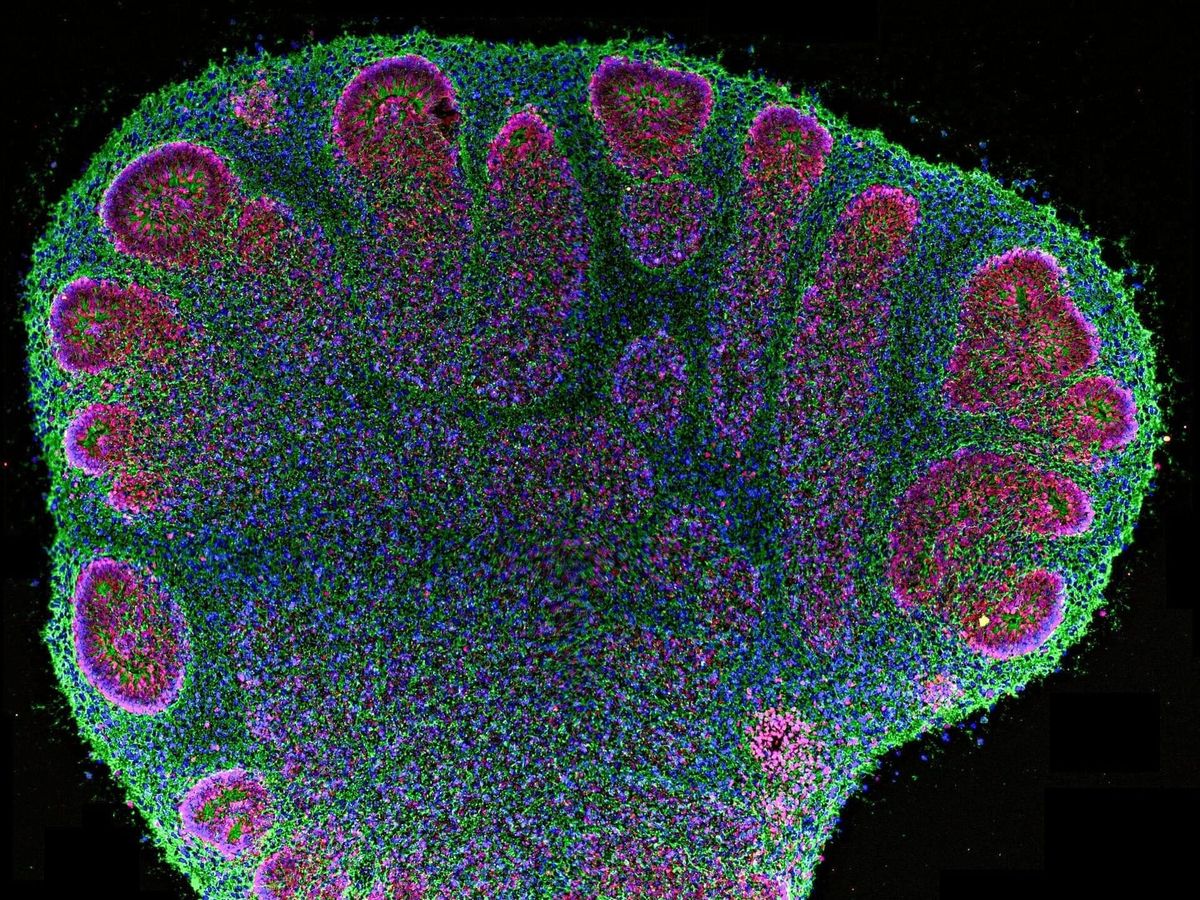
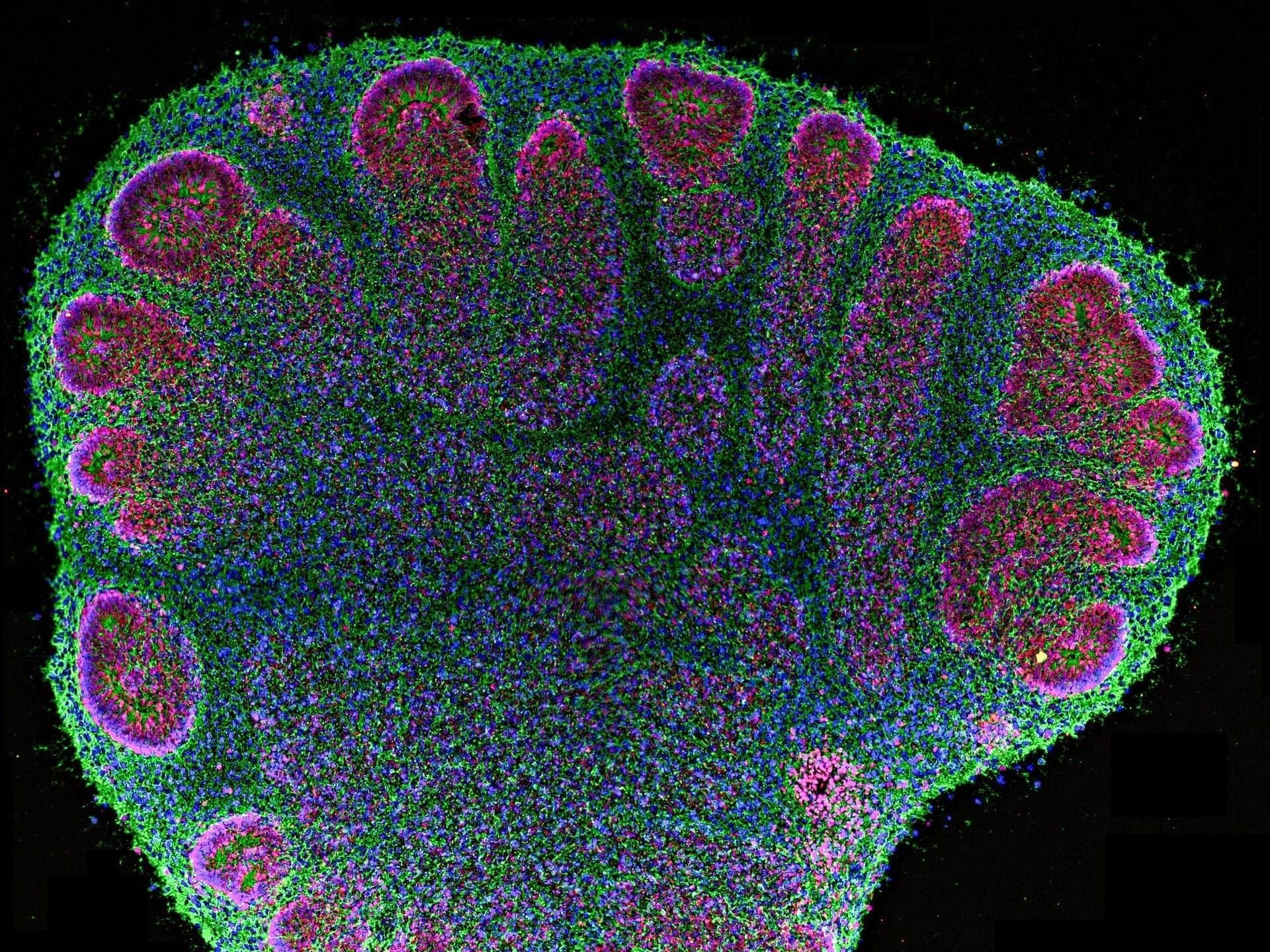
The study sits within organoid intelligence, a field exploring whether brain organoids might be useful for computing applications. Brain organoids are small clusters of neural tissue derived from stem cells. In this experiment, they were smaller than a millimeter and maintained on arrays that kept them alive while supporting electrical stimulation and measurement.
The project was led by Tianyi Liu, a Bristol University PhD candidate. Liu said the work was motivated by the remarkable information-processing capacity of the human brain and its relatively low energy use. Artificial neural networks, she noted, were originally inspired by biological nervous systems. The experiment asks a more direct question: what information-processing abilities might real biological neural networks display when connected to a sensing system?
That question remains exploratory. The reported results do not establish that organoids understand language, experience the tactile world, or possess human-like intelligence. Instead, they show that the organoids’ responses to a defined set of electrical inputs could be used in a classification task.

Why Braille was chosen
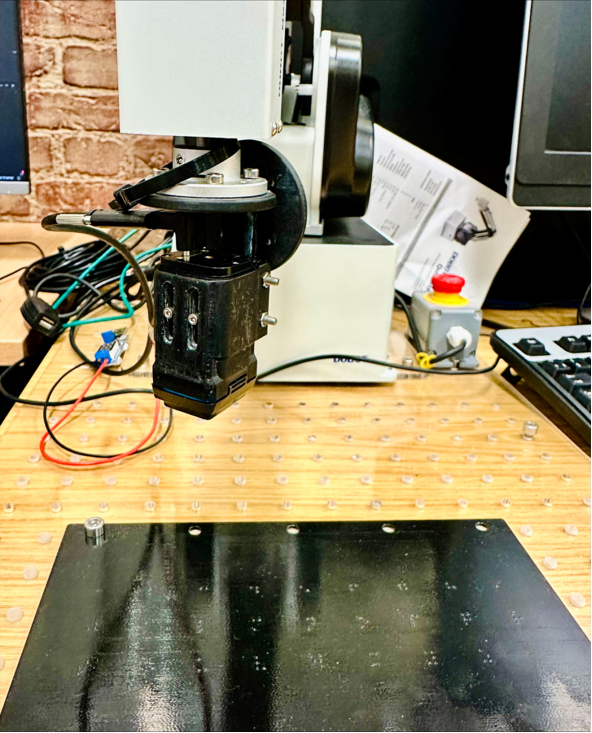
The research team specializes in how robots sense and respond to touch, making Braille a useful experimental input. Braille letters are represented through arrangements of raised dots, allowing a tactile sensor to scan a physical pattern and turn it into a digital representation. The team converted those data into electrical stimulation patterns for the organoids.
Using Braille gave the researchers a set of 26 distinct tactile patterns while keeping the task focused on the relationship between sensing, stimulation, and classification. The stated aim was not to prove that organoids could read Braille like humans. Rather, it was to investigate whether biological neural networks could take part in processing sensory information originating from a robotic tactile sensor.
The approach links two systems that are often considered separately: a machine sensor that captures patterned touch information and living neural tissue that responds to electrical stimulation. The output is not a human-style reading process. It is an experimental pipeline in which sensor data become stimulation patterns and the tissue’s electrical responses become signals that can be analyzed for classification.
One organoid versus a group
The difference between the reported single-organoid and three-organoid results is one of the clearest findings. A single organoid achieved about 61% accuracy in classifying the letters. Teams of three organoids achieved 83% accuracy. The supplied account does not describe every aspect of the decoding method or provide a full comparison with conventional computing systems, but it does show improved reported classification performance when three organoids were used together.
That result gives researchers a concrete basis for further questions about how organoid-based systems might be configured, connected, or evaluated. Liu identified learning and adaptation as questions the team is interested in exploring. The study itself demonstrates classification under the described conditions; it does not claim to have answered all questions about learning, adaptation, or the broader capabilities of organoids.
The controlled nature of the test is also a strength. Rather than using a vague measure of intelligence, the researchers selected a defined input set, delivered electrical patterns corresponding to those inputs, and reported the accuracy with which the inputs could be classified from organoid responses.

Part of a developing research area
Previous studies have shown that organoids can recognize Japanese speech vowels or play the game Pong, according to the report. The Braille experiment extends this line of work into tactile sensing. It does so by using information that began as a physical pattern of raised dots, not as an audio signal or game input.
That expansion matters because real-world sensing involves more than one type of input. Robots must often process information from touch, vision, sound, and other sensors. The new work specifically investigates a tactile pathway: a sensor observes a Braille pattern, the pattern is translated into electrical stimulation, and neural tissue produces responses that can be decoded.
It would be premature to treat the demonstration as a ready-made computer architecture. The experiment is a research result in a young field, and the source describes the organoids as tools for exploring biological neural-network processing. Yet it provides evidence that living neural tissue can be incorporated into a task involving robotic tactile data and letter classification.
What the result does and does not show
The study supports a specific conclusion: under the experimental setup, human brain organoids were able to participate in classifying electrical patterns derived from Braille letters. A single organoid reached about 61% accuracy, while three-organoid teams reached 83% accuracy.
It does not show that the tissue reads or comprehends Braille as a person would. Liu explicitly said the team’s original goal was not to establish that organoids were already intelligent enough to understand Braille. Nor does the reported result settle whether organoids can learn or adapt; those are presented as questions for continued research.
Still, the experiment offers a striking proof of concept. A tactile sensor, a conversion step, and living neural tissue were combined into an information-processing system that produced distinguishable responses. As organoid-intelligence research develops, such experiments may help clarify both the potential and the limits of using biological neural networks directly in computing-oriented tasks.
This article is based on reporting by 404 Media. Read the original article.

Originally published on 404media.co