Teradyne takes a second major European IP fight into the cobot market
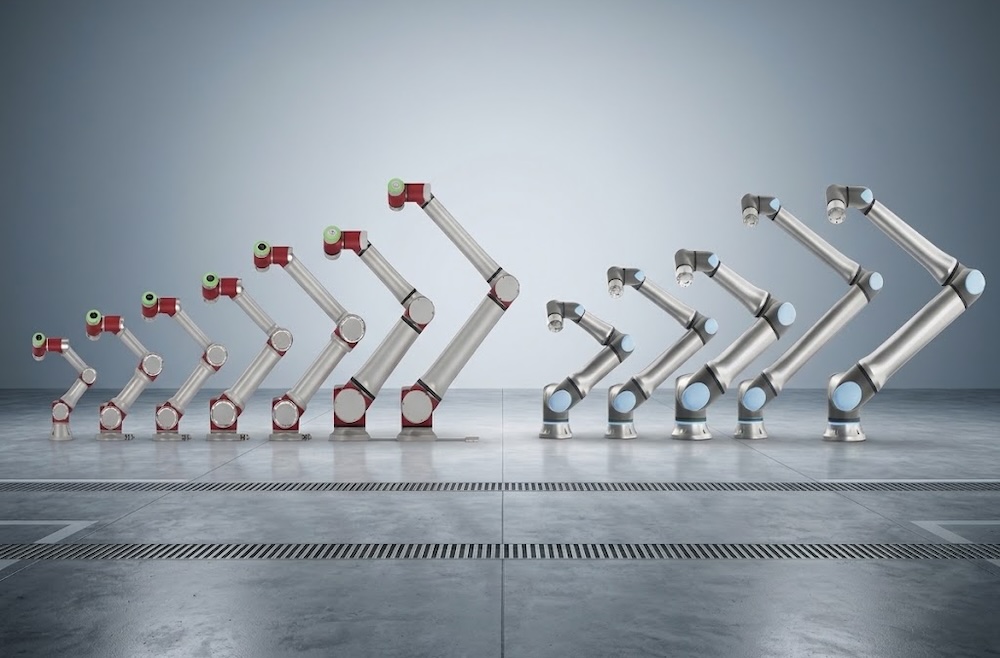
Teradyne Robotics has opened another legal front in Europe, this time accusing a subsidiary of Chinese robotics company JAKA of infringing patents tied to Universal Robots collaborative robot systems. The filing marks the company’s second major case in 2026 involving a Chinese cobot competitor, but it differs in both the legal theory and the stakes of the dispute.
According to The Robot Report, Teradyne Robotics says the lawsuit targets patents covering both hardware and software used in Universal Robots’ collaborative robots. The case was filed with the Unified Patent Court Local Division in Copenhagen, a venue the company says is appropriate because the alleged infringement occurred in Denmark and other European Union member states.
The dispute adds to a widening pattern in industrial robotics: as collaborative robots become more standardized in form factor and functionality, incumbent vendors are leaning harder on intellectual property law to protect design choices, control systems, and integration features that helped define the category. That makes this case more than a bilateral corporate fight. It is also a test of how aggressively major robot makers will police product similarities in one of the fastest-moving corners of industrial automation.
Why Teradyne says JAKA drew scrutiny
Universal Robots CTO David Brandt told The Robot Report that Teradyne became interested in JAKA’s products after noticing what he described as strong similarities between the two companies’ force- and power-limited robot arms. The company then acquired one of JAKA’s robots and examined it more closely.
Brandt said that review made Teradyne believe there was possible patent infringement. That sequence matters because it suggests the lawsuit was not framed around broad market suspicion alone, but around a product teardown and technical comparison that the plaintiff apparently believes can withstand court scrutiny.
Teradyne says the complaint covers a range of JAKA collaborative robots marketed in the European Union. The article does not list the patents at issue or identify the exact models, but it does make clear that the company sees the overlap as extending across multiple protected features rather than a single narrow claim.
That distinction could prove important. Patent litigation involving robotics can hinge on highly specific engineering details, and single-patent cases may be easier to route around through redesigns. A case built on multiple patents spanning hardware and software potentially creates broader commercial pressure, especially if the products under challenge are already being sold across multiple European markets.

Different from Teradyne’s earlier 2026 case
Teradyne’s earlier dispute this year involved Elite Robots’ German subsidiary and centered on alleged copyright infringement rather than patents. In April, the Regional Court of Hamburg issued a preliminary injunction that prohibited Elite Robots Germany from offering the disputed software and products containing it in Germany. That case remains ongoing.
The JAKA matter is different in a fundamental way. As Brandt told The Robot Report, the previous case was about copyright, while this one is a patent case involving several patents and both hardware and software aspects of the product. For Teradyne, that signals a broader enforcement strategy. The company is not limiting itself to one type of intellectual property or one procedural path. It is using whatever legal mechanisms it believes fit the technology at issue.
For the wider robotics sector, that approach sends a clear message. If leading vendors believe rivals are borrowing too heavily from their technical architecture, they may respond with layered claims that are harder to dismiss as routine commercial friction. In practical terms, that can raise the cost of entering crowded cobot segments, particularly in Europe, where the new patent court system offers a more centralized route for cross-border disputes.
The Unified Patent Court raises the geographic stakes
One of the most consequential details in the report is the venue. By filing in the Unified Patent Court, Teradyne is seeking relief in a system designed to streamline patent enforcement across participating jurisdictions. According to the company, a ruling could take effect across 17 of the 18 EU member states participating in the UPC, and could also have implications for certain countries outside the UPC Agreement, including the United Kingdom and Spain.
If that understanding holds, the case carries far wider significance than a national injunction limited to one market. A favorable ruling for Teradyne could constrain how JAKA markets or ships affected products across a substantial portion of Europe. Even before any judgment arrives, the presence of such a case can influence distributors, integrators, and customers who may hesitate to commit to systems facing unresolved IP challenges.
That is especially relevant in collaborative robotics, where buyers often expect long deployment lives, software updates, and ecosystem continuity. Legal uncertainty can weigh on procurement decisions nearly as much as price or performance.
A maturing market meets harder competition
Collaborative robots were once treated as a relatively open growth category defined by ease of use, safer operation, and new applications for smaller manufacturers. But as the market matures, differentiation is narrowing and pressure on pricing is increasing. Under those conditions, established vendors have stronger incentives to defend the features they see as foundational to their lead.
Teradyne Robotics Group President Jean-Pierre Hathout framed the lawsuit in those terms, saying the company would enforce its patents and intellectual property rights against what it considers illegal and unfair copying across both hardware and software. The statement positions the case as part of a broader effort to protect innovation, but it also reflects a more competitive reality: cobots are no longer a niche technology where fast growth can absorb overlap without confrontation.
JAKA did not comment before publication, according to The Robot Report. That leaves the public record one-sided for now, and the eventual court filings and responses will matter far more than opening rhetoric. Patent cases often narrow as technical claims are tested against specific product implementations, and early allegations do not guarantee a sweeping outcome.
What to watch next
The immediate question is whether the court moves quickly enough to shape JAKA’s European business in the near term. The longer-term question is whether this becomes a template for other robotics manufacturers seeking pan-European remedies through the UPC.
If more companies follow this route, Europe could become a more legally consolidated battleground for industrial robotics IP disputes. That would matter not only for Chinese and Western robot makers competing head-to-head, but also for customers trying to assess vendor durability, product roadmaps, and legal exposure.
For now, Teradyne has made its position unmistakable. After already pursuing one high-profile case this year, it is pressing forward again, this time with patent claims aimed at both the physical and digital layers of collaborative robot design. In a market built on repeatable motion, software refinement, and subtle mechanical advantages, that combination could make this case one of the more closely watched robotics disputes of the year.
This article is based on reporting by The Robot Report. Read the original article.

Originally published on therobotreport.com