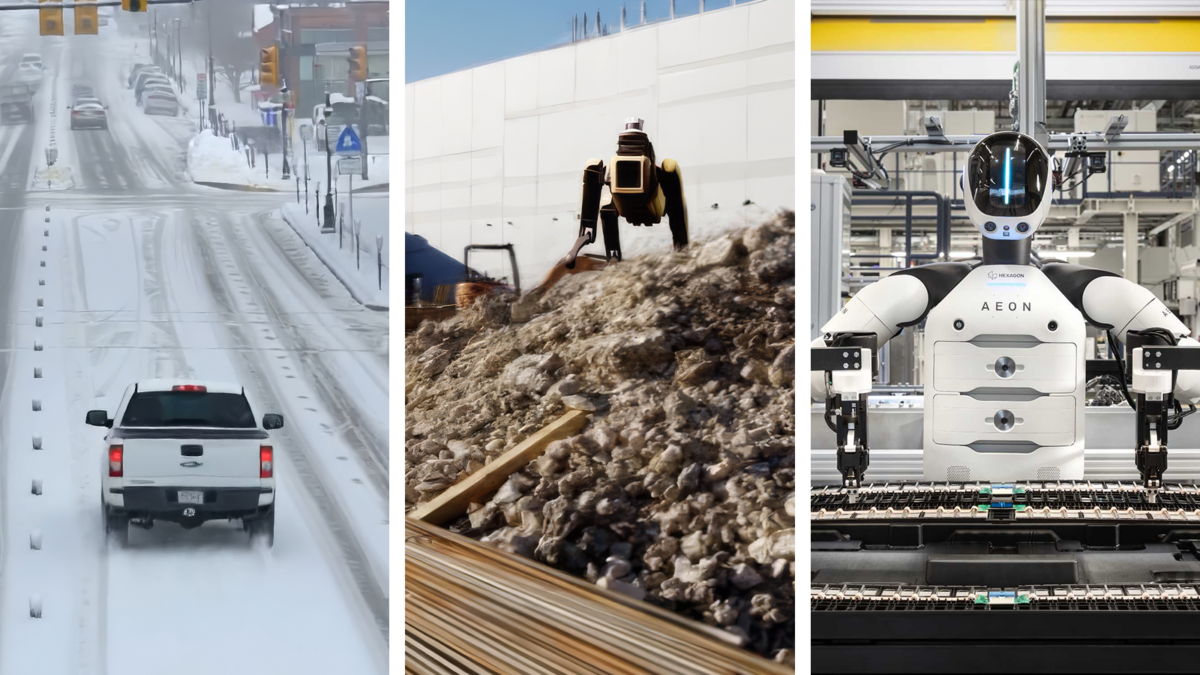
The Physical World Gets an AI Upgrade
Nvidia's annual GTC developer conference has become the most important event in the AI industry calendar, and the 2026 edition was no exception. While previous years established Nvidia's dominance in data center AI computing, GTC 2026 marked a decisive pivot toward what CEO Jensen Huang described as physical AI — the deployment of AI intelligence into systems that interact with the physical world rather than just processing digital data. The announcements spanning autonomous vehicles, industrial robotics, and humanoid robot platforms represent a strategic expansion that could reshape multiple industries simultaneously.
The unifying thread is Nvidia's ambition to become the computational substrate of the physical AI era the way it became the substrate for the data center AI era. If the company succeeds, the AI chips, software platforms, and simulation tools it sells will be as central to the next generation of industrial robots and self-driving cars as its GPU clusters are to today's large language models.
Autonomous Vehicles Hit Los Angeles Streets
Perhaps the most consumer-visible announcement was a partnership with Uber to deploy autonomous vehicles in Los Angeles beginning in 2027. The vehicles will use Nvidia's Drive Orin platform for perception and decision-making, running neural networks trained and tested in Nvidia's Omniverse simulation environment before deployment on public roads. The partnership positions Nvidia as a key infrastructure provider for the AV industry rather than an operator — the company supplies the computational intelligence while partners like Uber handle fleet management, mapping, and regulatory relationships.
Los Angeles presents a particularly challenging deployment environment for autonomous vehicles: complex intersections, aggressive driving culture, frequent construction, and dense pedestrian activity in commercial districts. Nvidia's decision to showcase its platform in LA rather than a more controlled environment reflects confidence in the robustness of its current generation of AV software and hardware.

Industrial Robots Get Nvidia Brains
Two of the world's largest industrial robot manufacturers, FANUC and ABB, announced integrations with Nvidia's Isaac robotics platform. FANUC, which builds approximately a third of all industrial robots globally, and ABB, whose robots are ubiquitous in automotive and electronics manufacturing, will incorporate Nvidia hardware and software into their next-generation robot controllers.
The Isaac platform provides the simulation, training, and deployment tools that enable robots to learn tasks from demonstration rather than requiring hand-coded programming for every new operation. For manufacturers, this means robots that can be retrained for new parts or assembly sequences in hours rather than weeks — a flexibility that is increasingly essential as production runs shorten and product variety increases. The FANUC and ABB partnerships give Nvidia direct access to the installed base of robots in manufacturing plants worldwide.
Solving Robotics' Data Problem
Jensen Huang framed a central challenge for physical AI development in a memorable way: the robotics industry has a data problem that needs to become a compute problem. This formulation captures something important. Unlike language models, which were trained on the vast internet text corpus already in digital form, robot learning models require physical interaction data — videos of robots manipulating objects, sensor streams from robot joints, images of industrial parts — that simply does not exist in the quantities needed for large-scale training.
Nvidia's solution is synthetic data generation at scale using Omniverse, its physically accurate 3D simulation platform. Rather than collecting training data from physical robots in factories, developers can generate millions of simulated examples of robot-object interaction in Omniverse and use them to pre-train models that then require only modest fine-tuning on real hardware. The compute cost of this approach is enormous — hence Huang's framing of converting a data problem into a compute problem — but it is a problem that Nvidia can profitably solve.

Humanoid Robot Models
GTC 2026 also featured new foundation models specifically designed for humanoid robots. Nvidia's GR00T model series, updated with a new generation architecture, provides a pre-trained base that humanoid robot developers including Figure, 1X, and Agility Robotics can fine-tune for specific manipulation and locomotion tasks.
The humanoid segment remains in early development, with most deployed units in controlled pilot environments rather than open-floor manufacturing. But the trajectory is clear: as foundation models improve and physical AI training pipelines mature, the gap between what humanoid robots can do in a lab and what they can do in a real factory is closing faster than most observers predicted.
The Platform Play
Taken together, Nvidia's GTC 2026 announcements describe a company executing a platform strategy across physical AI applications: providing the chips, simulation software, training infrastructure, and pre-trained models that any physical AI developer needs. For investors and industry participants, the question is whether this platform strategy will produce the kind of winner-take-most dynamics that characterized Nvidia's data center GPU business — or whether physical AI's diversity of applications and hardware requirements will sustain a more fragmented competitive landscape.
This article is based on reporting by The Decoder. Read the original article.
Originally published on the-decoder.com