A restaurant robotics company broadens its playbook
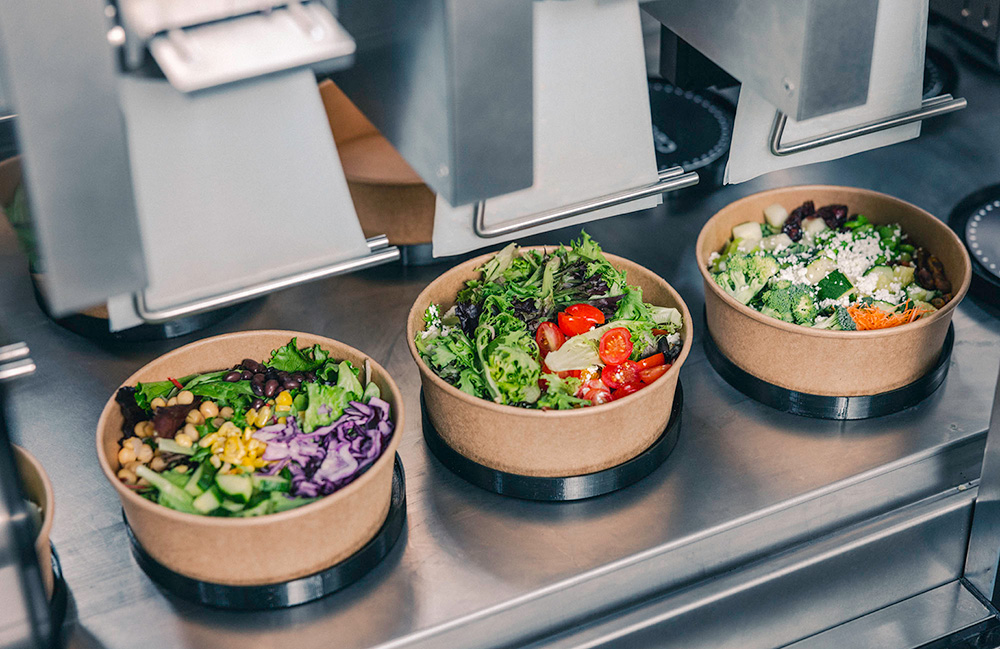
Appetronix has acquired Cibotica, adding ingredient dispensing and portioning technology to a business that had previously focused on building standalone autonomous restaurant formats. According to The Robot Report, the deal gives Appetronix access to Cibotica’s flagship automated bowl and salad assembly system, known as Remy, while also opening a second route to market: retrofitting existing kitchens instead of only launching new robotic sites from scratch.
The financial terms were not disclosed, but the strategic logic is visible in the supplied report. Appetronix already operates robotic pizza kitchens through a partnership with Donatos, including a fully autonomous location at John Glenn Columbus International Airport in Ohio and another location expected to open this spring. By adding Cibotica, the company is no longer limited to proving restaurant automation through greenfield concepts. It can now offer modular systems that fit into existing food-service operations.
That is an important shift because the restaurant automation market has long faced a structural challenge. Building entirely new robotic venues can showcase the future, but retrofitting existing kitchens is how the technology reaches a much larger installed base.
From closed system to modular expansion
In comments quoted by The Robot Report, Appetronix CEO Nipun Sharma emphasized that Cibotica had created modular equipment that can go into existing restaurants and automate a significant share of current tasks. That modularity is the heart of the acquisition. It expands Appetronix from a company with purpose-built autonomous environments into one that can also sell automation into conventional operations.
This matters because restaurants are operationally fragmented. Many operators do not have the capital, space, or appetite to replace a kitchen with a fully autonomous concept. A modular line that dispenses and portions ingredients can be a more practical entry point. It offers a step toward automation without requiring a full redesign of the business.
The acquisition therefore changes Appetronix’s addressable market. Standalone autonomous restaurants remain one path, but the new combined offering can also target salad, bowl, and other food-service formats where precise ingredient handling is repetitive, labor-intensive, and commercially important.

Labor pressure remains the biggest driver
The supplied report makes clear that labor pressure is central to the company’s thesis. Sharma described labor as the biggest challenge in the restaurant industry over the last decade, arguing that equipment alone cannot solve throughput problems if there is no one available to run it. He also pointed to rising labor costs and rising costs of goods driven by tariffs and inflation as additional pressure on operators.
That diagnosis is familiar across food service, but the acquisition gives it a more concrete operational response. Portioning and dispensing are precisely the kinds of repetitive tasks that automation can handle with consistency. In categories such as bowls, salads, and fast-casual assembly, those steps also affect speed, waste control, and quality. A system that automates them has value beyond labor substitution alone.
Sharma’s comments in the report also reveal a distinction Appetronix has been trying to make in the market. He argued that some efforts to automate existing kitchens were not materially speeding processes, saving money, or eliminating labor. In that framing, the goal is not just to add robotics for visibility. It is to improve restaurant economics in measurable ways.
Why this deal may matter more than a single product launch
Acquisitions in robotics can sometimes amount to feature additions. This one looks more like a strategy correction or, more charitably, a strategy expansion. By buying Cibotica, Appetronix is aligning itself with two realities of restaurant automation at once.
The first is that fully autonomous concepts remain useful as demonstrations and as operating models in high-constraint locations such as airports and theme parks. The second is that the bigger volume opportunity may lie in augmenting the kitchens that already exist. Those are different sales motions, deployment cycles, and customer profiles. Owning technology for both gives Appetronix more flexibility than a pure autonomous-restaurant company would have.
The acquisition also appears to broaden cuisine coverage. The report says Cibotica’s dispensing technology helps Appetronix position itself to launch robotic concepts across multiple cuisines and other formats requiring precise ingredient portioning. That is a meaningful operational point. A pizza-focused robotic kitchen does not automatically translate into all of food service. Portioning systems that handle diverse ingredients are a route toward wider applicability.

The next phase of food automation
The restaurant sector has often been cited as fertile ground for robotics, but adoption has moved unevenly. The challenge is not simply technical feasibility. It is the fit between robotics, labor dynamics, menu structure, space constraints, and return on investment. Appetronix’s acquisition of Cibotica suggests that companies in the space are adapting by becoming more modular, more retrofit-friendly, and more explicit about economic outcomes.
That could make the category more credible. Operators are more likely to act on automation if the technology can be inserted into an existing workflow and tied to specific pain points such as staffing shortages, rising costs, and consistency demands. A system like Remy fits that template more naturally than a moonshot-style autonomous restaurant alone.
Appetronix is still betting on autonomous dining concepts, but this acquisition shows a wider understanding of how restaurant technology scales. The future kitchen may still be robotic. The more immediate business, however, may be helping conventional kitchens automate one high-value task at a time.
This article is based on reporting by The Robot Report. Read the original article.
Originally published on therobotreport.com