From robotics lab ambition to product execution
Humanoid robotics companies have spent years proving that their machines can walk, lift, balance, and perform tightly scripted tasks. Far fewer have shown that they can turn those demonstrations into repeatable products, with the organizational discipline needed for manufacturing, market fit, and sustained deployment. Apptronik’s decision to hire Daniel Chu as chief product officer suggests the company believes it is entering exactly that transition point.
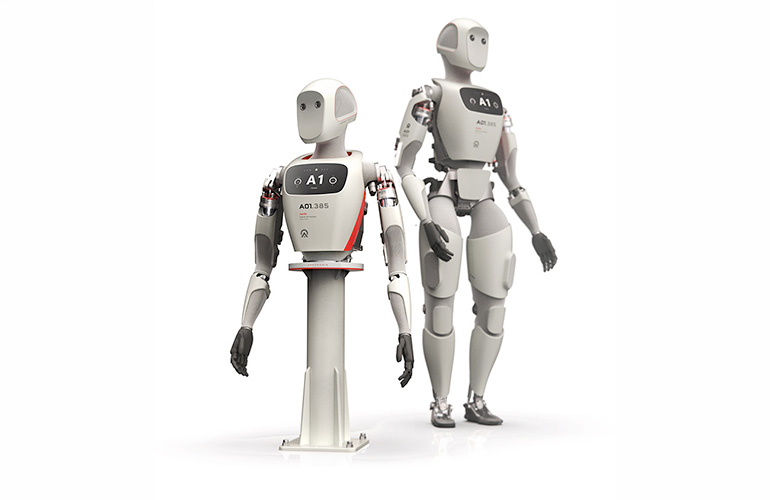
According to the supplied source material, Chu previously served as chief product officer at Waymo and played a foundational role in building the product organization behind its autonomous ride-hailing service. Apptronik is also bringing in veterans from companies including Amazon, Boston Dynamics, and Paramount+, while positioning its Apollo humanoid robot for broader commercialization. The message is clear even through the company’s own framing: this is not being presented as a pure research milestone. It is a business-scaling moment.
Why this hire matters
Humanoid robots attract attention because they promise general-purpose physical labor in spaces designed for humans. But that same promise creates brutal product challenges. A company is not just shipping hardware. It is shipping reliability, safety, software updates, deployment tooling, customer support, and a roadmap that can move from controlled pilots into real environments without collapsing under edge cases.
That is why a product leader with experience turning advanced autonomy into an operational service matters. Waymo’s context is different from humanoid robotics, but the overlap is meaningful. Both involve safety-critical systems, public scrutiny, integration into existing infrastructure, and the long grind of turning extraordinary technical capability into something customers can trust and use at scale.
If Apptronik’s leadership believes Apollo is moving closer to real customer deployments, then product discipline becomes as important as raw engineering talent. A humanoid robot that looks impressive in a video is not yet a product. A robot that can be configured, serviced, monitored, updated, and economically justified in a warehouse or care setting is.

The funding and timing signal bigger ambitions
The source text says Apptronik is backed by a fresh $935 million Series A and is preparing to manufacture and sell its Apollo humanoid robot. That scale of capital suggests the company is no longer optimizing solely for technical credibility. It is preparing for infrastructure: supply chain buildout, hiring, product operations, go-to-market execution, and the long runway required to commercialize expensive embodied AI systems.
In robotics, funding rounds can sometimes create a distorted sense of inevitability. Money does not guarantee product-market fit. But capital at this level does change what a company is able to attempt. It can fund not only R&D but also the slower, less glamorous work of commercialization. Hiring a chief product officer from Waymo fits that picture more plausibly than a purely research-oriented appointment would.
The eldercare narrative, and the near-term reality
Apptronik’s statements, as quoted in the source, tie Chu’s background at 23andMe to a longer-term vision for assistive care and eldercare. That is an ambitious aspiration, and it reflects a broader trend in humanoid robotics: companies often describe a near-term path through industrial or commercial environments while holding up healthcare and home assistance as eventual high-impact destinations.
The sequencing matters. Warehouses and other structured workplaces are typically easier first markets than homes or clinical environments, where variability, safety expectations, and regulatory complexity are higher. Apptronik’s own framing points to commercial applications first, followed later by healthcare and the home. That ordering makes strategic sense. The path to generalized assistive care likely runs through narrower operational domains where reliability can be hardened and unit economics can be improved.

What this says about the humanoid sector
Apptronik is not the only company racing to prove that humanoid robots can become a real category rather than a perpetual demo. What stands out here is the explicit emphasis on leadership imported from companies that solved adjacent scale problems in autonomy, logistics, and consumer platforms.
That hiring pattern suggests a maturing market. As the field moves beyond foundational motion and manipulation breakthroughs, the bottleneck shifts toward productization. The key question becomes less “Can the robot do this once?” and more “Can the company deliver this reliably, profitably, and at operational scale?” Those are different competencies, and they require different executives.
A stronger signal than a concept video
In emerging technology, executive hires are often treated as soft news. In this case, the hire may be more revealing than another robot demo would be. It indicates where Apptronik believes its hardest problems now lie. If the company were still mainly solving for proof of concept, a Waymo product veteran would be a less obvious centerpiece. If it is solving for repeatable commercialization, the move looks more strategic.
Apptronik still has to prove that Apollo can cross the gap between promise and deployment. The humanoid robotics market remains crowded with ambition and short on scaled evidence. But the company’s latest leadership move suggests it understands that the next contest will not be won by spectacle alone. It will be won by turning general-purpose robotics into a managed product business, one customer environment at a time.
This article is based on reporting by The Robot Report. Read the original article.

Originally published on therobotreport.com