Artemis II Did Not End at Splashdown
NASA says the science phase of Artemis II is still unfolding nearly two months after the mission's April 10 splashdown in the Pacific. In a new agency update, researchers describe how they are continuing to analyze crew health, performance data, astronaut-derived organ chips, and mission observations gathered during the record-setting flight around the Moon.
The message is clear: Artemis II was not only a demonstration mission in space, but also a research campaign that extends well into postflight analysis on Earth. That matters because NASA is using the mission to inform future human exploration plans, including later lunar operations and eventual deep-space surface work.
Why Immediate Postflight Data Matters
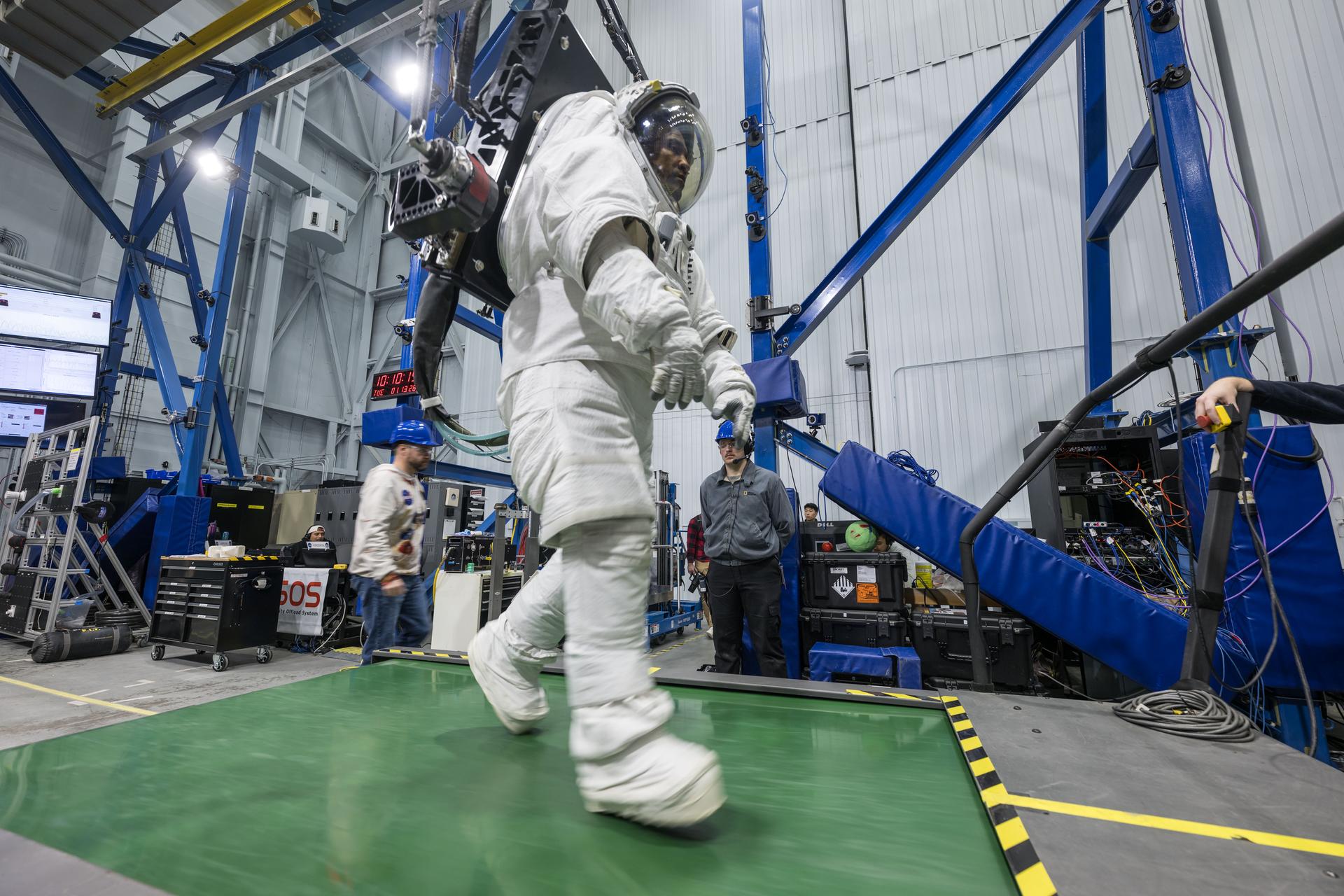
One of the main focuses is how quickly the human body readapts after spaceflight. According to NASA, researchers collected data from the Artemis II crew in the hours, days, and weeks after landing to understand the transition from microgravity back to Earth's gravity. That included health measures such as blood pressure, heart rate, eye health, and motor control.
The crew also completed a mini obstacle course involving actions such as lying down, standing up, unfurling a rope ladder, and climbing. Those tasks were designed to assess how quickly astronauts could perform mission-critical physical actions after returning to a gravity environment.
This is not an abstract concern. NASA notes that future crews landing on the Moon or Mars may not have support personnel waiting to assist them. Understanding how rapidly astronauts can function after landing therefore has direct operational relevance.
From Earth Recovery to Lunar Surface Planning
NASA explicitly ties these postflight studies to future exploration architecture. The agency says the results will help support safe human exploration of deep space and provide a blueprint for how later missions conduct science on the lunar surface as it works toward a Moon Base and an enduring human presence there.
That linkage makes the Artemis II research strategically important. A mission around the Moon is valuable on its own, but the larger program goal is sustainable operations beyond low Earth orbit. Every piece of health and performance data feeds into that broader planning effort.
Organ Chips and Other Biological Experiments
The update also references astronaut-derived organ chips that flew around the Moon. While the supplied source text does not include detailed findings, their continued analysis points to another important dimension of Artemis II: the mission is being used to study not just astronaut performance, but also how biological systems respond to deep-space conditions.
That kind of work can help bridge human and biomedical research. Organ-chip platforms are often used to model tissue behavior under conditions that would be difficult to study directly. When paired with actual mission exposure, they can become a powerful way to investigate risk in a controlled framework.
Operational Science, Not Symbolic Science
NASA's framing of the postflight effort is notably practical. This is not science for public relations alone. It is operational science aimed at reducing uncertainty. Can astronauts complete tasks quickly after landing? How do their bodies adapt? What baseline measures shift? Which procedures need to change before crews are expected to operate more independently on another world?
Those questions sit at the heart of deep-space mission design. Exploration programs often capture public imagination through launch and flight milestones, but their long-term viability depends on post-mission analysis that is slower and less visible.
The Broader Artemis Pattern
The Artemis program has always had two narratives running in parallel. One is symbolic and geopolitical: returning humans to deep-space missions around and eventually onto the Moon. The other is technical and cumulative: building the medical, engineering, and operational knowledge needed to make those missions repeatable.
The new NASA update belongs squarely to the second category. It shows how the agency is trying to turn a high-profile crewed mission into a reusable dataset for future operations.
What Comes Next
NASA says teams are still collecting and analyzing observations from Artemis II. That means the mission's scientific output is still developing, and later releases may add more detail on crew adaptation, organ-chip results, lunar imagery, and other onboard data products.
For now, the most important takeaway is that Artemis II's value did not end when the capsule hit the water. The mission is still generating evidence that NASA intends to use in planning how humans will live and work farther from Earth.
This article is based on reporting by science.nasa.gov. Read the original article.
Originally published on science.nasa.gov