A landmark map with a bigger cosmology question behind it

The Dark Energy Spectroscopic Instrument, or DESI, has completed the five-year survey that formed its core mission, delivering the largest and most detailed three-dimensional map of the universe yet assembled. The project catalogued far more objects than originally planned and has now been extended through 2028, but the map itself is only part of the story. The more consequential result may be what the data continues to suggest about dark energy.

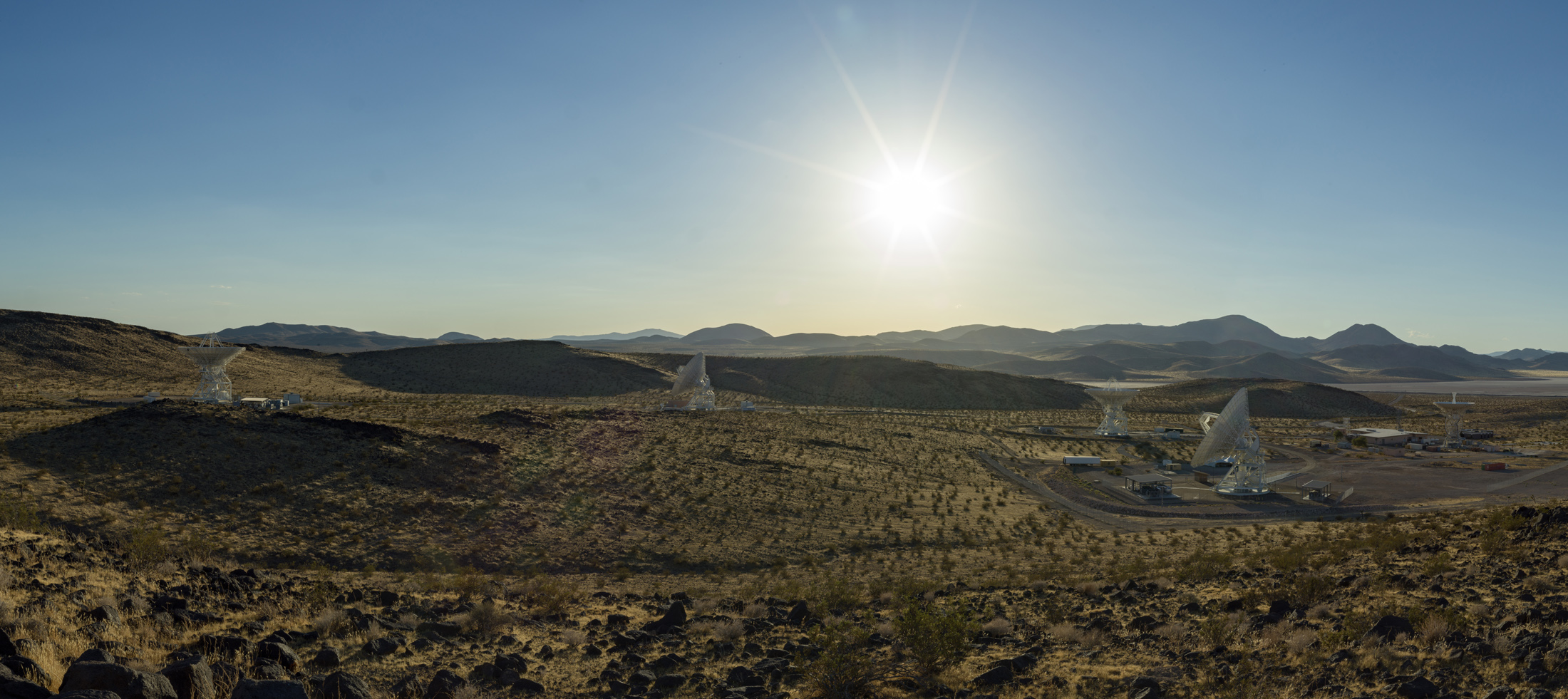
DESI operates from Kitt Peak in Arizona using roughly 5,000 robotic fiber-optic positioners that capture light from distant objects. Over the course of the survey, the instrument mapped 47 million galaxies and quasars, along with 20 million stars in the Milky Way. The original plan had been to map more than 34 million galaxies over five years. By the time observations for the main mission concluded on April 14, the project had exceeded that target by a wide margin.

Why this map matters

Three-dimensional maps of the universe are not just visual achievements. They let researchers measure how matter is distributed across space and time, which in turn helps them reconstruct the expansion history of the cosmos. DESI’s scale gives cosmologists a far more detailed dataset for testing how the universe has evolved and how that expansion has changed.

The project’s success also matters operationally. According to DESI Director Michael Levi, the instrument performed better than expected, and the survey advanced with exceptional speed given the size of the undertaking. Completing a map of this breadth is a technical accomplishment in its own right, but its scientific value depends on what researchers can extract from the patterns embedded in that distribution.

The central mystery: is dark energy changing?

Dark energy is the name given to the unknown component thought to drive the accelerating expansion of the universe. It is often treated as a cosmological constant, meaning something that does not vary with time. That assumption has shaped a large part of modern cosmology.

DESI’s early findings from its first three years introduced a challenge to that picture by hinting that dark energy might instead be evolving as the universe ages. The newly completed five-year dataset is expected to sharpen that question. If the larger dataset confirms the earlier pattern, the implications would be substantial.

A confirmed shift away from a constant dark energy model would force a reassessment of some of cosmology’s most basic assumptions. It would affect how scientists model the universe’s long-term behavior and could reshape debates over possible end states such as a Big Rip, Big Freeze, Big Bounce, or something not yet clearly described by existing theory.

Why cosmologists are paying attention

The significance of the possibility is captured by the reaction within the collaboration. Gregory Tarlé, a founding DESI member and University of Michigan professor, described the emerging result as a stunning discovery that has forced scientists to rethink what they understood about dark energy.

That kind of statement does not mean the question is settled. The source text is explicit that scientists are still working through the full five-year dataset. But it does indicate that the signal is serious enough to sustain attention after earlier hints, rather than fade as a statistical artifact.

The mission is over, but the survey continues

One of the most notable details in this milestone is that DESI is not shutting down after completing its original brief. Its main mission has already been extended through 2028. That means the map released from the first five years is both a culmination and a foundation for more observations.

Continued data collection matters because dark energy questions are inherently statistical and comparative. Larger samples improve confidence, reduce uncertainty, and may reveal whether apparent deviations from standard assumptions are robust across time and object classes.

A data product with philosophical consequences

Cosmology is unusual in that a better catalog can alter the universe’s story at the highest level. DESI’s new map is not simply a bigger database of galaxies. It is an instrument for testing whether one of the field’s central explanatory pillars is incomplete.

If dark energy turns out to be dynamic, the consequences will extend well beyond one survey or one theory paper. It would mean the dominant framework used to describe cosmic acceleration needs revision. That would ripple through models of structure formation, expansion history, and the ultimate fate of the cosmos.

For now, DESI has delivered a remarkable observational achievement: tens of millions of galaxies and quasars positioned in the most extensive 3D portrait of the universe yet made. The scientific payoff may be even larger if that map helps show that the force shaping cosmic expansion is not constant after all.

This article is based on reporting by Universe Today. Read the original article.

Originally published on universetoday.com