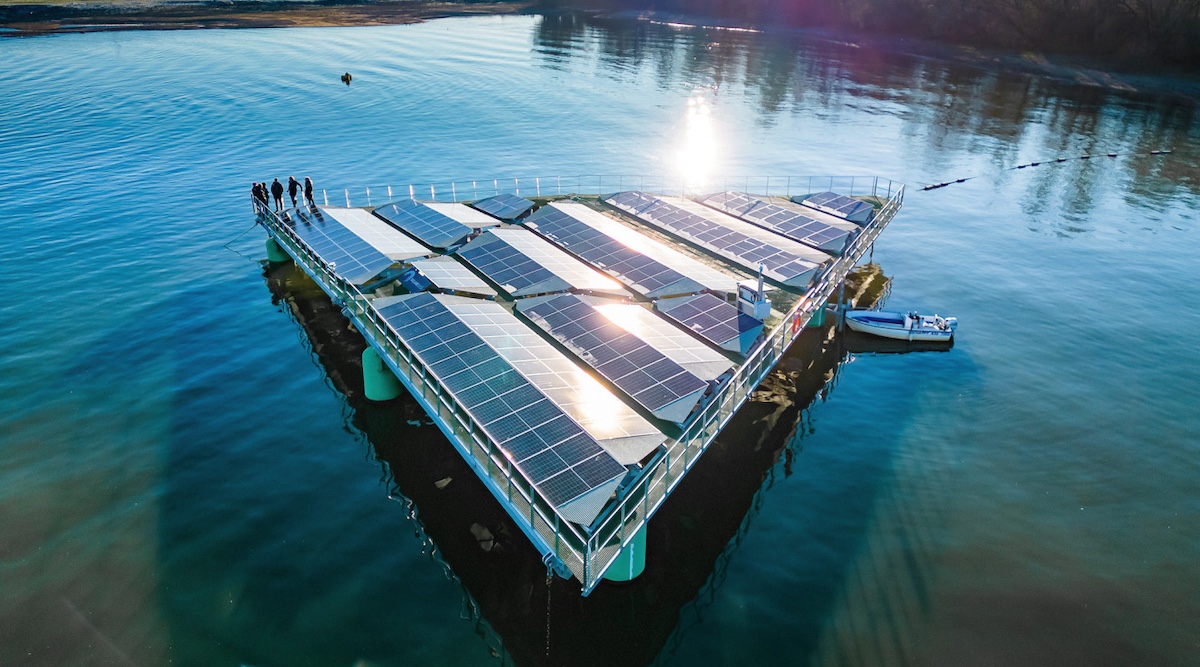
Spain’s coastline may support a new layer of solar generation
Researchers from the University of A Coruña have estimated that Spain could develop between 4.45 gigawatts and 6.48 gigawatts of floating offshore solar photovoltaic capacity. According to the summary provided with the study, that level of deployment could meet roughly 6.2% to 9% of the country’s electricity demand, based on September 2025 data.
The finding is notable because offshore solar has generally received less attention than either land-based solar or offshore wind. Spain is already widely recognized as one of Europe’s stronger solar markets on land. The new assessment suggests the country’s marine space may also represent a meaningful, if still emerging, source of generation.
Why the estimate matters
The research is framed around installable capacity rather than a near-term buildout forecast, but even that distinction matters. Energy planning increasingly depends on understanding where new generation can fit physically, legally, and economically. By tying its analysis to Spain’s Maritime Spatial Planning Plans, known as POEM, the study places offshore solar inside the country’s formal marine-use framework rather than treating it as a purely theoretical idea.
That makes the work more relevant to policy and infrastructure planning. Marine energy development is not just an engineering problem. It must fit around shipping, environmental constraints, competing uses of coastal waters, and permitting systems. Mapping potential capacity against official spatial plans helps move offshore solar from speculative concept toward an option that planners can assess more concretely.
Floating systems offer operational advantages
The source summary highlights one of the recurring arguments for floating solar systems: water can improve panel performance by reducing operating temperatures. In this case, the reported generation boost is 10.2% compared with conventional land-based systems. That is a meaningful claim because panel efficiency is sensitive to heat, and in sunny environments the cooling effect of surrounding water can become part of the economic case.
The same summary says payback periods can range from around three to seven years. That does not establish that every project would be equally attractive, but it does suggest floating offshore solar is being examined as a potentially commercial technology rather than only as a demonstration-class experiment.
Spain is a useful test case for that discussion. Its solar resource is strong, and its coastline provides exposure to a maritime environment that could accommodate additional capacity where land-use conflicts, siting limits, or grid considerations make other options harder.
Not a substitute for offshore wind
One of the more important points in the source material is that the researchers do not present offshore solar as a direct rival to offshore wind. Instead, they describe the two as potentially complementary. That is a strategically important distinction. New energy technologies often get framed as zero-sum competitors for space, capital, or policy attention. Here, the argument is that co-location or coordination could allow both technologies to share portions of their electrical infrastructure.
If that proves workable in practice, the implications could be broader than Spain alone. Shared infrastructure can change project economics, especially offshore, where grid connection and marine installation costs are often central barriers. A combined approach might also diversify output profiles and make coastal energy zones more productive overall.
The source text does not claim those combinations are already deployed at scale in Spain. What it does establish is that the research treats offshore solar and offshore wind as compatible planning components rather than mutually exclusive claims on the same water.
From niche concept to system planning question
Floating solar has already advanced in inland settings, but offshore deployment remains a more specialized frontier because of harsher conditions and the technical demands of anchoring, survivability, and maintenance at sea. That makes this estimate important even beyond the headline capacity number. It suggests offshore solar is entering the stage where national potential is being quantified against real planning instruments.
The paper, titled Assessment of installable offshore solar power capacity in Spain based on maritime spatial planning, was published in the Journal of Cleaner Production. Based on the supplied summary, its contribution is not to claim that Spain is on the verge of installing nearly 7 gigawatts offshore tomorrow. Its contribution is to put a credible range on what marine deployment could look like under existing spatial constraints.
That is how new infrastructure categories often begin. Before large pipelines of projects appear, there has to be a serious estimate of where they could go and how much they could add. In that sense, the study performs a foundational role.
What this means for the energy transition
For Spain, the research reinforces the idea that the next stage of clean-energy expansion may come not only from adding more familiar assets, but from widening the geography of generation. Offshore solar is still early compared with established technologies, yet the reported capacity range is large enough to matter in national planning terms.
More broadly, the study reflects a shift in how energy systems are being imagined. Coastal waters are no longer seen only as transport corridors or wind zones. They are becoming multi-technology energy spaces where solar, wind, and shared infrastructure could increasingly intersect.
The case for offshore solar will still depend on costs, engineering performance, environmental review, and deployment experience. But the Spanish assessment provides a clear signal that the category deserves attention. It moves the conversation beyond novelty and into the more consequential question of how much generation a country could realistically host if the technology continues to mature.
This article is based on reporting by CleanTechnica. Read the original article.
Originally published on cleantechnica.com