When Surveillance Hardware Meets Resistance
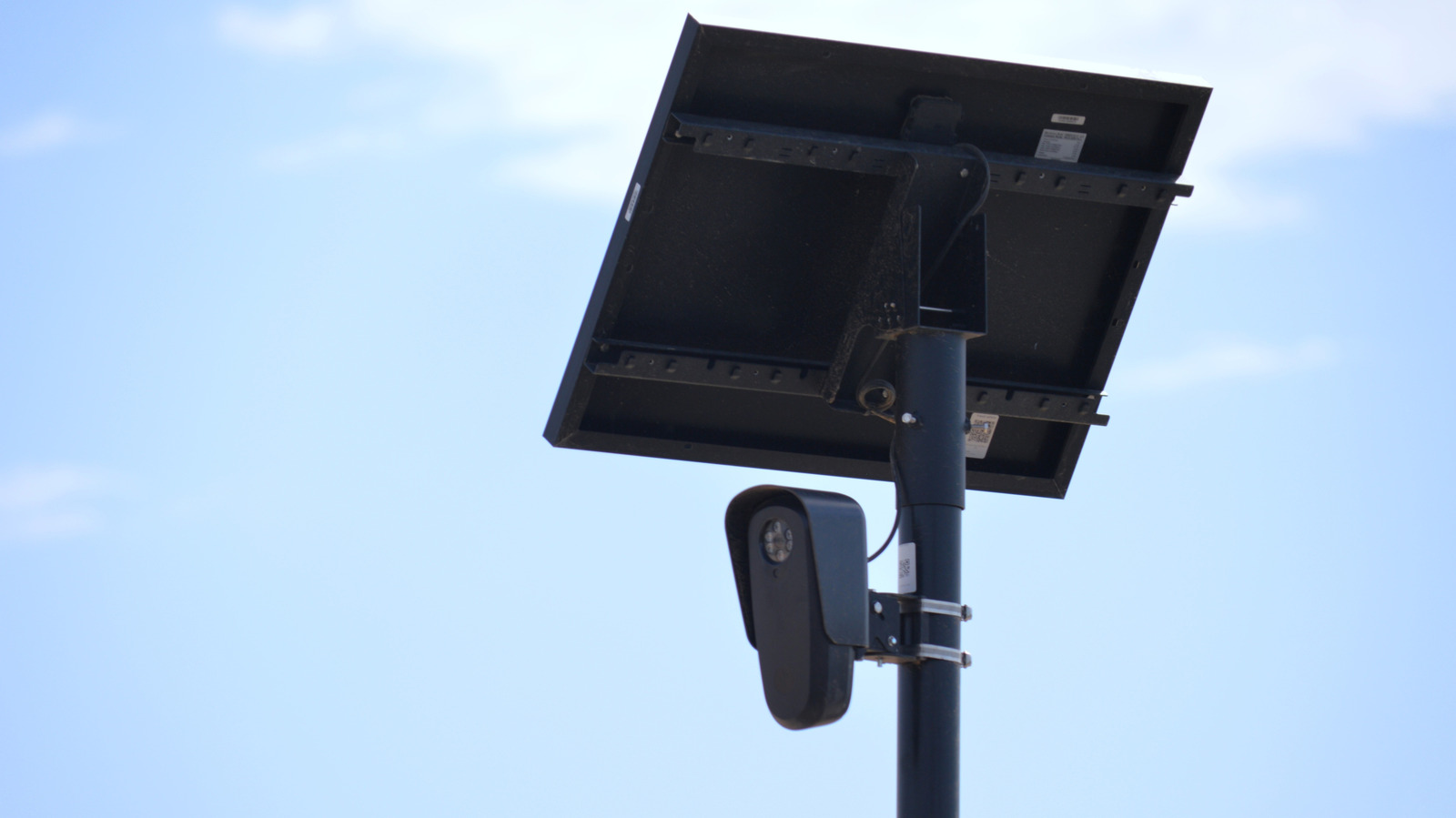
Flock Safety's license plate readers have spread across American cities and counties quickly enough that they now form a familiar layer of the built environment. The pole-mounted units sit at intersections, subdivision entrances, and highway ramps, recording passing vehicles and feeding that information to the law enforcement agencies that contract for the service. They have also become a favorite target for people who object to round-the-clock tracking. Cameras have been cut off their poles and otherwise disabled often enough that the pattern reads like a rough measure of public sentiment. Anyone who has scrolled through the comments beneath coverage of Flock deployments already has a sense of how many Americans feel about being watched continuously; the damaged hardware simply makes that sentiment physical.
All of that destruction raises an unglamorous question that rarely surfaces in privacy debates: when a camera is lost, stolen, or broken, who pays to replace it? According to the contracts and policies that govern these systems, the answer is the agency that bought the hardware — which in practice means the county, and therefore the taxpayer.
Houston Shows How the Math Works
Houston offered a concrete illustration in July, when residents there cut down at least six Flock cameras. The removals came in response to multiple counties renewing their agreements with the surveillance company through 2027.
The gesture was expressive, but its practical effect was limited and possibly counterproductive. Rather than costing Flock Safety anything, the damage likely put more money into the company's pocket, because of how its contracts handle replacement hardware.
A Contract Clause That Shifts the Cost
In at least one Texas jurisdiction, Fort Bend County, the agreement with Flock contains language covering equipment that is lost, stolen, or damaged. The customer may request replacement hardware for a fee, and those fees are itemized:
- $500 to replace a standard pole
- $2,000 to replace an advanced pole
- $800 for each camera
None of that money comes from the person who took the camera down, and none of it comes from Flock. The county pays, and the county's budget is filled by residents. Tearing down a camera as a protest therefore triggers a repair bill that lands on the same public the protester might have been trying to speak for.

Flock's Own Answer: The Camera Protection Plan
Flock Safety has acknowledged the problem publicly. Around the same time as the Houston removals, the company published a blog post titled 'What Happens if a Flock Camera Is Damaged?' The post describes a service that law enforcement agencies can opt into.
Under that program, the Camera Protection Plan, the company says it will repair or replace covered license plate recognition or video cameras at no additional cost when damage occurs. The plan is described as an optional annual add-on, which implies a recurring premium — and Flock does not publicly disclose what that premium costs. Agencies therefore have to weigh an unknown annual fee against the risk of repeated replacement bills.
Because the company does not publish pricing, comparisons between jurisdictions are difficult, and residents have little way to evaluate whether the premium is a good deal relative to simply paying for replacements as they happen.
Insurance, Except the Insurer Also Sells the Camera
The arrangement has an unusual structure. It functions like insurance, except that unlike auto coverage, which a third-party insurer provides, the protection here comes from the same company that manufactures and sells the hardware being insured. Every damaged camera generates either a replacement fee or a reason to enroll in the protection plan, and both paths lead back to the vendor's revenue.
That does not make the plan worthless to a county. Predictable annual costs can be easier to budget than sudden repair bills. But it does mean that a jurisdiction's decision to insure its cameras is also a decision to deepen its financial relationship with the company selling them.
Who Ends Up Holding the Bill
However the accounting is arranged, the money originates in the same place. Whether a county pays per-replacement fees or enrolls in an annual protection plan, the funds come out of its budget, and county budgets are built from tax revenue. The cost of a camera that no longer exists is absorbed by the public either way.
That has several implications worth tracking:
- Replacement fees are a line item that any act of vandalism can trigger, making them an unpredictable budget risk.
- The protection plan's undisclosed price tag makes cost comparison difficult for agencies and for the residents who fund them.
- Vandalism imposes no cost on the vendor; if anything, it creates additional hardware and service revenue.
- Public frustration with surveillance does not translate into financial pressure on the company operating the network.
For residents, the practical takeaway is that the financial consequences of camera damage are as much a part of the deployment debate as the privacy questions. A county that installs license plate readers is also accepting responsibility for maintaining them, and the contracts determine how much that responsibility costs.

Questions Worth Asking About Any Camera Contract
The Flock example suggests a short list of items that residents and local officials can examine before or after a system goes up:
- Does the agreement include a replacement fee schedule, and at what amounts?
- Is the agency enrolled in an optional protection plan, and what does that premium add to the annual cost?
- How many years does the contract run, and when is it next up for renewal?
- Who is responsible for damaged equipment that is never recovered?
The Bigger Picture for the Surveillance Economy
The Flock episode illustrates a durable feature of the surveillance-technology business: the hardware is distributed, but the financial risk is concentrated in the public agencies that adopt it. Counties sign multi-year contracts, renew them — sometimes over visible local objections — and take on responsibility for equipment that is frequently attacked. Meanwhile, the vendor collects subscription revenue, replacement fees, and optional protection-plan premiums.
That is not a legal scandal so much as a contract structure. But it is worth understanding, particularly for residents who attend public meetings to argue against camera deployments. The fine print determines who absorbs the cost of the backlash, and in the jurisdictions examined so far, the answer is the same party that funds nearly everything else in local government.
This article is based on reporting by Jalopnik. Read the original article.

Originally published on jalopnik.com



![Nissan reveals its newest EV, an affordable electric city cruiser with 259 km of range [Images]](https://electrek.co/wp-content/uploads/sites/3/2026/09/Nissan-affordable-Pixo-EV.jpeg?quality=82&strip=all&resize=1200,628)