The Crown remains unusual, but not necessarily essential
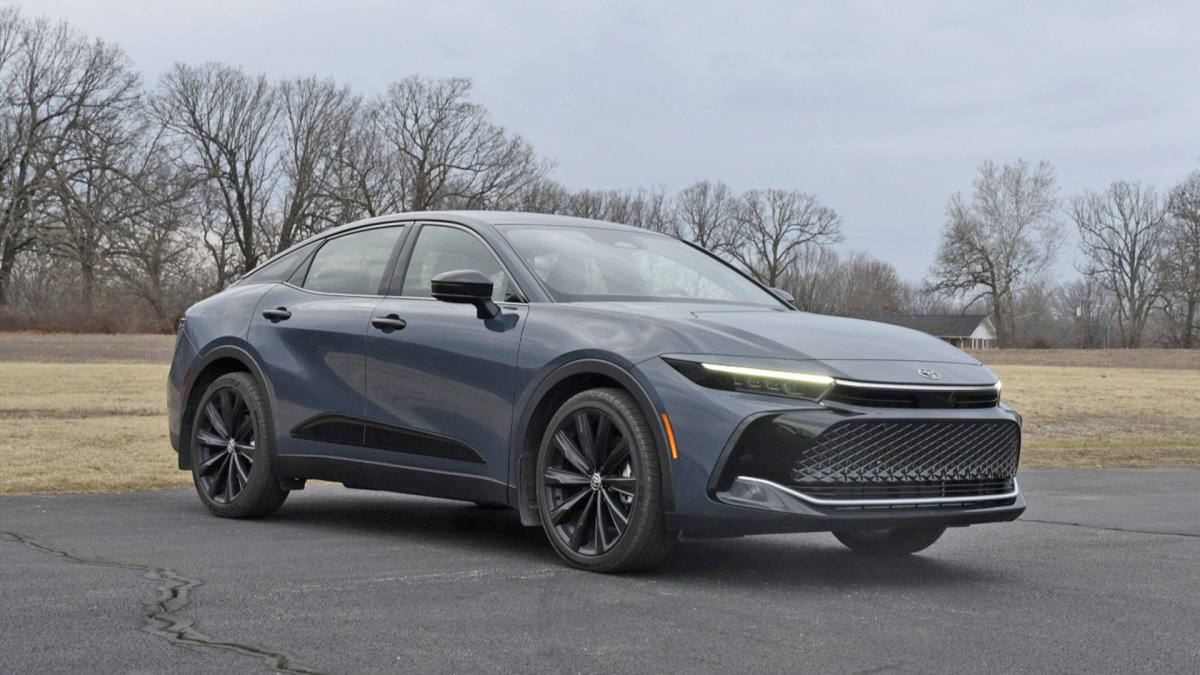
The 2026 Toyota Crown continues to occupy an odd place in the market: part sedan, part crossover, more upscale than a Camry, and shaped by current consumer preferences for ride height and all-wheel drive. In a recent review, that formula came across as competent rather than compelling. The vehicle was described as comfortable, efficient, and nicely appointed, but difficult to justify when Toyota’s own Camry already covers much of the same ground.
That tension has followed the Crown since Toyota brought the nameplate back in 2022 after a 50-year absence. The latest assessment suggests the model still has not fully escaped the question that greeted its return: what exactly is it for? As a product, it seems designed for buyers who want sedan familiarity without giving up the elevated stance and visual cues now associated with crossovers.
Toyota is leaning on hybrid efficiency and standard AWD
On paper, the Crown makes a coherent case. The reviewed version used a 2.5-liter hybrid four-cylinder powertrain producing 236 horsepower and carrying an EPA combined rating of 41 miles per gallon. All-wheel drive is standard, and buyers can also opt for a turbocharged 2.4-liter hybrid. Those are respectable credentials in a market where consumers increasingly expect electrification, efficiency, and year-round usability in a single package.
The review also described the interior as a strength, highlighting physical controls and clear usability. That practical design approach matters because Toyota often wins not by chasing novelty for its own sake, but by making vehicles easy to live with. In that sense, the Crown appears to fit the company’s broader philosophy even if its exterior concept is more experimental.

The problem is not capability. It is differentiation.
The criticism in the review was not that the Crown is bad. Quite the opposite: it was portrayed as fundamentally fine. Fuel economy is strong, the cabin is spacious enough for several occupants, and the extra luxury content may appeal to some shoppers. The challenge is that being fine is not always enough, especially when a lower-positioned sibling is already highly regarded.
That is why the comparison to the Camry is so damaging and so revealing. If the Crown feels like a more expensive, lifted variation on Toyota’s mainstream sedan formula, then the burden falls on styling, packaging, and perceived distinctiveness to close the gap. The review suggests those areas remain contested.
What stands out in the supplied review details
- The Crown is positioned as a hybrid of sedan familiarity and crossover height.
- The reviewed 2.5-liter hybrid setup makes 236 horsepower and is rated at 41 mpg combined.
- All-wheel drive is standard.
- The interior was described as intuitive, with useful physical controls.
- The reviewer questioned whether the model offers enough beyond what a Camry already provides.
A product shaped by the crossover era
The Crown may be one of the clearest examples of how deeply crossover preferences now shape vehicle design. Rather than force buyers to choose between a conventional sedan and a utility vehicle, Toyota has attempted to blend the categories. The result is a car with elevated suspension and unconventional proportions that tries to satisfy buyers who want easier ingress, a slightly more commanding seating position, and hybrid thrift without moving fully into SUV territory.
That strategy is understandable, but it comes with aesthetic and conceptual compromises. The review called attention to the model’s unusual look, particularly from the rear three-quarter angle, where the extra height can make the shape feel unresolved. Vehicles that split categories often ask buyers to accept tradeoffs in visual coherence in exchange for practical versatility. The Crown appears to be making exactly that bargain.

The real question is who needs it
For transportation watchers, the Crown is interesting less because it is a breakout success than because it reflects how automakers respond when traditional body styles lose ground but do not disappear entirely. Toyota did not abandon the sedan here. It reinterpreted it for a market trained to expect crossover cues. That alone makes the Crown worth watching as an industry signal.
Still, the immediate commercial challenge remains straightforward. A vehicle can be efficient, comfortable, and well-finished, yet still struggle if its identity is fuzzy. The review’s conclusion was essentially that the Crown works, but it does not create an urgent reason to choose it over Toyota’s existing alternatives. In a lineup filled with competent hybrids, that may be the hardest problem to solve.
The 2026 Crown therefore reads as a product of transition: not a failed idea, but a vehicle searching for sharper justification in a market where even good cars need a very clear reason to exist.
This article is based on reporting by The Drive. Read the original article.
Originally published on thedrive.com