Tesla’s first European rollout comes with a built-in warning
Tesla’s so-called Full Self-Driving system has reached Europe for the first time, but the launch is arriving with an unusual gatekeeper: a mandatory on-screen tutorial and quiz that drivers must complete before they can activate it. The requirement is more than a formality. It reflects the central tension around advanced driver-assistance systems, which promise convenience and automation while still leaving the human behind the wheel legally and practically responsible for what happens on the road.
According to the supplied source material, Tesla labels the feature in Europe as “FSD (Supervised).” Before first use, drivers must take what the company calls an activation tutorial. The purpose is to make sure users understand how the system works, what the interface is showing them, and, most importantly, that the driver remains responsible for safe operation even while the feature is active.
That distinction matters because the phrase “full self-driving” has long been controversial. The source text notes that the system has drawn criticism from both drivers and lawmakers over its real-world performance and over the risk that users may overestimate what it can do. Tesla’s European tutorial appears designed to reduce precisely that risk by forcing a basic acknowledgment of the system’s limits before the feature is unlocked.
The Netherlands is first
The rollout begins in the Netherlands, which the source says has approved the technology for road use. The same material indicates that expansion to other European countries could follow, tied to compliance with UN-R171 standards. Those standards require that users of driver-control assistance systems be educated about system performance in order to avoid what the rule describes as misinterpretation, overestimation, or difficulty.
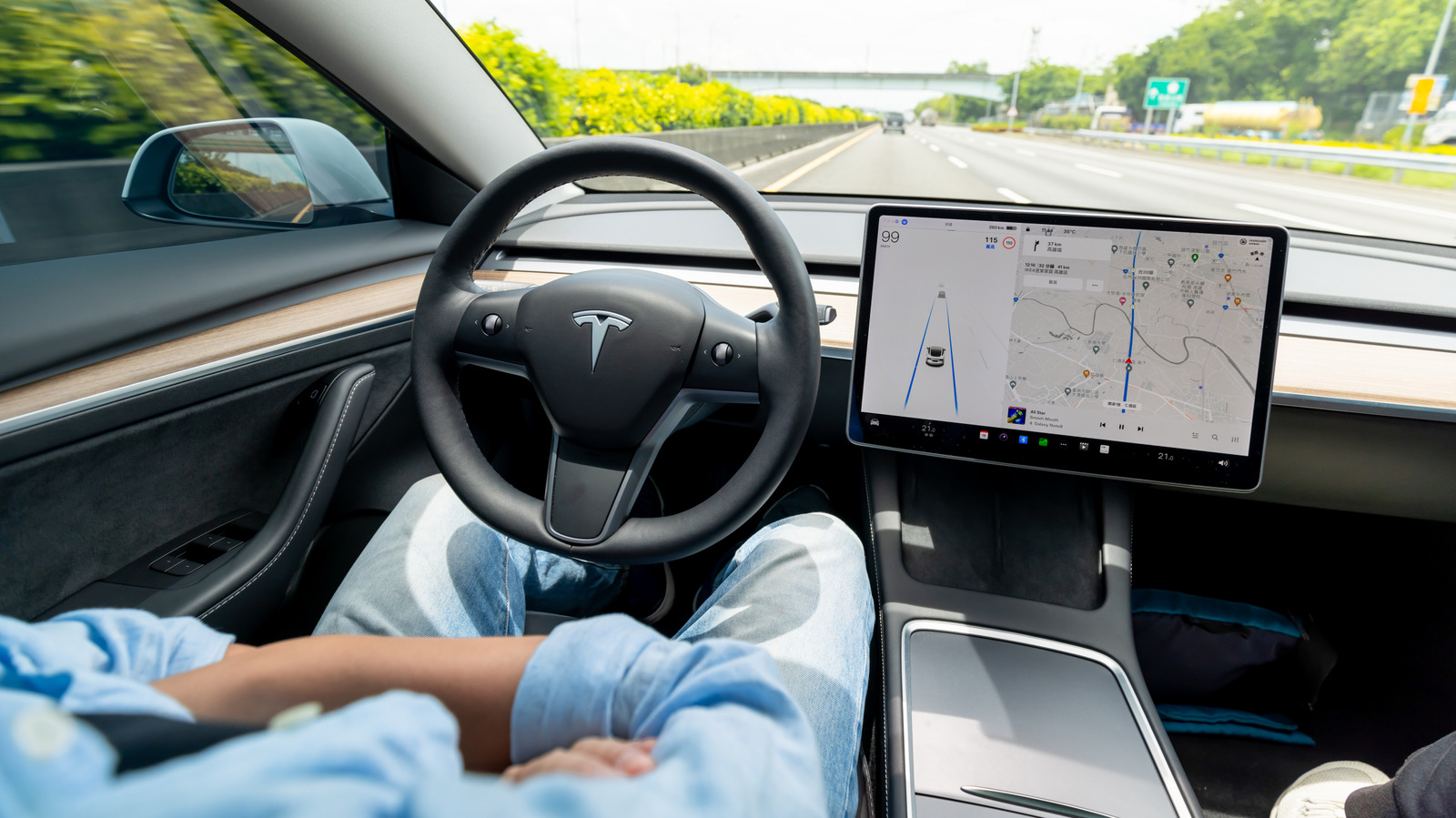
In practice, that means Europe is not simply importing the feature as-is. It is asking for a more explicit user education layer around it. The tutorial reportedly explains controls, interface elements, and how drivers can tell when the system is active. At the end, users face a brief knowledge check, including identifying the interface state in which FSD is active and answering whether they remain responsible for safe vehicle operation while it is engaged.
It is a minimal test, but it is still notable. Driver-assistance features have typically depended on owners reading manuals, watching videos, or learning by use. Tesla’s requirement turns that passive expectation into an active checkpoint. The quiz is not a technical safeguard in itself, but it is a clear attempt to shape user behavior before the first mile is driven.
Europe’s framing is more cautious than the branding
The contradiction at the heart of the launch is difficult to miss. Tesla’s branding has long implied a level of autonomy beyond what the system actually provides, while the European compliance approach emphasizes that the feature remains supervised and limited. The supplied source text is blunt on that point: if the system crashes the car, the driver is still liable because the driver was expected to take over and prevent the crash.
That legal and operational reality puts pressure on every part of the user experience, from naming to warnings to training. Europe’s tutorial requirement may therefore become one of the most important parts of the launch, not because it makes the software smarter, but because it better aligns the user’s expectations with the system’s actual role.
There is also a broader regulatory signal here. Rather than banning advanced driver-assistance outright or accepting it on marketing terms, regulators appear to be pushing for a middle ground: permit deployment, but demand clearer communication about boundaries and accountability. That model could become increasingly common as more automated features move into consumer vehicles.
Why the quiz matters beyond Tesla
Even a short two-question test carries symbolic weight. It acknowledges that the biggest failure mode for this class of technology may not be purely technical. It may be the mismatch between what the machine can reliably do and what the human thinks it can do. A driver who assumes a system is more capable than it is can become inattentive at exactly the wrong moment.
That is why the European debut is important even aside from Tesla itself. It points to a likely future in which automated-driving systems are judged not only by code and sensors, but also by how companies explain them, train users on them, and prevent overconfidence around them. In that sense, the tutorial is part of the product.
The immediate rollout is limited, and the test itself is simple. But the policy idea behind it is significant: if consumers are going to use increasingly capable driver-assistance tools on public roads, they may first need to demonstrate that they understand the technology is assistance, not autonomy.
- Tesla’s supervised driving feature is now available in the Netherlands, its first European market.
- Drivers must complete an activation tutorial and quiz before first use.
- The rollout is tied to UN-R171 requirements meant to reduce misunderstanding and overestimation of driver-assistance systems.
This article is based on reporting by Jalopnik. Read the original article.
Originally published on jalopnik.com