Extreme Engine Testing in Tennessee
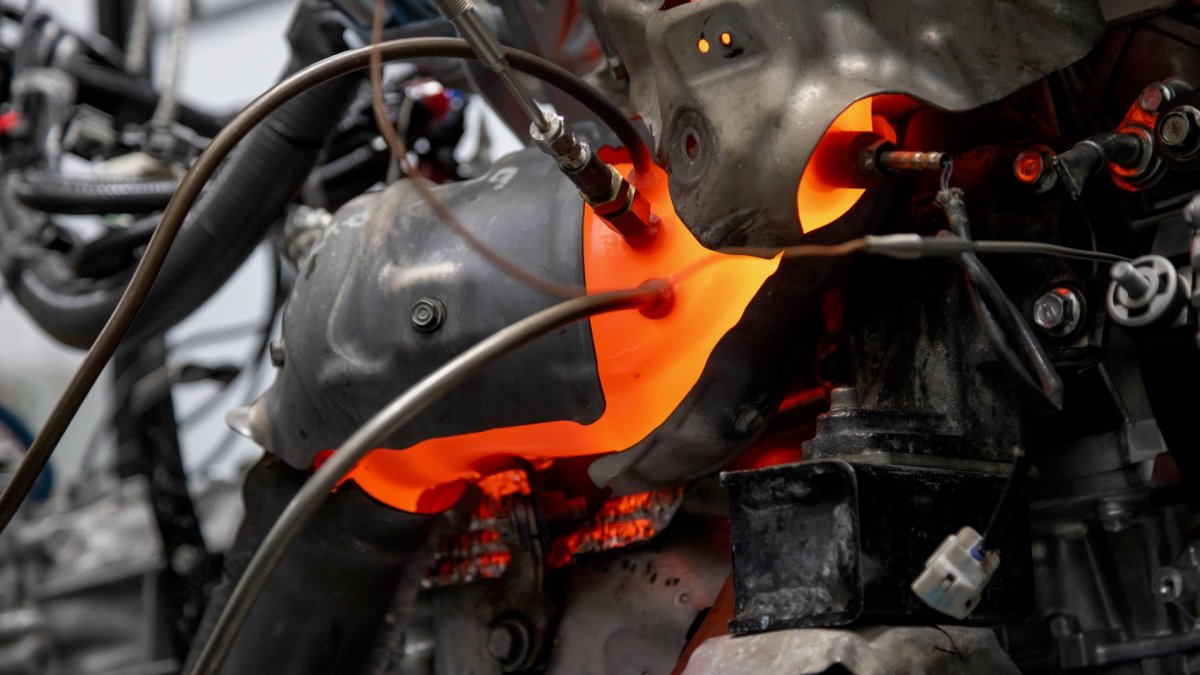
At Nissan's Decherd Powertrain Assembly Plant in Tennessee, quality assurance engineers push the Frontier's 3.8-liter naturally aspirated V6 to limits no customer would ever approach. Engines randomly pulled from the assembly line are mounted on dynamometers and subjected to punishing test cycles ranging from 4 to 300 hours, with the most severe protocol running at maximum RPM under maximum load for 100 continuous hours.
The result is a dramatic sight: engine components glow a vivid orange as they endure conditions far beyond anything encountered in normal driving. A 300-hour test is equivalent to approximately 130,000 miles of driving wear, compressed into less than two weeks on the dyno.
Inside the Quality Control Process
Brandon McClain, quality assurance manager at the Decherd plant, explained the rigorous procedure. "We'll pull a random engine from the assembly line, run it through our testing procedures and then tear it down," McClain said. "We confirm all internal components meet specifications and look for any issues that didn't appear during the test."
After each endurance run, engineers perform a complete teardown, inspecting every component for wear, fatigue, or defects. The tests are also conducted at temperature extremes to simulate the harshest real-world conditions the engine might face.
X-Ray Precision at the Molecular Level
Beyond dynamometer testing, Nissan employs advanced X-ray inspection as a secondary quality control measure. Engineers examine engines in 1.2-millimeter slices, detecting variations in internal cooling channels, cylinder wall thickness, and block integrity. Approximately one engine per 100 produced undergoes this examination, resulting in multiple samples checked daily.
This dual approach of physical endurance testing and non-destructive imaging helps identify manufacturing defects before vehicles reach customers and validates that any process changes maintain quality standards.
A Rare Breed in the Midsize Segment
The Frontier's 310-horsepower, 281 pound-feet V6 is becoming an increasingly rare breed. Most competitors in the midsize truck segment have shifted to turbocharged four-cylinder engines, leaving the Frontier alongside the Jeep Gladiator's 3.6-liter V6 as holdouts for naturally aspirated six-cylinder power. The engine's proven durability under extreme testing helps explain why Nissan has stuck with the formula.
This article is based on reporting by The Drive. Read the original article.

Originally published on thedrive.com