Artemis III is no longer the Moon landing mission
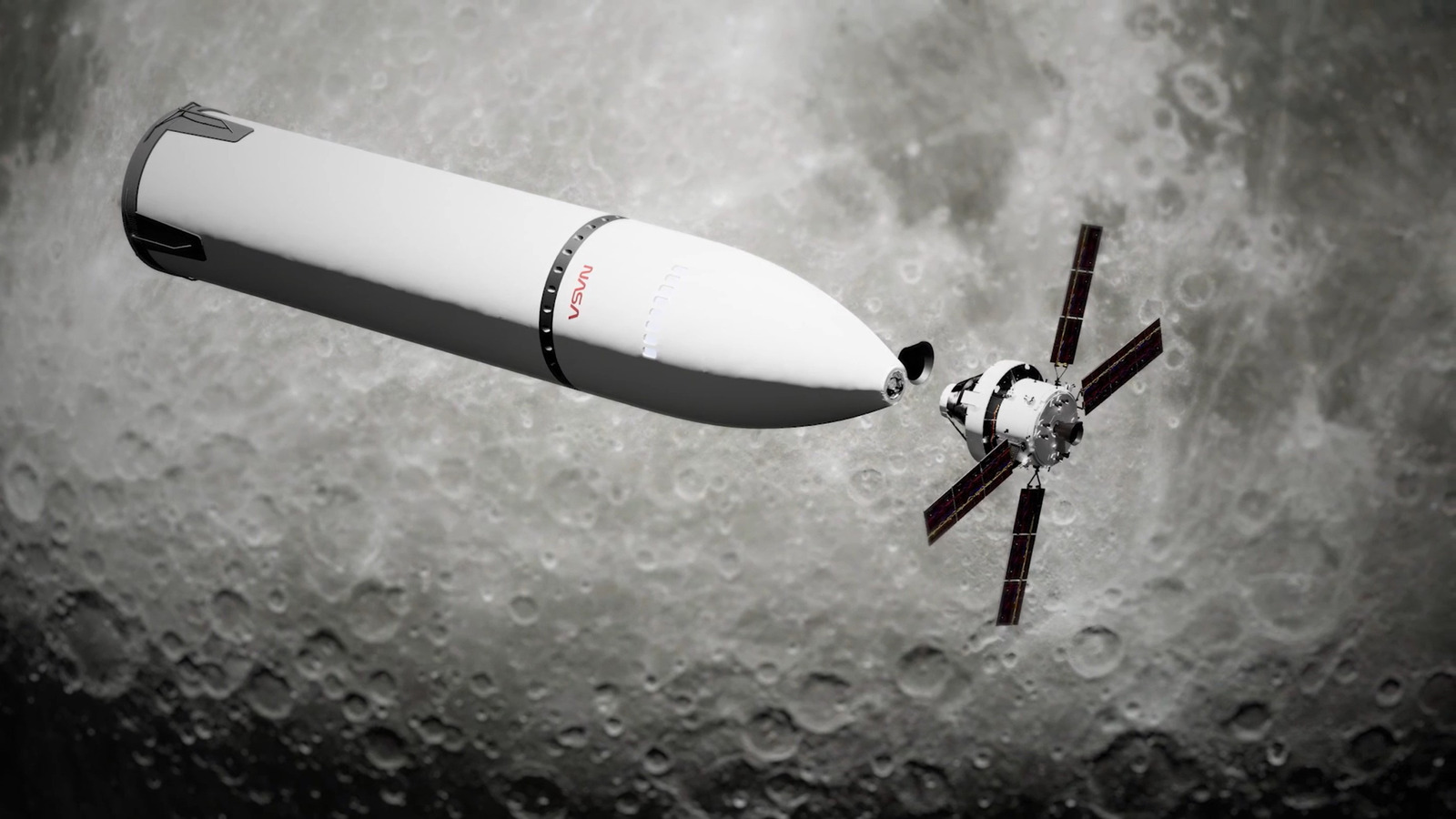
NASA has now outlined what Artemis III will do, and the answer is far more complex than a straightforward return to the lunar surface. According to the source material, the mission is scheduled for 2027 and will remain in Earth orbit rather than flying to the Moon. Its purpose is to test critical hardware and mission operations that NASA now considers necessary before attempting a human lunar landing.
That marks a major shift in the Artemis program. Artemis III had previously been expected to carry the symbolic and operational burden of putting astronauts back on the Moon for the first time since 1972. Instead, NASA redesigned the mission earlier this year, concluding that it should not attempt such a landing before essential supporting vehicles and procedures had been demonstrated.
The new plan turns Artemis III into a dense rehearsal mission built around three launches, two orbital rendezvous operations, and coordination across multiple spacecraft systems from different providers. Rather than being a simplification or delay tactic in disguise, it looks like a recognition that the infrastructure required for sustained lunar return is too immature to skip intermediate validation steps.
What the mission will actually involve
The source says Artemis III will begin with a Space Launch System rocket sending four astronauts into Earth orbit aboard an Orion capsule, following the broad operational pattern used for Artemis II. From there, the mission branches into a far more elaborate sequence.
Blue Origin is expected to launch its Blue Moon lunar lander into orbit on a New Glenn rocket. Orion will then dock with Blue Moon for two days. During that period, the astronauts will run tests and practice interacting with the lander. The mission then adds another major element: SpaceX will launch Starship into orbit, where it will dock with Orion for one day. The astronauts are expected to conduct tests related to the vehicle, although the source indicates they will not actually enter Starship during this mission.
After those operations, Orion will return to Earth for ocean splashdown and recovery. The full mission is expected to last about two weeks. On paper, it is an Earth-orbit mission. Operationally, it functions as a systems-integration stress test for the Artemis architecture now taking shape.

Why NASA changed course
The central logic behind the redesign is hard to dispute. Sending astronauts to land on the Moon without previously testing the vehicles that would make the landing possible would concentrate too much risk into a single mission. NASA’s revised approach suggests the agency decided that proving docking, access, and coordination steps in orbit is a prerequisite for any credible lunar landing schedule.
That matters because Artemis is no longer a single-agency endeavor in the old Apollo mold. It is increasingly a multi-provider architecture in which NASA’s own deep-space spacecraft must interact with hardware built and launched by commercial partners. That creates a broader challenge than simply getting one rocket and one capsule to work. It requires interoperability, timing, and confidence across a network of vehicles that are all developing on separate trajectories.
By repositioning Artemis III as a test mission, NASA is effectively acknowledging that the program’s success depends on validating those interfaces before trying to execute the most consequential maneuver of all: a crewed lunar landing.
The risks are technical and schedule-related
The source material does not downplay how ambitious this is. A three-launch mission involving different rockets and spacecraft already carries substantial operational complexity. Each launch is a separate risk event. Each docking is another. The fact that the vehicles come from multiple providers with different development histories adds more uncertainty.
The article cited in the candidate text points to several obvious vulnerabilities. Blue Moon and Starship do not yet exist as operational crew-supporting elements in the form Artemis III would require. New Glenn recently suffered a launchpad explosion, according to the source, which could delay Blue Origin’s launch cadence. Starship, meanwhile, has not yet flown into orbit, making its eventual role in a tightly choreographed human-spaceflight mission especially consequential.
Those concerns are not arguments against the new plan. If anything, they reinforce why NASA backed away from using Artemis III as a direct lunar landing attempt. The mission now appears structured around the principle that demonstration should come before commitment.

What Artemis III now means for the broader lunar return
Under the revised sequence described in the source, Artemis IV is the mission expected to attempt a return of astronauts to the lunar surface, with 2028 mentioned as the target year if development and testing go well. That makes Artemis III the hinge between the symbolic success of sending crews deeper into space and the practical challenge of assembling a functioning Moon program.
It also reveals how much the Artemis effort has evolved from a single-mission narrative into a layered campaign. The headline of “returning to the Moon” remains politically powerful, but the actual work now revolves around proving that multiple untested systems can operate together safely and predictably.
That is a less glamorous story than a landing date, but it is arguably the more important one. Human exploration programs fail when they compress unresolved engineering and operational questions into moments that have no margin for error. Artemis III is now designed to expand that margin.
A realism test for NASA and its partners
The revised mission plan is also a useful reality check for the wider space sector. Ambitious lunar timelines have often depended on optimistic assumptions about launch readiness, vehicle maturity, and cross-company coordination. Artemis III, in its new form, turns those assumptions into concrete tests.
If the mission succeeds, NASA will have validated not only the Orion spacecraft and SLS launch system, but also the practical beginnings of a modular architecture involving commercial landers and rendezvous operations that future missions may depend on. If it struggles, the delays will at least surface in an orbital test environment rather than during an attempted landing.
Either outcome would produce valuable information. In spaceflight, learning that a system is not ready can be just as important as proving that one is.
For now, Artemis III has become something more technically honest than its earlier version. It is no longer the mission expected to carry a lunar homecoming on its back. It is the mission tasked with proving whether the pieces of that homecoming can actually work together. That makes it one of the most consequential tests in NASA’s current exploration roadmap, even without a single boot touching the Moon.
This article is based on reporting by Jalopnik. Read the original article.

Originally published on jalopnik.com




![Kia launches three new GT EVs, including an electric hot hatch and two SUVs [Images]](https://electrek.co/wp-content/uploads/sites/3/2026/09/Kia-EV3-GT-EV4-GT-EV5-GT.jpeg?quality=82&strip=all&resize=1200,628)