Battery Breakthroughs for the Mass Market
When advanced battery technologies make their automotive debuts, they typically arrive first in six-figure luxury vehicles — a calculated strategy to recoup high development costs before pursuing volume. Tesla's first Roadster, Lucid's Air, Porsche's Taycan: each introduced novel powertrain technology at premium prices before the rest of the industry followed at scale. China's MG, owned by SAIC Motor, is deliberately inverting this model.
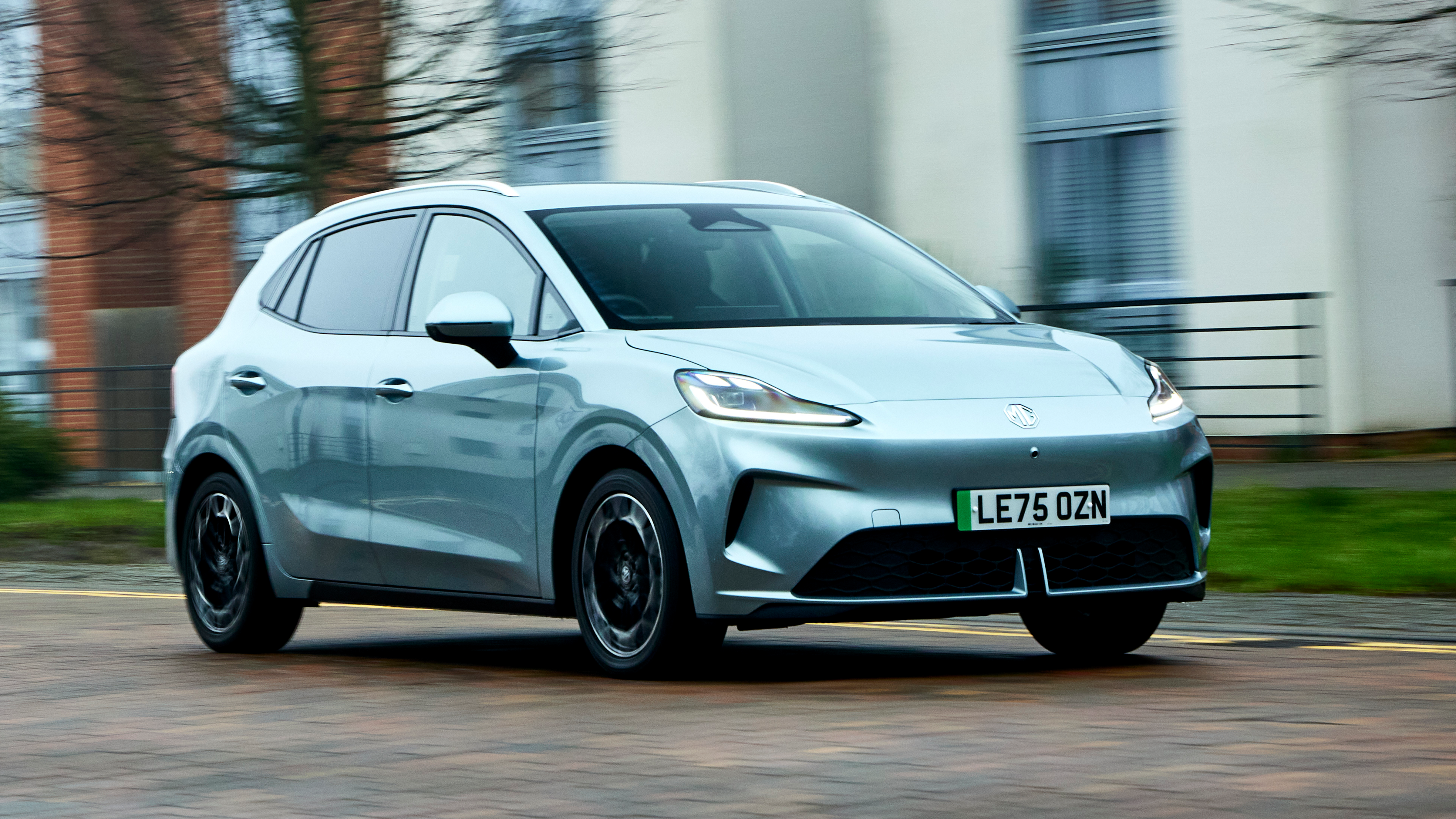
The MG4 EV Urban, scheduled for a European launch in late 2026, will be one of the first mass-production vehicles anywhere in the world to feature semi-solid-state battery technology. Its target price of approximately €20,000 places it firmly in the budget end of the EV market — a segment where Chinese automakers have systematically outcompeted European and American rivals. The MG4 Urban isn't just a product launch; it's a statement about where advanced battery manufacturing is maturing fastest.
What Semi-Solid State Actually Means
The term "solid-state battery" covers a spectrum of technologies, and the MG4 Urban's approach sits at an important point on that spectrum. The battery uses a manganese-based lithium-ion chemistry in which approximately 95 percent of the electrolyte is solid, with around 5 percent liquid electrolyte remaining. Conventional lithium-ion batteries use roughly 20 percent liquid electrolyte.
This reduction in liquid electrolyte content delivers meaningful practical benefits. Liquid electrolytes are the primary source of thermal runaway risk in conventional batteries — they are flammable, and if a cell is damaged or overcharged, the liquid can ignite. Reducing the liquid fraction substantially lowers this risk, improving the safety profile of the battery pack under abuse conditions. Solid electrolytes are also more chemically stable, which should translate to better long-term capacity retention and slower degradation.
The 5 percent liquid content that remains is a manufacturing decision rather than a compromise. Fully solid-state batteries face significant challenges in achieving adequate ion conductivity at the electrolyte-electrode interface at room temperature. Retaining a small liquid fraction maintains sufficient ionic contact while delivering most of the safety and durability benefits of a fully solid system — a pragmatic bridge technology that can be manufactured at scale today.
Made in China, Sold in Europe
The MG4 Urban's battery was developed by SAIC in collaboration with QingTao Energy Development, a private Chinese solid-state battery company. The technology was introduced in China in late 2025, in an MG4 variant priced at approximately 102,800 yuan — roughly $14,500 at current exchange rates — before the European adaptation was announced.
MG's European operation is navigating a complex competitive environment. The brand outsold Nissan, Tesla, and BYD in Europe last year, achieving 307,522 vehicle sales — a 26 percent increase — despite European Union tariffs imposed on Chinese-built EVs in 2024. The tariffs, which add up to 35 percentage points to MG's import costs on top of the standard 10 percent duty, have significantly compressed margins on European sales.
To address this, MG is actively seeking a European manufacturing location to begin local production by 2027. Manufacturing within the EU would exempt vehicles from the Chinese EV tariffs, restore margin flexibility, and allow MG to price more competitively against European-built rivals from Volkswagen, Stellantis, and Renault.
The Strategic Logic of Budget Deployment
MG's decision to introduce semi-solid-state batteries in a budget vehicle, rather than a premium model, reflects a distinctly Chinese industrial philosophy about technology deployment. As MG's chief battery scientist Li Zheng explained, deploying the technology in a high-volume, affordable vehicle is the only way to achieve the manufacturing scale and cost reduction required for the technology to become viable at a system level.
A technology that appears only in a €60,000 vehicle will be refined slowly, through limited production volumes. The same technology in a €20,000 vehicle will accumulate manufacturing experience and drive cost reductions at a pace determined by mass-market volumes. MG is betting that this approach will compound over time into a structural cost advantage that European rivals, with their premium-first deployment histories, will struggle to match.
This philosophy mirrors the broader Chinese EV strategy. BYD, CATL's battery supply chain, and now SAIC with MG have consistently prioritized volume deployment of new technologies over margin protection, accepting lower near-term profitability in exchange for faster learning curves and supply chain maturation.
What European Buyers Can Expect
The MG4 EV Urban builds on a platform that has already demonstrated strong market acceptance across Europe. The existing MG4 range has been praised for offering competitive range, modern connected features, and straightforward ownership experiences at price points well below European-brand alternatives. The Urban variant adds a technology story — the battery chemistry — to the established value proposition.
Specifications for the European MG4 Urban beyond battery chemistry have not been fully disclosed. Chinese market variants suggest a range of approximately 430-450 kilometers WLTP, competitive with rivals at twice the price. European safety certification testing and software localization requirements will determine the exact specification of the version that reaches dealers later in 2026.
This article is based on reporting by Automotive News. Read the original article.
Originally published on autonews.com