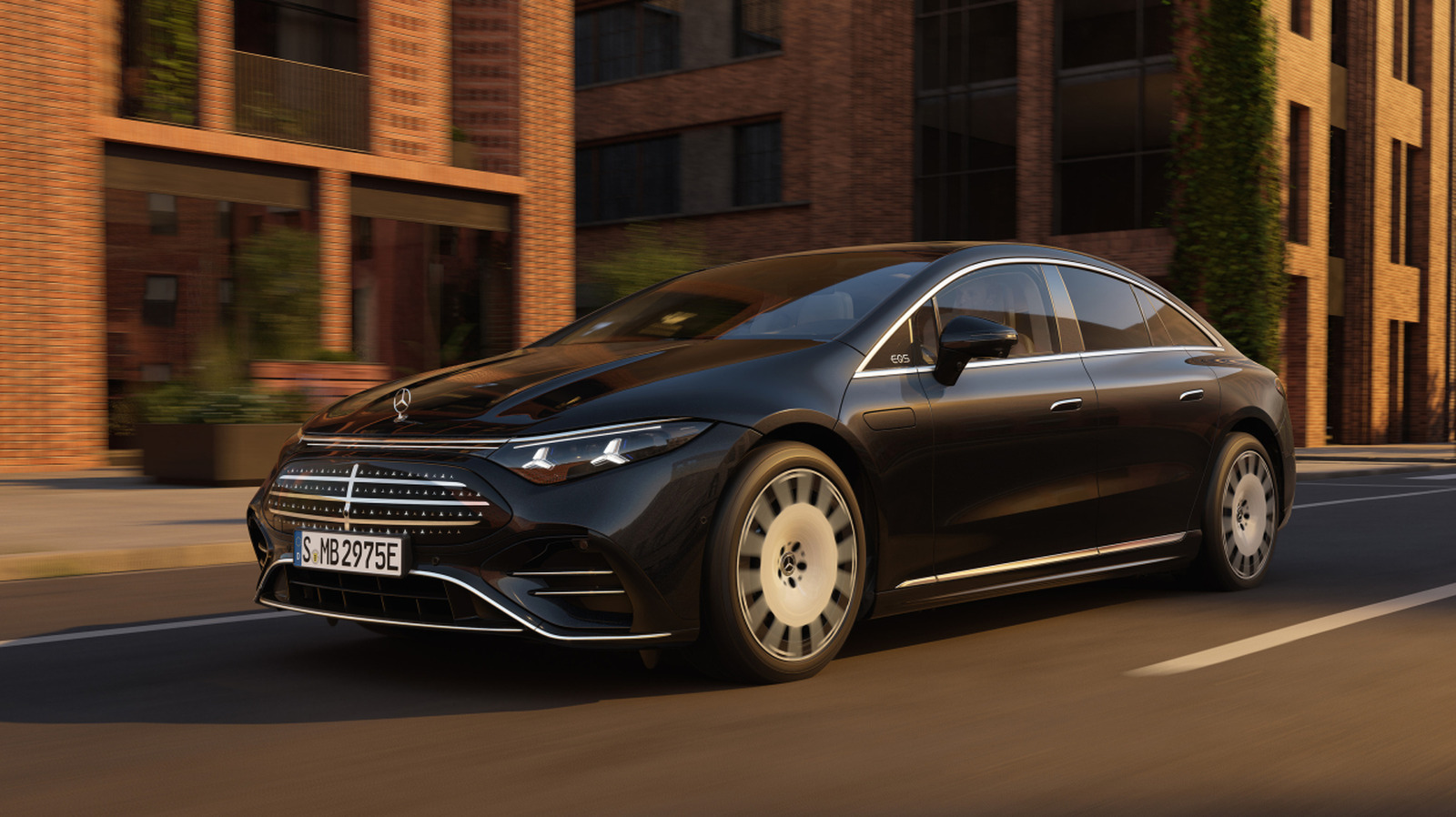
Mercedes is trying to make its flagship EV harder to ignore
Mercedes-Benz is giving the EQS a substantial technical update for 2027, aiming squarely at two of the metrics that still define premium electric vehicles in the market: range and charging speed. According to the company details cited in reporting on the refresh, more than a quarter of the sedan’s components are new, and the headline change is a move to an 800-volt architecture paired with a larger 122 kWh battery pack.
The numbers are meant to reset the conversation around the car. Mercedes says the updated EQS can reach 575 miles on the European WLTP cycle, a major increase over the current version. The company is also raising peak DC fast-charging capability to 350 kW, a significant jump from the 200 kW ceiling that has been one of the weaker points in the outgoing model. Mercedes says that under those conditions the sedan can add nearly 200 miles of WLTP range in 10 minutes.
Battery chemistry and charging changes are central
The battery revision is not only about size. Mercedes says the new cells use anodes that blend silicon oxide with graphite, increasing gravimetric energy density over the previous generation with conventional graphite anodes. It also says volumetric energy density has improved while the battery dimensions remain the same, helping extend range without a packaging penalty. The company further notes that cobalt content has been reduced.
Those material changes matter because the EQS is no longer competing only on luxury or software-rich interiors. It has to compete in an EV market where long-distance usability is becoming more important, especially in the premium tier. Faster charging and higher energy density go directly to that question. Mercedes is also adding a compatibility workaround for 400-volt fast chargers by virtually splitting the battery into two halves, each charged at 175 kW. That should help the vehicle extract more value from a charging landscape that is still mixed in real-world deployments.
More than range: braking, motors, and steering
The update extends beyond the battery. Mercedes says regenerative braking power rises from 290 kW to 385 kW, suggesting a stronger and potentially more convincing one-pedal driving experience. The automaker also says its new electric motors are smaller and more efficient, and that it now builds them in-house. On top of that, steer-by-wire becomes available, adding another technology marker to a sedan that has always been positioned as a showcase vehicle.
All of this arrives as Mercedes reassesses its EV strategy. The EQ sub-brand’s styling and identity have produced mixed results, and the company has already signaled a return toward more conventional design language in newer electric models. But the EQS is not being abandoned. Instead, Mercedes is attempting to fix some of the practical objections while preserving the flagship’s role as a technical demonstrator.
The revised EQS therefore looks less like a minor facelift and more like a serious engineering correction. If the range and charging gains translate well outside headline test cycles, Mercedes may have given its biggest electric sedan a more convincing argument in a market that is increasingly less patient with compromises at the top end.
This article is based on reporting by Jalopnik. Read the original article.
Originally published on jalopnik.com