Formula 1 gets a new screen in the United States
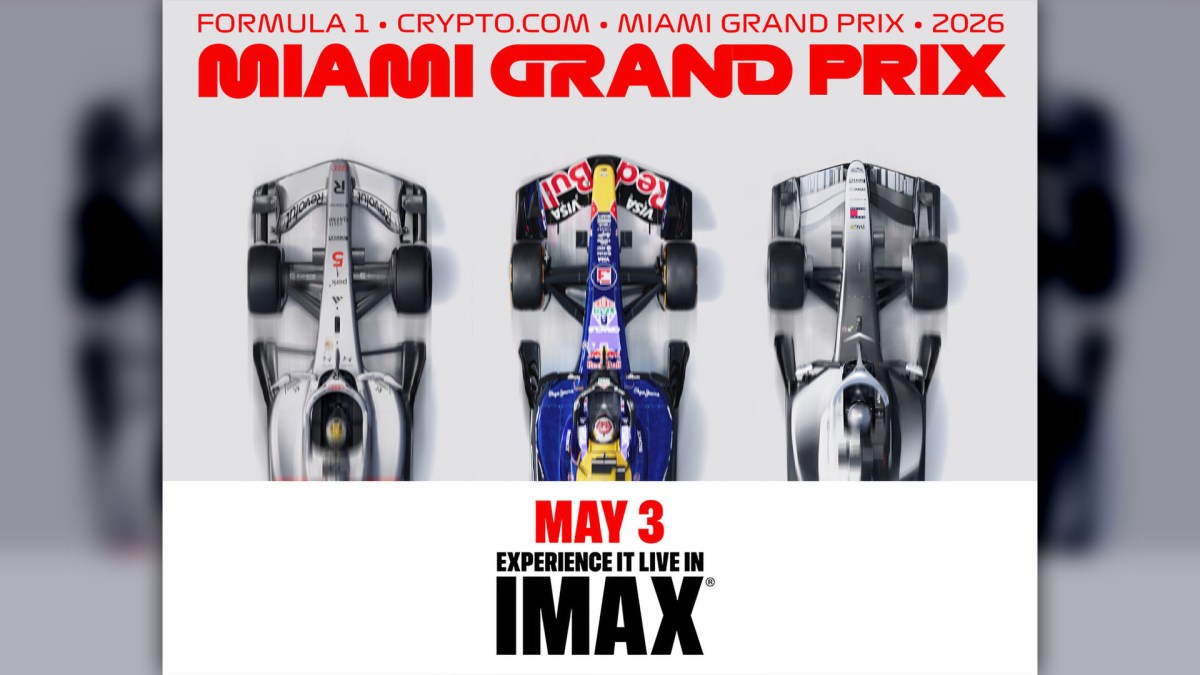
Formula 1’s long U.S. expansion is entering another phase, this time through theaters instead of racetracks or streaming apps. Beginning with the Miami Grand Prix on May 3, select 2026 races will be shown live on IMAX screens across the country. The move is part of Apple TV’s broader strategy to deepen the sport’s domestic reach and experiment with a more communal viewing format for an audience that has grown substantially in the American market.
According to the source material, the IMAX broadcast experience will run about 150 minutes and include a short preshow, the full race, and podium celebrations. Ticket prices appear to land around $30 plus fees, though that will vary by location. On the schedule are five races: Miami on May 3, Monaco on June 7, Britain on July 5, Italy on September 6, and the United States Grand Prix on October 25.
By itself, this is not a technical revolution. But it is a notable shift in how motorsport is being packaged for U.S. audiences and how rights holders are trying to turn live racing into a bigger event outside the home.
Why theaters make sense now
Formula 1 has spent years trying to convert American curiosity into habit. That effort has included more U.S. races, broader media exposure, and a steady push to make the series feel less niche. A live IMAX offering fits neatly into that agenda because it reframes race watching as something closer to a shared spectacle.
That may be especially useful for a sport that can still be difficult to follow casually. Race weekends often demand early start times, long broadcasts, and sustained attention. A theater event turns that into a destination outing, with scale, sound, and crowd energy doing some of the work that solitary home viewing does not.
The timing also matters. Formula 1 is no longer obscure in the United States, but it is still not fully normalized as mass live entertainment on the level of domestic stick-and-ball sports. A premium-format theater presentation is one way to push the series further into mainstream cultural space without having to change the sport itself.

Apple’s role in broadening access
The source material ties the IMAX plan directly to Apple TV’s new broadcasting strategy. That makes the move more interesting than a one-off promotional stunt. It suggests Apple is willing to test different formats for how live sports are consumed and monetized, particularly when those formats can strengthen fan identity and turn passive viewing into a branded experience.
For Apple, the logic is clear. A race shown in IMAX is not just another stream. It is an event with scarcity, physical presence, and potentially higher perceived value. That can support premium positioning while also attracting people who might not regularly sit through a full Grand Prix at home.
It also gives Formula 1 something it has always benefited from: atmosphere. Motorsport has a sensory scale that does not always survive compression onto a laptop or phone. The larger the screen and the louder the room, the easier it is to make strategy, speed, and spectacle feel inseparable.
The price and audience question
Whether fans will pay roughly $30 for that experience is the immediate market test. Some will see that as a fair price for a social, high-production presentation. Others will compare it unfavorably with watching from home, especially if they already subscribe to Apple TV or other sports packages.
The value proposition therefore depends less on access to the race itself and more on what theater viewing adds. The source text points to one likely advantage: the chance to watch with other fans rather than alone. That social factor could matter more than it seems. Sports fandom often grows through ritual and community, and Formula 1’s American audience still has room to build more of both.
At the same time, the theater model probably works best for marquee events, not every race weekend. The five-race rollout reflects that. Miami, Monaco, Silverstone, Monza, and Austin are recognizable names, and each offers enough identity to justify a special format.

A sign of a more experiential sports market
The bigger significance of the IMAX plan is what it says about sports media more broadly. Leagues and rights holders are increasingly looking for ways to make live viewing feel premium, social, and harder to substitute. That can mean alternate broadcasts, immersive formats, or location-based experiences. Formula 1 in IMAX belongs to that same shift.
It is also a reminder that growth in U.S. motorsport fandom is no longer just about securing distribution. It is about packaging. Once a sport has basic visibility, the next challenge is creating experiences that deepen attachment and justify spending time and money in a crowded entertainment market.
The IMAX rollout will not determine Formula 1’s future in America on its own. But it is a sharp indicator of where the business believes the opportunity lies: not only in reaching more viewers, but in making race day feel like an occasion.
If audiences respond, the theater could become another durable stop in the sport’s American expansion. If they do not, the experiment will still have clarified something important. Formula 1’s U.S. growth story has entered a stage where distribution is no longer enough. The contest now is over experience.
This article is based on reporting by The Drive. Read the original article.
Originally published on thedrive.com