The aftermarket pillar many Fisker owners depended on
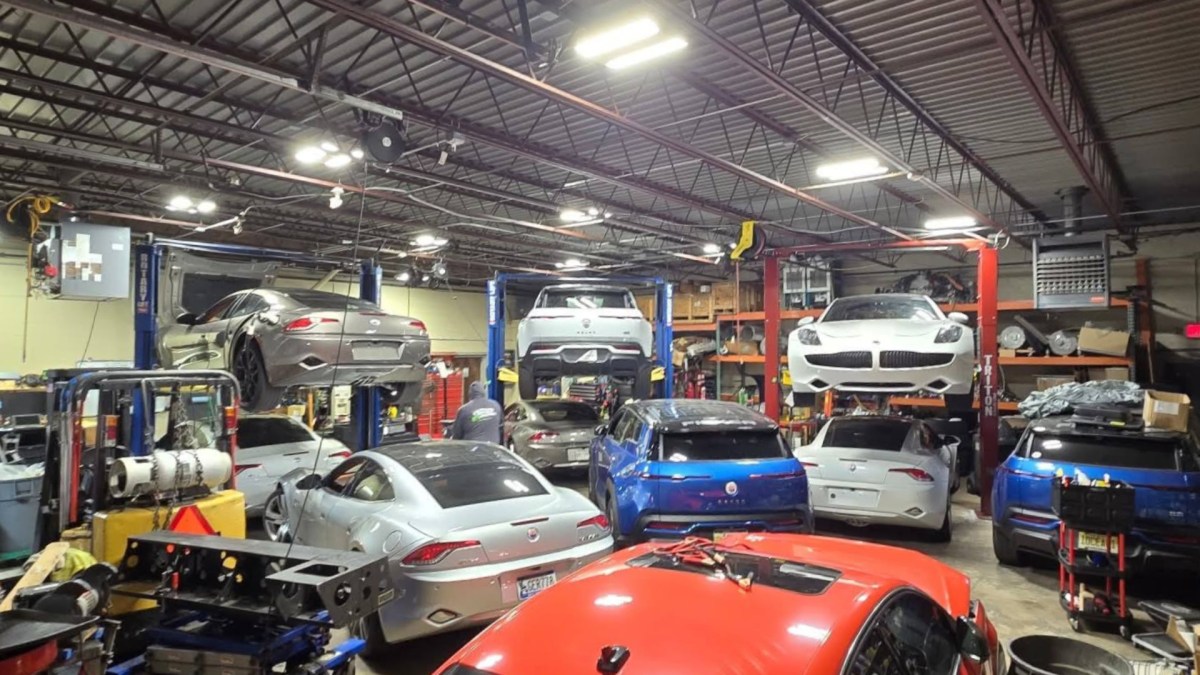
Joe Ferrante built something unusual out of automotive collapse: a specialized service ecosystem for a brand that no longer has a functioning manufacturer standing behind it. According to the supplied report, Ferrante’s EVolution Autosports in Bucks County, Pennsylvania, is the largest dedicated Fisker dealer and service center in the United States and the only one outside the West Coast cluster typically associated with the brand.
Now Ferrante is preparing to move on, and the business is for sale. That is not simply a local business story. It is a test of what happens when a niche but critical repair network for an orphaned EV maker may change hands.
How the business became indispensable
Ferrante started Fisker of Cherry Hill in 2014, during an earlier period when Fisker was still trying to establish itself as a Tesla challenger. The company eventually delivered thousands of vehicles, but with the automaker no longer able to provide reliable support and service, owners were pushed toward independent solutions. Ferrante stepped into that vacuum.
The report says EVolution Autosports now controls all of Fisker’s remaining factory parts, stored in a separate 4,000-square-foot warehouse. It also owns the patent for a “bulletproofing” process designed to improve the reliability of factory-spec Fiskers. That means the company’s value is not just in labor capacity or customer relationships. It is also embedded in inventory, proprietary know-how, and a reputation built around solving problems others could not.
Why the sale matters beyond one shop
The sale is consequential because the Fisker community appears to have very few substitutes. The report underscores that scarcity bluntly: search for a Fisker service center and the landscape is thin. Ferrante’s business became a national node in that vacuum, serving a community that still needs parts, repair expertise, and practical ways to keep rare vehicles on the road.
Ferrante himself seems aware of the anxiety this creates. He told the publication he wanted to avoid alarming the Fisker community and had even considered making the announcement without identifying himself. That reaction says a great deal about how much the business has come to stand in for institutional continuity after the manufacturer’s decline.
A blueprint for post-startup vehicle support
The story also highlights a broader issue in the EV market: selling vehicles is only part of the job. Long-term service, parts logistics, and technical support become existential when a young automaker stumbles or disappears. Ferrante’s operation effectively turned into a private-sector bridge over that failure, showing how aftermarket specialists can preserve value and functionality when official channels vanish.
His pitch to potential buyers reflects that logic. The physical footprint is modest, he says, and the model could plug into another existing business, preferably on the East Coast. In other words, the value proposition is not a sprawling dealership empire. It is a compact but specialized operation with a built-in customer base and unusually scarce assets.
The next owner will inherit a community problem as much as a business
Whoever takes over would not just be buying bays, a parts inventory, and a brand niche. They would also be inheriting responsibility for a group of owners whose vehicles remain rare, distinctive, and dependent on specialized knowledge. That means the succession question is not purely financial. It is also about whether technical trust can transfer with the assets.
Ferrante’s business became essential because he stayed when others did not. The sale therefore poses a simple but important question for the broader transportation market: when a startup automaker fails, who becomes the custodian of the vehicles already sold? In the Fisker case, the answer has largely been one small Pennsylvania operation. If that operation changes hands, the future of that support network will matter far beyond its square footage.
This article is based on reporting by The Drive. Read the original article.
Originally published on thedrive.com