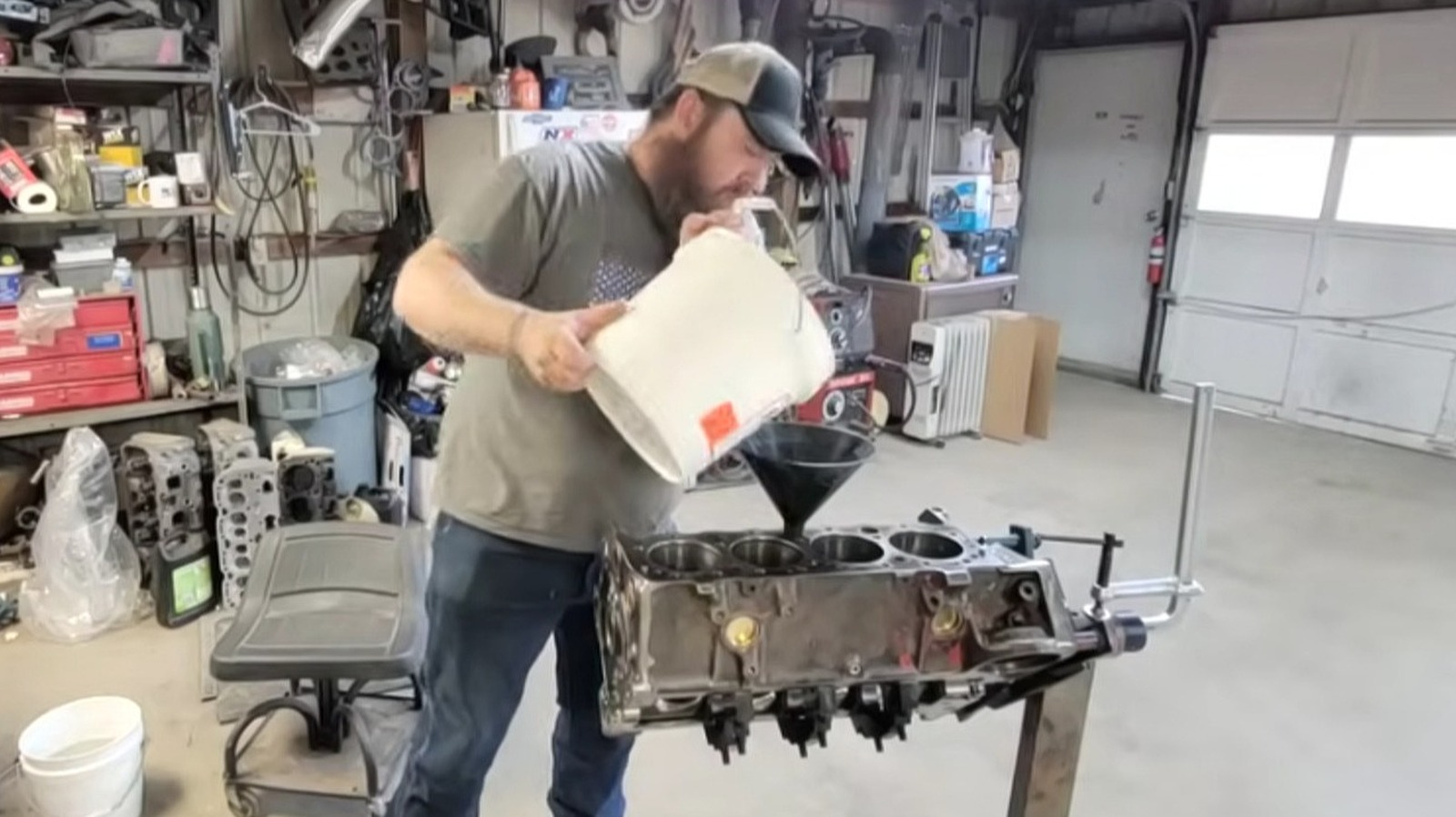
It sounds like sabotage, but it is a real performance technique
Pouring concrete into an engine block sounds like the kind of mistake that would destroy an engine instantly. In normal driving, that intuition is basically correct. But in the highly specialized world of drag racing and extreme performance builds, filling part of an engine block with a solid material can be an intentional way to make the engine stronger.
The key is that builders are not dumping material randomly into the engine. They are targeting the coolant passages within the block, or using purpose-made block fillers designed for the job. The aim is structural reinforcement, not ordinary road use.
As the source explains, the engine block is not a completely solid mass of metal. In addition to the cylinders, it contains channels that allow coolant to circulate. Those passages are essential for temperature control in regular driving, but they also create spaces where the block can flex under very high load.
The engineering logic is straightforward
When an engine is pushed hard, vibration and combustion forces place intense stress on the block. Around coolant channels, the surrounding metal can flex out of shape or even crack. That becomes a serious problem because cylinder geometry matters. If the cylinder walls distort, the seal between the pistons and the walls can degrade.
That seal is central to compression and combustion. Once the cylinder shape changes, piston rings may begin to leak. The source points to one familiar consequence: blow-by, where exhaust gases get past the rings. Those gases can then react with engine oil and reduce its effectiveness.
Filling the coolant passages with a hard material addresses the problem by reducing how much the block can move. With less room for the metal to flex, the engine is better able to hold its intended shape under heavy stress. In performance terms, the modification is about rigidity and consistency, not convenience.
For high-output builds, that matters because small distortions can become large losses. A race engine operating near its limits does not have much tolerance for changing clearances, unstable sealing, or block movement that grows worse as the load rises.
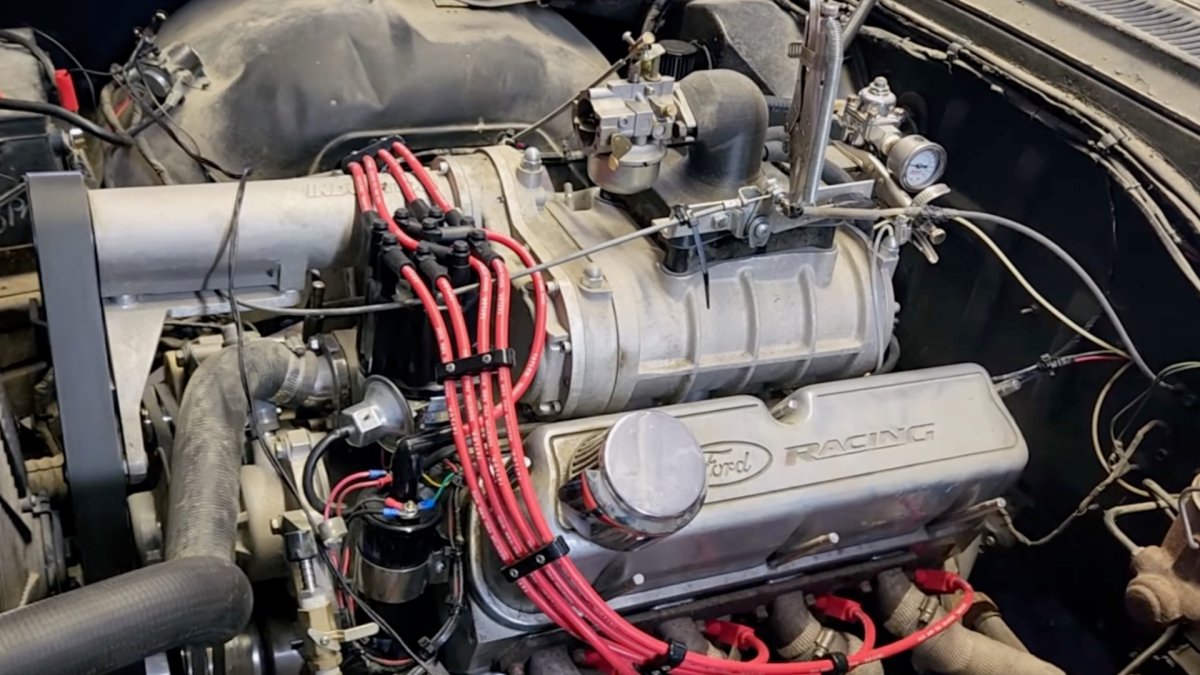
Why this makes sense mainly in drag racing
The obvious tradeoff is cooling. Once those passages are filled, they no longer function as normal coolant channels. That means the engine becomes more prone to overheating over time. For an everyday vehicle, that would be a major drawback and usually a deal-breaker.
In drag racing, however, the duty cycle is completely different. The engine may only need to deliver peak power for a few seconds at a time. In that context, builders may accept reduced cooling capacity in exchange for greater structural strength. The engine only has to survive a short burst of maximum stress long enough to complete the run.
That is what makes the technique so counterintuitive to outsiders. On the street, removing cooling capacity from an engine sounds absurd. On the strip, where the priority is short-duration output and durability under violent load, the compromise can be rational.
The source emphasizes that this is one reason block filling is most common in drag racing. It is not a universal upgrade, and it is not a general recommendation for road cars, endurance driving, or normal performance use. It belongs to a narrow slice of motorsport where the operating conditions justify the sacrifice.
Not all “concrete” is literally concrete
Another important point is that today’s builders often use dedicated engine-block fillers rather than ordinary construction concrete. The article notes that some people have used actual concrete, but companies now produce materials intended specifically for this purpose.
That distinction matters because the technique has become refined enough to support its own specialist products. The phrase “pouring concrete into your engine” captures attention, but the actual practice is typically more controlled than that wording suggests. The goal is not crude improvisation. It is a deliberate attempt to reinforce a block in a known weak area.
Even then, the method still depends on precision. The source makes clear that success comes down to exactly where the filler goes. Done correctly, it can support extreme performance conditions. Done poorly, it can simply ruin the block or make the engine unusable for its intended purpose.

What this says about performance engineering
The broader lesson is that engineering decisions are always tied to use case. A modification that is disastrous for one application can be beneficial in another. Filling a block sacrifices thermal management capacity to gain stiffness. Whether that trade makes sense depends entirely on the demands placed on the engine.
That principle is common in motorsport. Race setups routinely prioritize a narrow objective over everyday practicality. Tires, gearing, suspension, fuel, and even engine lifespan are all tuned around the mission. Block filling belongs to that same philosophy. It optimizes for short, extreme performance rather than long-term comfort or versatility.
It also shows how misunderstood some specialist automotive practices can be when removed from context. The raw idea sounds ridiculous because it clashes with what most drivers know about engines: they need cooling, lubrication, and careful maintenance. All of that remains true. The difference is that a drag engine is solving a different problem than a commuter car.
A useful technique, but only in the right domain
For racers chasing every margin, a more rigid block can help preserve cylinder shape, ring sealing, and reliability during all-out launches. That is the upside. The cost is reduced cooling and a much narrower operating window. In effect, the engine becomes more specialized and less forgiving.
That makes the practice a good example of how far performance engineering can diverge from conventional automotive logic. The same modification that would be reckless in one environment can be effective in another because the constraints are different.
So yes, filling part of an engine block with concrete-like material can make sense. It just makes sense only when the target is a few seconds of extreme power, not the long, controlled life expected from an engine on the road.
Seen that way, the technique is less a stunt than a reminder that in racing, durability and performance are often achieved by changing the problem rather than preserving the defaults.
This article is based on reporting by Jalopnik. Read the original article.

Originally published on jalopnik.com