A trucking safety problem hiding in plain sight
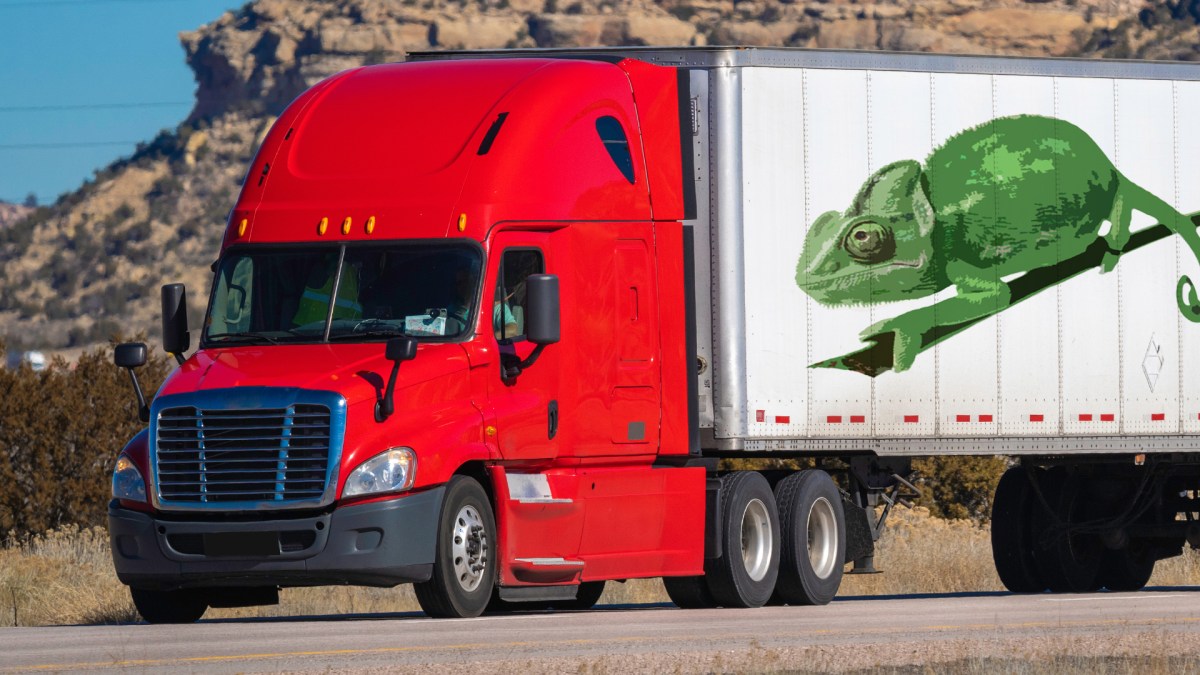
The U.S. trucking industry already faces scrutiny over enforcement, driver qualifications, and unsafe equipment. A new flashpoint is the practice known as “chameleon carriers,” in which operators allegedly evade penalties and oversight by changing company identities and continuing to operate under fresh paperwork. Based on the supplied source text, a recent 60 Minutes investigation has pushed that issue back into public view, focusing in part on the network known as Super Ego Holding.
The basic allegation is straightforward and alarming. Rather than correcting serious safety problems, some operators can effectively abandon their documented history, create a new carrier identity, update the identifiers on trucks, and continue working. If that pattern holds, it exposes a structural weakness in the enforcement system: regulators may be tracking names and numbers more effectively than they are tracking the business continuity behind them.
That matters because trucking is not a minor corner of the transportation economy. It is critical infrastructure. If unsafe fleets can keep reappearing with new identities, then violations tied to hours-of-service abuse, poor maintenance, or other risky conduct may not lead to the long-term accountability the system is supposed to create.
How the alleged scheme works
The supplied reporting describes chameleon carriers as a networked phenomenon. Trucking safety consultant Rob Carpenter told 60 Minutes that these companies “constantly reincarnate,” running a business hard, accumulating a poor history, then adopting a new identity and moving on. In that telling, the point is not administrative convenience. The point is to escape the burden of prior safety performance.
According to the source text, this can be done by changing identifying information such as the freight operator name and Department of Transportation number, effectively creating what appears to regulators to be a different entity. Carpenter says that starting a new company can be done online, quickly and cheaply, which would make the barrier to re-entry low if oversight systems are not designed to connect the dots.
The allegations become more concrete in driver testimony cited by the source. One driver, Daniel Sanchez, described a work culture in which risk and violations were treated as acceptable costs so long as freight kept moving. He also recounted being told to replace identifying markings on his truck, a vivid example of how administrative identity can be altered in operational settings.
These are allegations from an investigation, not adjudicated findings in the supplied material. But even at that level, they point to a regulatory challenge more sophisticated than a single bad actor. The concern is that some carriers may be using the legal and administrative structure of the industry itself to outrun their own safety record.

Why this matters for public safety
Commercial trucking safety rules exist for reasons that are neither abstract nor optional. Limits on drive time, requirements for vehicle condition, and documentation standards are intended to reduce the risk of crashes involving large, heavy vehicles operating at highway speed. If companies can sidestep enforcement by rotating through new identities, the deterrent power of those rules weakens.
That makes chameleon-carrier behavior more than a compliance issue. It is a public-safety issue. A regulator may sanction one business name while the underlying operation continues under another. Drivers may remain under pressure. Equipment may remain in poor condition. The public sees the same truck on the road, but the paperwork suggests a reset.
The trucking industry has long argued, often correctly, that most carriers and drivers operate responsibly under difficult conditions. That is exactly why the alleged behavior described here matters. Rule-abiding operators are put at a disadvantage when competitors can cut corners on safety and then shed the consequences.
It also raises questions about the adequacy of identity verification, beneficial-ownership checks, and cross-entity data matching in federal oversight systems. If a company can be functionally reborn for around $1,000 online, as Carpenter described, then the system may be too easy to game for businesses intent on avoiding accountability.
A familiar enforcement lesson in a new form
Transportation regulation often struggles with a recurring problem: rules are only as strong as the entities they can reliably bind over time. When a regulated party can splinter, rename, or reorganize faster than enforcement can follow, compliance becomes performative. That appears to be the central concern in the supplied reporting.
The specific case highlighted by 60 Minutes may draw immediate attention, but the broader lesson is institutional. Agencies can inspect trucks, review logs, and issue penalties, yet still fail to solve the underlying problem if the identity of the operating company is too easy to swap. In that sense, chameleon carriers represent an enforcement-design flaw as much as an enforcement-gap story.
This is also the kind of issue that tends to escalate only after investigative reporting or a major incident. It lacks the simplicity of a recall or a single-rule change. Instead, it sits at the intersection of licensing, data systems, contractor relationships, and cross-border business structures. Those are exactly the kinds of complexities that allow serious safety problems to persist.

What comes next
The supplied material does not describe new federal policy action yet, but it makes a stronger case for one. If the allegations are accurate, regulators will need better ways to identify continuity across supposedly distinct carriers, especially when ownership networks, equipment, or operating patterns remain substantially the same.
That could mean tighter business-verification requirements, more aggressive link analysis across DOT records, stronger scrutiny of lease-and-contractor arrangements, or faster escalation when fleets appear to be cycling through fresh identities. None of that is simple, but the alternative is tolerating a safety regime that can be evaded by clerical reinvention.
The trucking industry depends on trust: trust that the operator carrying freight down an interstate has met enforceable standards, and trust that a documented safety record actually follows the business responsible for it. The chameleon-carrier problem strikes at both assumptions. If a company can leave its history behind simply by changing the name on the door, the system is not enforcing safety nearly as effectively as it claims.
This article is based on reporting by The Drive. Read the original article.
Originally published on thedrive.com