BMW is drawing a sharper line for the next M3
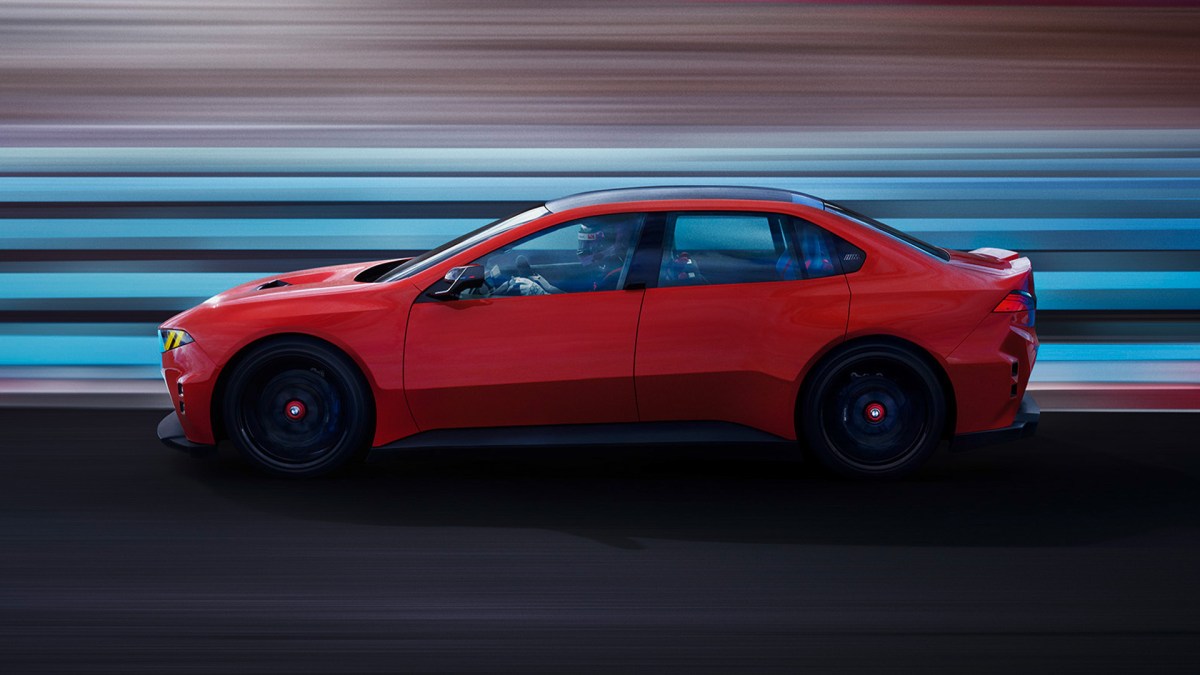
BMW has confirmed that the next-generation M3 will not be a hybrid. Instead, the company plans to split the future of the model into two distinct paths: a gasoline-powered version and a fully electric version with four motors.
The decision matters because it rejects a middle-ground strategy that many performance brands have used to bridge combustion and battery power. BMW M chief Frank Van Meel’s explanation is direct in the supplied source material: for the new M3, the company wants extremes rather than “the in-between.”
Why BMW is avoiding the hybrid route
The performance-car market has spent the last few years testing whether hybrids are the most practical answer to tightening emissions rules and rising expectations for speed. Hybrids can add torque and regulatory breathing room, but they also add mass and complexity. For enthusiast models, that tradeoff can be hard to sell.
BMW appears to be making that calculation explicitly. The current M5 is a plug-in hybrid, but the M3 is being treated differently. Rather than ask buyers to accept a blended formula, the company is keeping a conventional combustion version alive while also building a dedicated electric performance model.
That gives BMW a clearer product story. Drivers who want the character of an internal-combustion sports sedan will still get one. Buyers ready for an electric M3 will get a version designed to push vehicle dynamics in a different direction instead of serving as a partial compromise.

The combustion case rests on an updated inline-six
The gasoline model will continue using BMW’s twin-turbocharged 3.0-liter inline-six, known internally as the S58. Van Meel said the revised Euro 7-compliant version of that engine will survive into future M cars.
According to the supplied source text, BMW has heavily reworked the engine to meet upcoming emissions standards. The changes include a pre-chamber ignition system called M Ignite, two spark plugs per cylinder, higher compression, and new variable turbine geometry turbos. The company says those updates are intended to cut fuel consumption at high revs without reducing power.
That engineering effort explains why BMW is confident enough to keep a gas M3 in the lineup. Rather than treating combustion as a short-term holdover, it has invested in a more sophisticated version of the engine to preserve the option under tighter regulation.
The electric M3 will chase dynamics, not just acceleration
BMW is also preparing a quad-motor electric M3 based on the Neue Klasse direction. Van Meel’s comments suggest the company wants the EV to stand on its handling and torque management, not merely its ability to post a faster straight-line number.
That point is important. Electric performance cars are often judged first by acceleration, but BMW is framing the next M3 EV around vehicle dynamics and control. With four motors and software-managed torque distribution, the company sees an opportunity to create something more radical than a conventional combustion successor.
In other words, BMW is not trying to make one universal M3 that satisfies every powertrain preference. It is trying to make two distinct high-performance interpretations of the same badge.

A cleaner strategy than the industry norm
There is strategic clarity in that decision. Hybrids can look like the safest path on paper, but they can also leave both camps unsatisfied. Traditional enthusiasts may object to weight and complexity, while EV-focused buyers may prefer a purpose-built electric platform rather than a transitional architecture.
BMW’s approach accepts that the market is splitting. Some buyers still want combustion as long as regulation allows it. Others want a full electric performance car, provided it delivers more than silent speed. By choosing separate tracks, BMW avoids presenting either group with what the company seems to view as a diluted answer.
What the M3 decision says about performance cars now
The significance of this announcement extends beyond one nameplate. It shows that even under emissions pressure, some manufacturers believe the performance market is better served by sharper differentiation than by compromise. That does not mean hybrid performance cars will disappear. It means their role is no longer assumed.
For BMW, the next M3 becomes a test of whether a legacy performance icon can survive a powertrain transition by splitting in two rather than blending its future into one package. If the company gets both versions right, it may prove that the best way to navigate a divided market is not to average the options, but to build the strongest case for each of them separately.
This article is based on reporting by The Drive. Read the original article.
Originally published on thedrive.com


![Kia launches three new GT EVs, including an electric hot hatch and two SUVs [Images]](https://electrek.co/wp-content/uploads/sites/3/2026/09/Kia-EV3-GT-EV4-GT-EV5-GT.jpeg?quality=82&strip=all&resize=1200,628)